Trees Gallery - Wentworth Woodhouse
Rotherham, South Yorkshire
Wentworth Woodhouse is one of the largest houses in the country. Having fallen into disrepair following a chequered modern history, it is now undergoing renovation on a massive scale. This includes the gardens and pleasure grounds at the rear, largely destroyed by open-cast mining after the second world war, probably as a vindictive act by the newly nationalised coal board under Manny Shinwell in 1946. Some efforts have already been made with new planting and new structural improvements in the area that was mined. Some older trees remain around the edges of the devastated area.
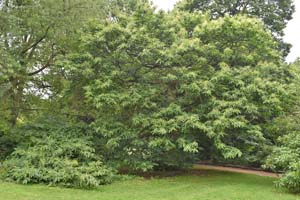 July 2023
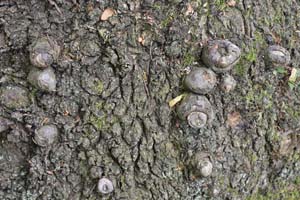 July 2023
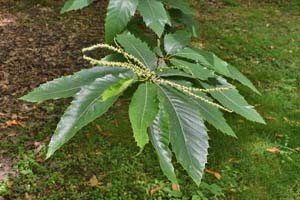 July 2023
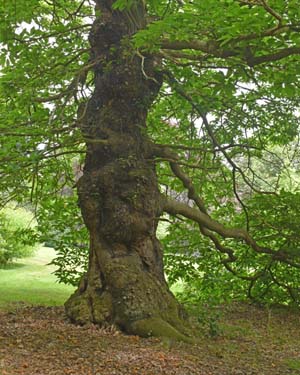 July 2023
Castanea sativa
Sweet chestnut
Also known as Spanish chestnut or just chestnut, it can reach 35m and exceed 700 years in age. It is , but is . After pollination by insects, female flowers develop into shiny, red-brown fruits wrapped in a green, spiky case. Sweet chestnut is native to S Europe, W Asia and N Africa. The story of how sweet chestnut trees came to be in Britain is unclear. It has long been thought of as a Roman introduction, but science doesn’t definitively back this up. It may be that sweet chestnut trees are a far more recent introduction.
 July 2023
 July 2023
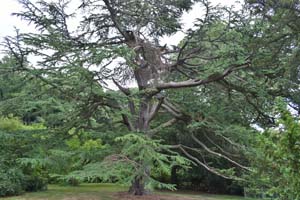
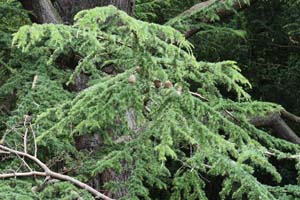
Cedrus libani
Cedar of Lebanon
Native to Lebanon and the eastern coast of the Mediterranean and Asia Minor. It is particularly well adapted to mountainous climates. It can grow to 35m. In the UK it was planted in nearly all the parks and gardens of large estates. In antiquity, in the Middle East, cedar wood was used to build major buildings, such as temples, due to the tree’s exceptional size and durability. The wood is also a source of an essential oil similar to turpentine and was used to make cough medicines, ointments and antiseptic. Egypt also imported the oil from Lebanon for embalming the dead. Cedar wood is used as an insect repellent in its native Lebanon and is used in clothes drawers and wardrobes in the UK and around the world as a moth repellent.
 July 2023
 July 2023
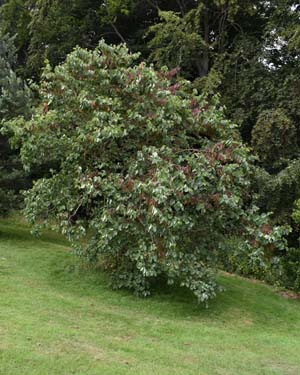
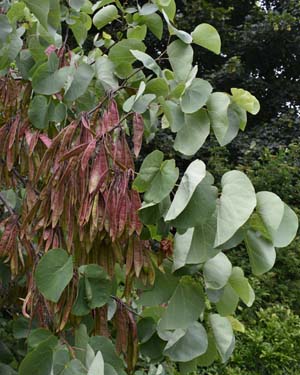
Cercis siliquastrum
Judas tree
Native to S Europe and W Asia. A small tree up to 12m tall, 10 m wide. It is noted for its prolific display of deep pink flowers produced on year-old or older growth, including the trunk, in spring. Flowers have five free petals and fused sepals, with a shape typical of much of the pea family (Fabaceae). There are many explanations given to the Judas Tree name, perhaps the most likely being a corruption of the French common name, Arbre de Judée, meaning tree of Judea.
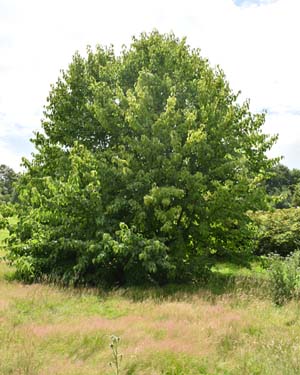 July 2023
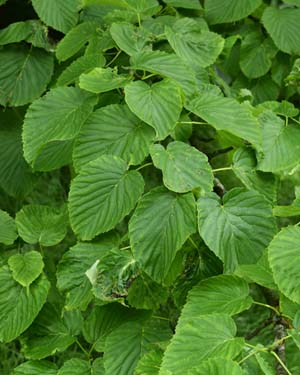 July 2023
Davidia involucrata
Dove tree
Also known as the handkerchief tree, both names relating to the large oval-rounded showy white involucre bracts which subtend each flower cluster. The bracts flutter in the slightest breeze, resembling doves or handkerchiefs. Native to woodlands in southwestern China, a deciduous tree that grows to 12m. .
 July 2023
 July 2023
Fagus sylvatica asplenifolia
Cut-leaved beech
A.k.a. fern-leaved beech, and f. sylvatica laciniata. A medium sized, deciduous ornamental cultivar, capable of living for hundreds of years. The bark is smooth, thin and grey, sometimes with slight horizontal etchings. The leaf buds form on short stalks and are reddish brown in colour and torpedo-shaped. They have a very distinctive criss-cross pattern. It is , flowering in April and May, but with climate change possibly in late March, the flowers leading to prickly beech mast with two nuts in each pod.
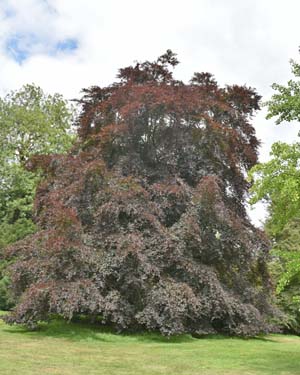 July 2023
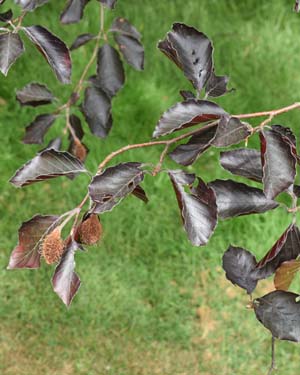 July 2023
Fagus sylvatica purpurea
Copper beech
Copper beech, also known as purple beech, is a cultivated form of common beech (although copper-coloured beech trees are also sometimes found in nature). It grows to a height of more than 40m. The bark is smooth, thin and grey, often with slight horizontal etchings. Twigs are slender and grey but not straight – their shape resembles a zig-zag. Torpedo-shaped leaf buds are coppery and up to 2cm in length, with a distinctive criss-cross pattern.
 July 2023
 July 2023
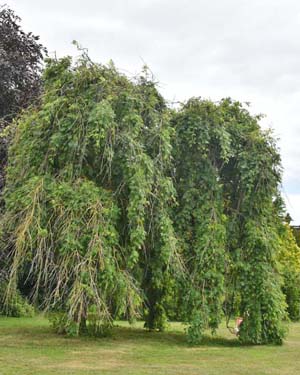
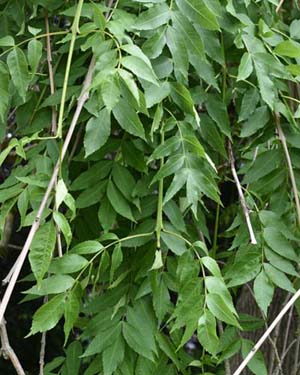
Fraxinus excelsior pendula
Weeping ash
A vigorous tree which might grow to 12m, discovered in England in the mid 18th century, a very popular planting in Victorian times. This cultivar does not have flowers or fruits. Some specimens, particularly taller ones, are grafted on to common ash trunks.
 July 2023
 July 2023
 July 2023
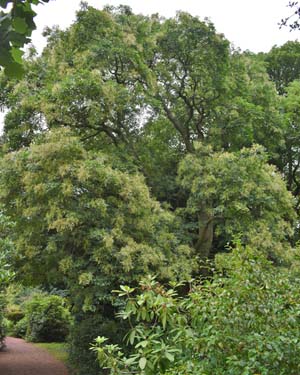
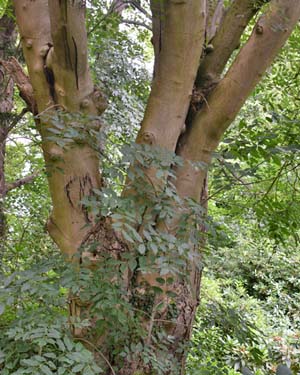
Fraxinus ornus
Flowering ash
A native of S Europe and W Asia, growing to 16m. A.k.a. manna ash, in recognition of a sweet, gummy sap taken from slits made in the bark. Perfect, fragrant, creamy white flowers appear in axillary and terminal panicles in May, which, given the number of seeds on this tree, must have been a spectacular sight.
 July 2023
 July 2023
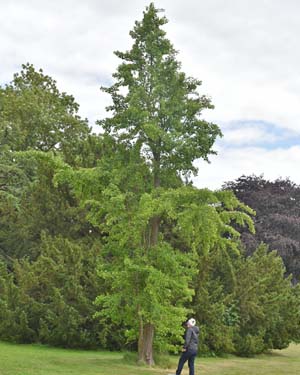
Ginkgo biloba
Maidenhair tree
Native to E Asia, normally reaching a height of 20–35m, with some specimens in China being over 50 m. Young trees are often tall, slender, and sparsely branched, as here; the crown becomes broader as the tree ages. It is the last living species in the order Ginkgoales, which first appeared over 290 million years ago, and fossils very similar to the living species, belonging to the genus Ginkgo, extend back to the Middle Jurassic epoch approximately 170 million years ago. It is widely regarded as a .