Trees Gallery - Wentworth Woodhouse
Rotherham, South Yorkshire
 July 2023
 July 2023
 July 2023
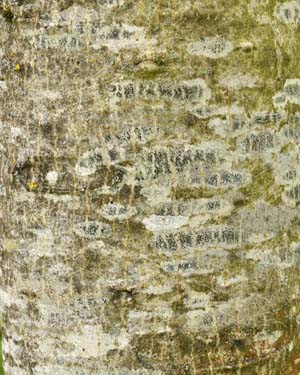
Juglans regia
Common walnut
A large deciduous tree, growing to 25–35m, and a trunk up to 2m in diameter, commonly with a short trunk and broad crown. The male flowers are in drooping catkins 5–10 cm (2 to 4 in) long, and the female flowers are terminal, in clusters of two to five, ripening in the autumn into a fruit with a green, semifleshy husk and a brown, corrugated nut. The whole fruit, including the husk, falls in autumn; the seed is large, with a relatively thin shell, and edible, with a rich flavour. [Wikipedia]
 July 2023
 July 2023
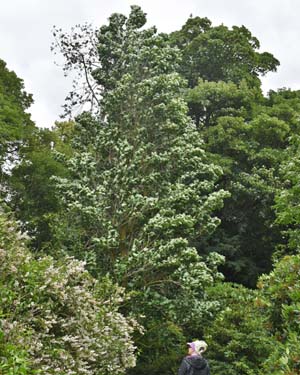
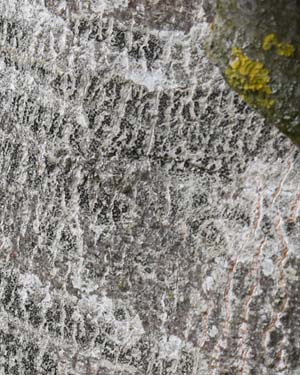
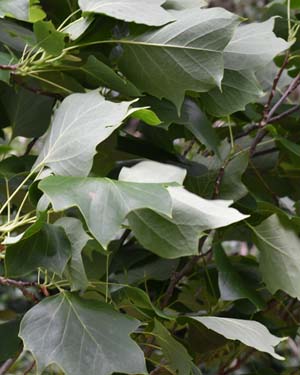
Liriodendron tulipifera
Tulip tree
A deciduous tree native to E North America. A.k.a. yellow poplar, it is a large, stately, deciduous tree growing to 30m. pyramidal to broad conical habit. flowers appear after the leaves are fully developed. Flowers are followed by dry, scaly, oblong, cone-shaped brown fruits, each bearing numerous winged seeds. Four-lobed bright green leaves (to 8” across) turn golden yellow in fall. Wood is used amongst other things for furniture, plywood, boatbuilding, paper pulp and general lumber. Native Americans made dugout canoes from tuliptree trunks. This is the state tree of Kentucky, Tennessee and Indiana.
 July 2023
 July 2023
 July 2023
Liriodendron tulipifera fastigiatum
Fastigiate tulip tree
Liriodendron tulipifera is a deciduous tree native to E North America. 'Fastigiatum' is a very narrow, columnar form, not as tall as the species (to 12m). All the lateral branches nestle parallel to the straight trunk. It flowers only at a later age and produces far fewer flowers than the species. The fruit is identical to that of L. tulipifera.
 July 2023
 July 2023
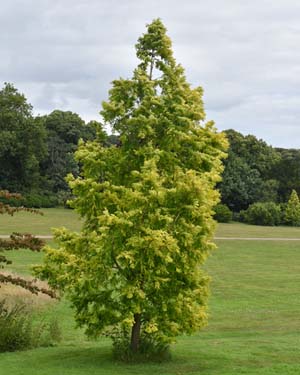
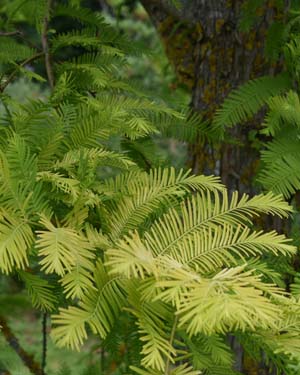
Metasequoia glyptostroboides 'Gold Rush'
Golden dawn redwood
‘Gold Rush’ is a cultivar that grows somewhat slower than the species, perhaps eventually reaching 30m. It was found as a seedling in a nursery in Japan where it was named 'Ogon' ('Golden Ogi' and 'Golden Mantel'are also seen.) Brought to Europe around 1993 by Dutch horticulturist Peter Zweinburg, who named it Goldrush. [Plant Finder]
 July 2023
 July 2023
 July 2023
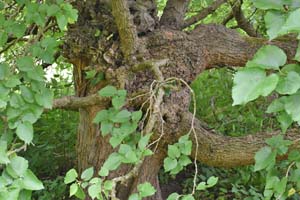
Morus nigra
Black mulberry
Native to SW Asia, where it has been cultivated for so long that its precise natural range is unknown. It came to Britain following an edict by James VI calling on the landed gentry to plant mulberry trees in order to sustain an English silk industry. Silkworms prefer the white mulberry to the black variety that arrived, and James’s project soon petered out, leaving a legacy of isolated 400-year-old, mostly Black Mulberries in the grounds of some Jacobean and Tudor houses today.
 July 2023
 July 2023
 July 2023
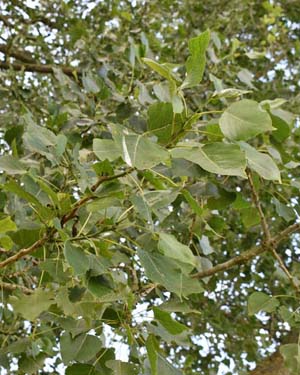
Populus spp.
Hybrid poplar
Spotted on returning to the car park, this looks like a large poplar, probably a hybrid black poplar (populus x canadensis perhaps?). Some hybrids are natural but many are artificial. Hybrid Black Poplars are common, some grown for timber but many are planted in new towns because they grow rapidly. They are generally known by their ‘cultivated variety’ name such as ‘Robusta’, ‘Regenerata’, ‘Serotina’, ‘Eugenei’ etc.
 July 2023
 July 2023
 July 2023
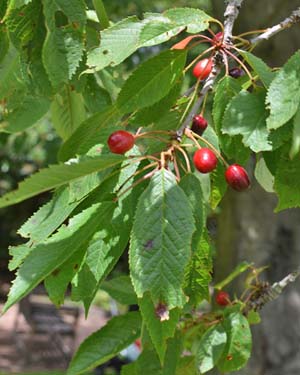
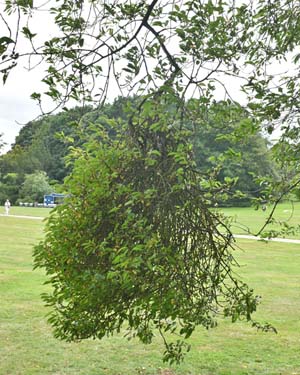
Prunus avium
Wild cherry
Native to Britain and Europe generally, as well as W Asia and N Africa, growing to 18m. Also known as sweet cherry, gean, or bird cherry. The hard, reddish-brown wood is valued as a hardwood for woodturning, and making cabinets and musical instruments.
 July 2023
 July 2023
 July 2023
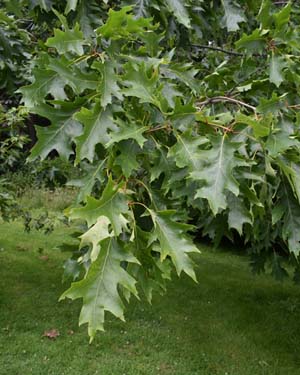
Quercus rubra
Red oak
A deciduous tree native to N America and S Canada. It can grow 30 to 40m, with a trunk up to 2m in diameter, quite straight and not too spreading in habit. The acorns take two years to develop on the tree. It is considered invasive in Europe, and is a in Britain.
 July 2023
 July 2023
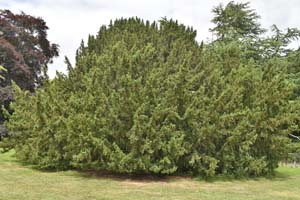
Taxus baccata
Yew
Mature yew trees can grow to 20m, and live for hundreds of years. It is commonly found growing in southern England, often forming the understorey in beech woodland. It is used as a hedging plant and is common in churchyards. The bark is reddish-brown with purple tones, and peeling. The yew is probably the most long-lived tree in northern Europe. The evergreen needle-like leaves are present all year round, though this specimen is suffering some browning on some branches. Unlike many other conifers, the common yew does not actually bear its seeds in a cone. Instead, each seed is enclosed in a red, fleshy, berry-like structure known as an aril which is open at the tip.