×
![woodturning]()

Trees Gallery - Dawyck Botanial Gardens. Page 1
Near Peebles, Scottish Borders

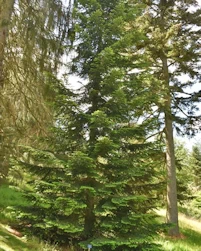 August 2024
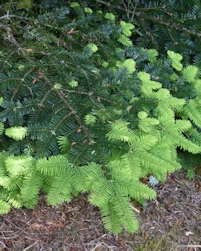 August 2024
Abies amabilis abies - from L. abeo - to rise, to go up; amabilis - lovely or attractive
Pacific silver fir
A.k.a. Cascades fir, Red Fir, White fir, native to Alaska and N California, growing to 80 m. The cones are 8–17 cm long,dark purple before maturity. The brownish winged seeds are released when the cones disintegrate at maturity about 6–7 months after pollination. The tree can live to over 400 years oldThis tree is sometimes used as a Christmas tree or for Christmas decorations.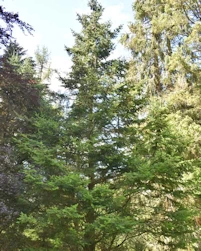 August 2024
 August 2024
Abies balsamea abies - from L. abeo - to rise, to go up; balsamum, referring to the resinous sap
Balsam fir
A small to medium-size evergreen tree, native to most of E and C Canada and NE United States, growing to 20 m. The bark on young trees is smooth, grey, and with resin blisters, becoming rough and fissured or scaly on old trees. The seed cones are erect, dark purple, ripening brown and disintegrating to release the winged seeds in September. The bark on young trees is smooth, grey, and with resin blisters, becoming rough and fissured or scaly on old trees.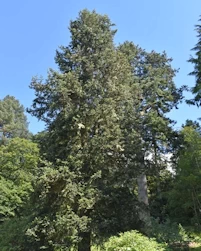 August 2024
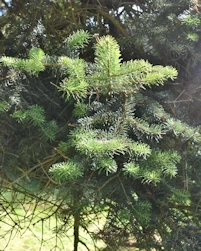 August 2024
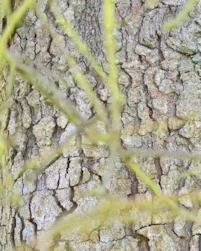 August 2024
Abies cephalonica abies - from L. abeo - to rise, to go up; cephalonica - derives from the Greek island of Kefallonia, where the tree was first identified
Greek fir
A medium-size evergreen coniferous tree growing to 35 m, native to the mountains of Greece, closely related to Nordmann fir. Large cones are 10–20 cm long with 150–200 scales, each scale with an exserted bract and two winged seeds; they disintegrate when mature to release the seeds. In the past the wood was used for general construction, but it is too rare to be of significant value now.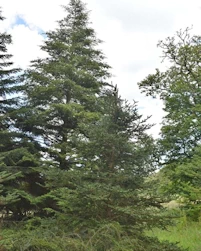 August 2024
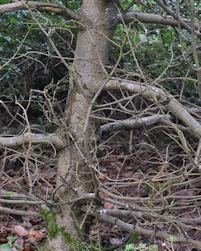 August 2024
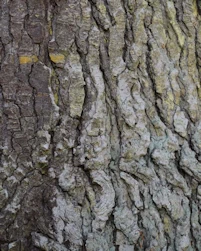
Abies forrestii abies - from L. abeo - to rise, to go up; forrestii -after Scottish plant hunter George Forrest
Forrest's fir
A.k.a. Chuandian Lengshan. A species of conifer native to China, growing to 20 m. This species is variable in morphology, and there are several varieties. Some of these are treated as separate species. The needles are 1.5 to 4 cm long, and as the needles rise up to form a 'V' above the shoots their white undersides are exposed, creating a silvery hue from a distance. Purplish, brown, or black cones are 7 to 12cm long. The timber is used for construction and pulp.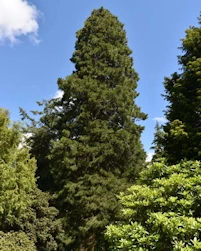 August 2024
 August 2024
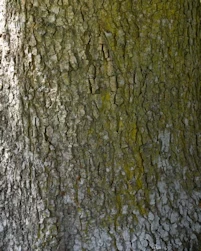
Abies grandisabies - from L. abeo - to rise, to go up, grandis - large
Grand fir
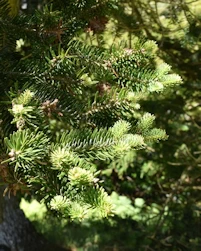
The David Douglas Tree Trail label says: The grand and the great. Grand firs often grow alongside Douglas firs in wild British Columbia. Here, this replica of a natural relationship clearly suits this agnificent tree. Since being planted in 1870, it has rapidly grown to become the tallest in the entire garden. Standing over 50 m high, the trunk has a diameter of over 1.8m. It took David Douglas eight months to ravel from Scotland to a wind-swept beach at the mouth of the great Columbia River. Duriing his epedition upstream he saw vast groups of the giant conifers for the very first time.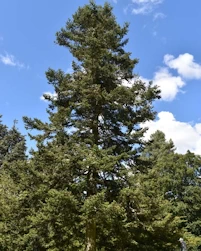 August 2024
 August 2024
 August 2024
Abies holophylla abies - from L. abeo - to rise, to go up, holos - whole, entire; phyllon -leaf (Greek).”
Needle Fir
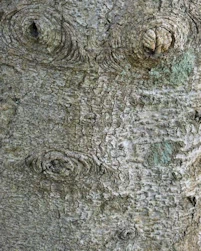
A.k.a. Manchurian fir, an evergreen coniferous tree growing to 30 m, native to mountainous regions of N Korea, S Ussuriland, and China. The cones are 12–14cm long, yellow-brown, and slightly tapering with a bluntly rounded apex. The scale bracts are hidden under the cone scales. The seeds have a wedge-shaped wing; they are released after the cones disintegrate at maturity in October.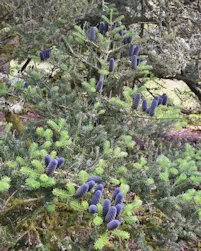 August 2024
 August 2024
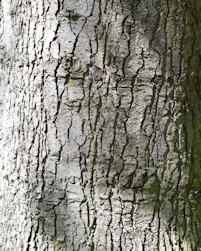
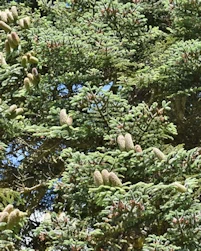
Abies Koreana abies - from L. abeo - to rise, to go up, koreana - from Korea
Korean fir
Compact evergreen conical tree to 18 m, native to the higher mountains of S Korea, with thick dark green needles, slightly notched at the tip, with white bands of stomata beneath. The cones are cylindrical blue or purple cones, some with protruding green or yellow bracts, often borne on young trees. The leaf arrangement is spiral on the shoot, but with each leaf variably twisted at the base so they lie mostly either side of and above the shoot, with fewer below the shoot.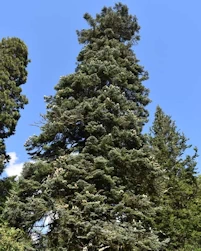 August 2024
 August 2024
 August 2024
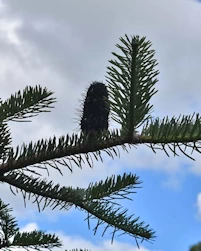
Abies procera abies - from L. abeo - to rise, to go up; procera - tall or long
Noble fir
The Majestic Tree Trail label says: Noble fir is restricted to the Cascade Mountains of Oregon and Washington. This large conifer was discovered in 1825 by the Scottish plant hunter David Douglas. In Scotland the noble fir thrives in wet conditions and poor acidic soils. As a result it has come to be an important component of plantation forestry in western Scotland. A form with blue needles is a popular garden ornamental.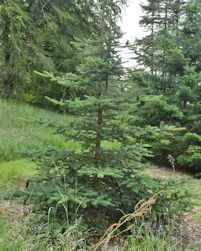 August 2024
 August 2024
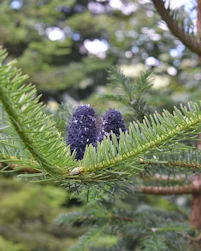 August 2024
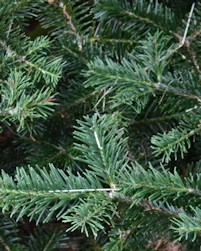 August 2024
Abies recurvata ernestii abies - from L. abeo - to rise, to go up; recurvata - curved back, ernestii - after botanist Ernest Henry Wilson
Min fir
A.k.a. Minjiang fir, a small to medium-sized tree mostly with conical crown, occasionally reaching a height of 40 m, found only in China, where its wild population is classed as vulnerable. It was heavily exploited until recently when the Chinese government finally decided to preserve its remaining old growth forests in the western provinces. Its timber was used mainly for construction and carpentry work. Its bark is smooth grey or rusty brown, at first shedding in thin plates, becoming greyish-brown and detaching in thick plates with age. The variety a. ernestii was introduced to cultivation when Ernest Wilson sent material from Sichuan in 1903.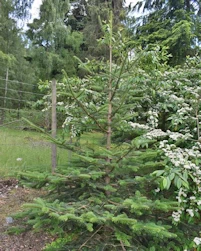 August 2024
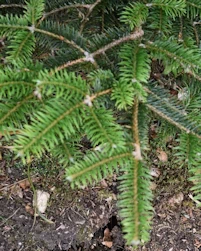 August 2024
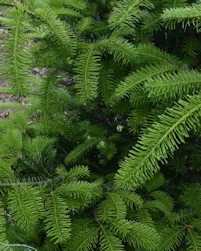
Abies squamata abies - from L. abeo - to rise, to go up; squamatus - scaly, referring to the flaky, distinctive bark of the tree.
Flaky fir
The Majestic Tree Trail label says: Flaky fir is a high mountain conifer from western China. With populations extending as high as 4,500 m, this tree forms some of the highest altitude forests known. Although the inaccessibility of this species makes logging difficult, slow recovery from such activity means that this species is regarded as 'Vulnerable' according to the IUCN Red List of Threatened Plants International Union for Conservation of Nature. . The Chinese Government has now placed a ban on further logging. August 2024
 August 2024
Abies veitchiiabies - from L. abeo - to rise, to go up; veitchii - after British horticulturalist John Gould Veitch
Veitch's fir
A.k.a. Veitch's silver-fir, a coniferous evergreen tree growing at a fast rate to 25–30 m, native to Japan from the islands of Honshū and Shikoku. The cone is purple-brown, cylindrical, 4–7 cm long and tapers slightly. The cones are upright and have slightly exserted and reflexed yellow-green bracts. The bark is smooth and light grey, and has resin blisters characteristic of many firs. There are two varieties - this one, which is A. veitchii var. veitchii, and a. veitchii var. sikokiana (Nakai) Kusaka. The wood is sturdy and elastic, and is used in construction, boxes, utensils, and spindles.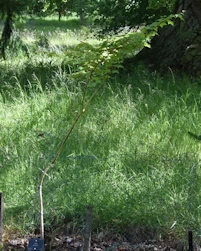 August 2024
 August 2024
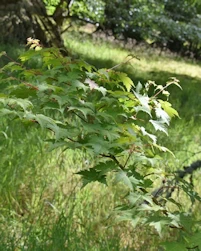
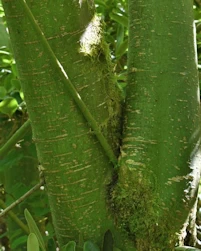
Acer australe acer - maple; australe - southern;
Butterfly maple
A variety of a. tschonoskii, which is a deciduous shrub or tree 10–13 m in the wild. It has grey-brown bark with reddish-brown inconspicuously striped branches. Flowers are yellowish-green, usually androdioecious bearing only male (staminate) flowers on some plants and either bisexual or both male (staminate) and female (pistillate) flowers on other plants. , with obovate petals, slightly shorter than, or as long as, sepals. Var. australe has flowers with sepals as long as petals, it also has smaller fruits and caudate-acuminate tapering into a long, tail-like extension at the apex. leaf lobes.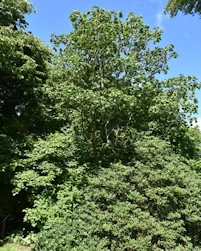 August 2024
 August 2024
 August 2024
 August 2024
 August 2024
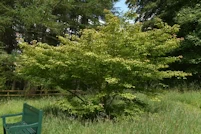
Acer circinatum acer - maple; circinatum - rounded, circular (relating to the shape of the leaves)
Vine maple
Native to NW North America, typically growing as a low-elevation coastal tree in temperate areas of high precipitation. It grows as a many-stemmed shrub-like tree to between 5 and 8 m, occasionally more. It produces a single flower a flower that produces one fruit with dark red sepals and 5 yellow petals. The David Douglas Tree Trail label says: AUTUMN'S ALARM CLOCK This is a talented specimen; early starter, stunning looks and very useful. In late summer this small, multi-stemmed tree is the first in the Garden to show signs of autumn. Although an early bird it is not short on quality. Like many of its maple relatives, t boasts a blaze of autumn foliage. In America the vine maple is called the basket tree. Its long, straight shoots are easily split and ideal for weaving. Every year, it is always exactly the same vine maple branch that first signals autumn's approach. August 2024
 August 2024
Acer cissifolium acer - maple; cissifolium - resembling the leaves of cissus, a genus in the vine family
Ivy-leaved maple
A fairly small deciduous tree growing to 10 m, native to mountainous areas of Japan. Initial growth is upright oval, with age it becomes distinctly mushroom-like with a wide-spreading, globose form. In spring long catkins appear and are followed by two winged samaras spreading at an acute angle. It is dioecious male and female flowers are on separate trees. The leaves turn a modest yellow to red in autumn. The bark is smooth and grey. August 2024
 August 2024
 August 2024
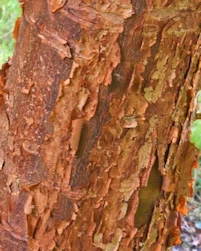
Acer griseum acer - maple; griseum from L. griseus - grey, referring to the undersides of the leaves
Paper bark maple
A.k.a. blood-bark maple, a small to medium-sized, deciduous, oval rounded tree reaching 6–9 m, with slender upright branching, native to mixed forests in C China. The yellow flowers are androdioecious bearing only male (staminate) flowers on some plants and either bisexual or both male (staminate) and female (pistillate) flowers on other plants. , produced in small pendent corymbs in spring, the fruit being a paired samara with two winged seeds about 1cm long with a 3cm wing. August 2024
 August 2024
Acer heldreichii acer - maple; heldreichii - after German botanist Theodor Heinrich Hermann von Heldreich (1822-1902)
Greek maple
A.k.a. Balkan maple, native to Albania, Bosnia Herzegovina, Bulgaria, Greece, Macedonia, Montenegro and Serbia. A deciduous tree growing to 25 m or more in the wild. The leaves are chartaceous a texture similar to stiff paper or parchment, thickly membranous , broadly pentagonal to rectangular in outline, with a truncate base, 5-lobed, deeply dissected. The upper surface is dark green, lower surface paler, glabrous free from hair or down; smooth. . Autumn colours are yellow to brown. The inflorescence in May is terminal, large, corymbose a type of inflorescence in which the lower flowers have longer pedicels than the upper ones, creating a flat-topped appearance. , somewhat erect, with few to many yellow flowers. August 2024
 August 2024
 August 2024
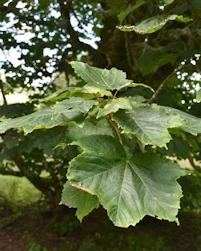
Acer mono
Painted maple
A.k.a. a. pictum and a. pictum subsp. mono acer - maple; mono - from Mono County, California; pictum - painted or brightly coloured, referring to the autumn leaves . A deciduous tree growing slowly to 20 m, native to China, Korea, Japan, Mongolia and E Russia. It is monoecious individual flowers are either male or female, but both sexes can be found on the same plant , in flower from April to May, and the seeds ripen into samaras a winged achene, a type of fruit in which a flattened wing of fibrous, papery tissue develops from the ovary wall. in horizontal to upright clusters, each pair usually wide spreading, but the angle can vary from horizontal to parallel or even overlapping.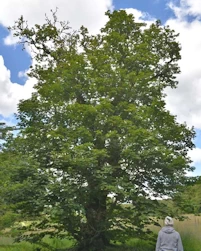 August 2024
 August 2024
 August 2024
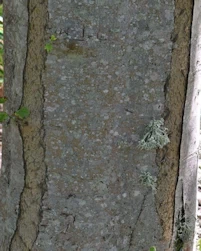
Acer pseudoplatanus acer - maple; pseudoplatanus - false plane, referring to a superficial similarity of leaves and bark to those of plane trees (genus platanus)
Sycamore
The Scottish Tree Trail label says: (Gaelic: sice). Although common in Scottish woods, the sycamore is an introduction from Europe, probably by the Romans. The wood of this large aple has many traditional uses. The rounded stems provided rollers in early textile mills; they are also readily turned to make chair legs. The characteristic winged seed are typical of all maples and are often called 'helicopters'. August 2024
 August 2024
 August 2024
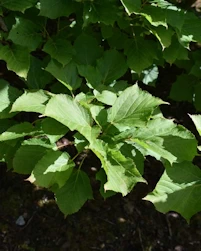
Acer rubrumacer- maple; rubrum - red, referencing the colour of the flowers, buds, and autumn foliage. (L.)
Red maple
A.k.a. swamp maple or water maple, a common native of E and C America, growing to 30 m. Its flowers, petioles, twigs, and seeds are all red to varying degrees, plus brilliant deep scarlet foliage in autumn. The red, 5-petalled flowers are generally unisexual, with male and female flowers appearing in separate sessile without a stem (usually of leaves, or acorns). Literally 'fixed in one place, immobile' clusters in late winter to early spring. The tree is polygamodioecious some individuals are male, some female, and some monoecious . Staminate male flowers are sessile, pistillate female flowers are borne on pedicels a small stalk bearing an individual flower in an inflorescence that grow out while the flowers are blooming. Fruits are a schizocarp fruits in which each carpel of a compound ovary splits apart to form two or more parts, each with a single seed. of 2 samaras a winged achene, a type of fruit in which a flattened wing of fibrous, papery tissue develops from the ovary wall, each one 15-25 mm long, wings diverging at an angle of 50 to 60°.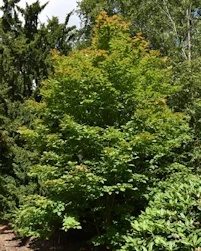 August 2024
 August 2024
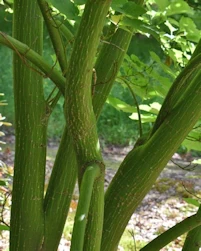 August 2024
Acer rufinerve acer - maple, rufinerve - red vein, referring to the reddish down on the veins (L.)
Grey snake-bark maple
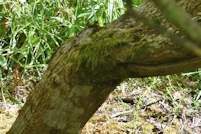
A.k.a. red-vein maple or Honshū maple, (Japanese: ウリハダカエデ urihadakaede, " melon-skin maple referring to the bark pattern "), a small deciduous tree growing to a height of 8–15 m, native to the mountain forests of Japan. It is dioecious male and female flowers on separate trees The flowers are produced in racemes 10 cm long, with 5 greenish-yellow sepals and petals, followed by a paired samara a winged achene, a type of fruit in which a flattened wing of fibrous, papery tissue develops from the ovary wall. 2–3 cm long with rounded nutlets.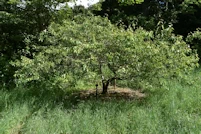 August 2024
 August 2024
 August 2024
Acer tataricum ginnala acer - maple, tataricum - of the Tatar people (area of Siberia and Mongolia) ginnala - native name in China and Japan (?)
Amur maple
A.k.a. Acer tataricum subsp. ginnala, Tatar maple, a deciduous spreading shrub or small tree growing to 3–10 m, native to NE Asia. The flowers are yellow-green, 5–8 mm diameter, produced in spreading panicles in spring as the leaves open. The fruit is a paired reddish samara, maturing in late summer to early autumn. Amur maple is treated either as a subspecies of A. tataricum or as a distinct species in its own right (a. ginnala). August 2024
 August 2024
 August 2024
Aesculus hippocastanum aesculus - an old Latin name for oak or mast bearing tree (or possibly an edible acorn); hipposcastanum - from Greek hippos - horse and kastanos - chestnut, reflecting similarity of the two unrelated species' nuts. Horse could be due to a medicinal use with horses (doubtful), or the older meaning of horse as 'strong'.
Horse chestnut
A.k.a. buckeye and conker tree. A large tree, growing to 39 m with a domed crown of stout branches, native to the Balkans. On old trees, the outer branches are often pendulous with curled-up tips. The , complete with seven "nails". The flowers are usually white with a yellow to pink blotch at the base of the petals; they are produced in spring in erect panicles a loose branching cluster of flowers 10–30 cm tall with 20–50 flowers on each panicle, from which 1-5 conkers develop in green, spiky capsules. Each conker is 2–4 cm in diameter, glossy nut-brown with a whitish scar at the base.[Wikipedia] August 2024
 August 2024
 August 2024
Araucaria araucana araucaria - after a region of Chile; araucana - the native tribe who used the tree's seeds for food.
Monkey puzzle
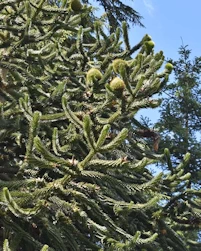
A.k.a. monkey tail tree, pewen, pehuen pine or piñonero, an evergreen tree growing to 30–40 m, native to C and S Chile and W Argentina. It is on the IUCN list as endangered in its native region due to logging, forest fires, and grazing. It is usually dioecious male and female cones on separate trees . The male (pollen) cones are oblong and cucumber-shaped. It is wind pollinated. The bark can be up to 15 cm thick, possibly an adaptation to resist wildfires.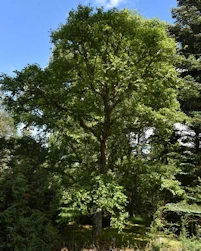 August 2024
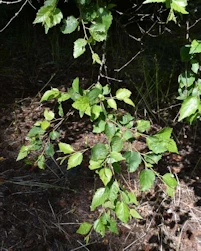 August 2024
 August 2024
Betula dahurica betula - birch, dahurica, from the region of Davuria (Dahuria) in SE Siberia and NE Mongolia
Daur's birch
A.k.a. b. davurica, Dahurian birch, or Asian black birch, a medium sized deciduous tree growing to 20 m, native to China, Japan, Korea, E Mongolia, and Russian Far East. Tiny monoecious flowers are contained in drooping, brownish male catkins and smaller, upright, greenish female catkins, both of which appear in spring on the same tree. Most birches are self-incompatible, however, so two trees are needed to achieve production of seed. Female flowers are followed by drooping cone-like fruits containing numerous, small, winged seeds that typically mature in late summer. August 2024
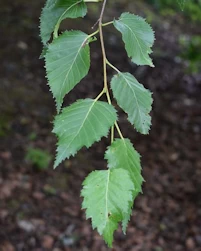 August 2024
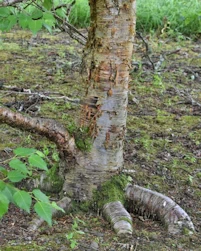 August 2024
Betula ermanii betula - birch, derived from the Gaulish betu- meaning bitumen or asphalt, referring to the tar extracted from birches; ermanii - after German natural scientist George Adolph Erman
Erman's birch
A.k.a. Russian rock birch, an extremely variable species growing to 20 m, found in NE China, Korea, Japan, and Russian Far East. It is Yellow-brown male catkins appear with the leaves in spring. The bright green, heart-shaped leaves are often the first to emerge in spring gardens, and first to fall in the autumn, turning a bright and clear yellow before they fall. If the central leader is retained, it retains a tidy, conical, pyramidal shape as it matures. August 2024
 August 2024
Betula pubescensbetula - birch, derived from the Gaulish betu- meaning bitumen or asphalt, referring to the tar extracted from birches; pubescens - covered with soft, short hairs; glabrata glabrata - smooth, lacking hairs (on the leaves in this variety)
Smooth-leaved downy birch
A.k.a. B. pubescens var. pubescens, moor birch, white birch, European white birch, or hairy birch, a native of N Europe and N Asia, growing further north than any other broadleaf tree. Young trees have smooth, silvery-white bark that darkens and develops horizontal lenticels as they mature. Young twigs are characteristically hairy, which is where the tree earns its name. It produces both male and female catkins on the same tree (monoecious).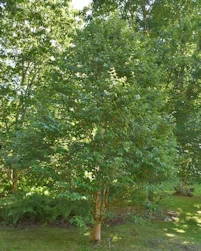 August 2024
 August 2024
 August 2024
Betula utilis jacquemontii betula - birch, derived from the Gaulish betu- meaning bitumen or asphalt, referring to the tar extracted from birches; utilis - useful, referring to the many uses of the tree; jacquemontii - honouring the French naturalist Victor Jacquemont
Himalayan birch
A.k.a. Himalayan birch, white-barked Himalayan birch or Indian paper birch, a fast growing, deciduous tree reaching 15 - 20 m, native to W Himalayas. It is graceful in appearance and offering light dappled shade with its open, conical crown. In spring, yellow catkins appear, closely followed by dark green ovate leaves. In autumn, the foliage turns golden yellow before falling. August 2024
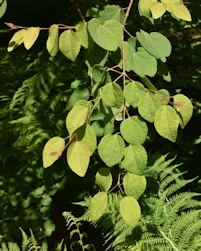 August 2024
 August 2024
Cercidiphyllum japonicum cercidiphyllum: Greek Cercis - redbud and phyllon -leaf, referring to the leaf shape's resemblance to the redbud genus cercis; japonicum - of Japan;
Katsura tree Katsura - Japanese name for the tree (カツラ, 桂).
A.k.a. caramel tree for the light caramel smell it emits during leaf fall, and candyfloss tree because of the scent. A deciduous tree growing 10–45 m tall, a native of Japan and E China. The flowers are inconspicuous and produced in early spring among the opening leaves, with male and female flowers on separate plants (dioecious). The fruit is a cluster of two to four follicles a dry, dehiscent fruit derived from a single carpel that splits open along one side (a single suture) to release its seeds. , each containing several winged seeds. August 2024
 August 2024
Cercidiphyllum cercidiphyllum: Greek Cercis - redbud and phyllon -leaf, referring to the leaf shape's resemblance to the redbud genus cercis; magnificum magnificum - magnificent, large (relating to the leaves);
Large-leaf KatsuraKatsura - Japanese name for the tree (カツラ, 桂).
A.k.a. caramel tree for the burnt sugar smell it emits during leaf fall, and candyfloss tree because of the scent. This variety is smaller that c. japonicum, only reaching 10 m; only native to Japan, not China. The species is dioecious having separate male and female trees , with small inconspicuous flowers appearing early in spring that are wind pollinated. The flowers lack petals, the male being reddish and the female greenish. Female trees produce woody, pod-like fruit in clusters of 2–4, each about 1–2 cm long. The pods contain many small flattened seeds that are winged at both ends. August 2024
Clethra barbinervis Greek klethra - alder, (the leaves resemble alder but it is not related) barbinervis - barbed or bearded veins;
Japanese clethra
An upright shrub growing to 3 m, native to E Asia, where it is found in open mountain forests of S China, Korea, and Japan. Its leaves are deciduous, dark green, and are 5 cm long. Racemes of small, fragrant, white flowers 15 cm long are produced in late summer and autumn. Mature specimens have peeling bark. The bark is plain, blackish brown with twigs turning back. August 2024
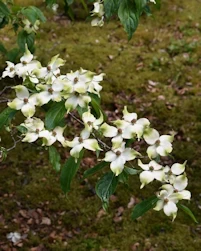 August 2024
Cornus kousa Latin Cornus - horn, from the cornel tree, (not clear) kousa - the Japanese name for the tree
Kousa dogwood possibly from dagwood - dags being sharp skewers, which the dogwood could furnish (cf. dagger)
A.k.a. Chinese dogwood, Korean dogwood, or Japanese dogwood. A small deciduous tree growing 8–12 m, native to E Asia including Korea, China and Japan. Like other Cornus, C. kousa has opposite, simple leaves, 4–10 cm long. The fruit is a globose red compound berry 2–3 cm in diameter. It is edible, with a sweet and creamy flavour, and is sometimes use.d for making wine.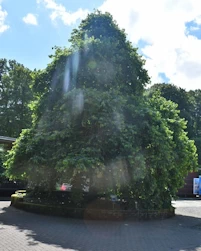 August 2024
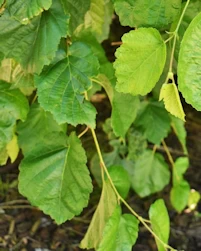 August 2024
Corylus Colurna Greek Korylos -hazelnut Colurna - Latinised name of the Turkish hazel
Turkish hazel
The information board says: This tree was first planted in the Royal Botanic Gardens Edinburgh, as part of a collection of street trees being trialled for training. It was then transplanted to Dawyck where it was tended to carefully, surviving - with careful protection - the building works as the Visitor Centre was developed through 2007-8. This is a true hazel, bearing nuts not unlike our British cobs - but smaller and lacking their taste - and surrounded by a softly spiny husk. Native across south east Europe and into western Asia, it is indeed found in Turkey. Its characteristic pendulous yellow catkins appear in late winter, with the nuts maturing in autumn as the leaves fade to a lustrous yellow. Its elegant conical shape and thick corky bark are features that can be admired year round. Although its nuts are inferior, Turkish hazel is important to commercial hazelnut production. Its non-suckering habit makes it an ideal rootstock for orchards, onto which to graft the common hazel cultivars.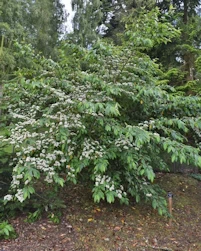 August 2024
 August 2024
Cotoneaster cornubia cotoneum - Latin name for quince, aster, 'resembling'; cornubia - the Latin name for Cornwall, though the cross was raised in Exbury, Hampshire.
Cotoneaster cornubia
A.k.a. c. x watereri - in honour of English horticulturalist and explorer Anthony Waterer cornubia, c. frigidus cornubia, a vigorous, arching semi-evergreen shrub or tree to 6m, native to the Himalayas. White summer flower clusters are followed by heavy trusses of large, bright red berries. Although the flowers are not particularly pleasant smelling, they attract beneficial insects, and the berries are appealing to birds.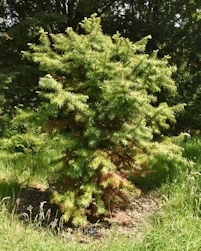 August 2024
 August 2024
Cunninghamii konishii Cunningham - after both Allan Cunningham (botanist) and Dr. James Cunningham, (British doctor who introduced the trees into cultivation in 1702); konishii - probably after a Japanese plantsman N.Konishi, possibly with its Japanese meaning 'small west'.
Taiwan cunninghamia
A large evergreen tree native to SE China, Taiwan, Laos and Vietnam. of large size with reddish-brown bark. It differs from C. lanceolata by the leaves of adult trees being much smaller, in their standing out all round the branches, and in their having stomata on both surfaces in the adult state; they are said to persist on the branches for eight years instead of about five as in C. lanceolata. The ovoid-conical cones, too, are considerably smaller. It thrives less well in cultivation. August 2024
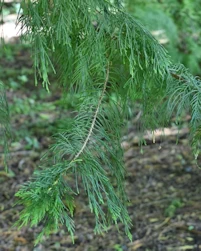 August 2024
 August 2024
Cuprocyparis Cupro - from cupressus, Latin for cypress tree, the first of the hybrid's parents; cyparis - from Chamaecyparis, the second parent tree leylandii Leyland Christopher Leyland owned Leighton Hall where the hybrid was first found.
Leyland cypress
A.k.a. Cupressus × leylandii, or × Cupressocyparis leylandii, often referred to simply as leylandii, a fast-growing coniferous evergreen tree much used in horticulture, primarily for hedging. Even on poor sites plants have been known to grow to heights of 15 m at a metre per year, eventually reaching 25m. Their rapid, thick growth means they are sometimes used to achieve privacy, but such use can result in disputes with neighbours whose own property becomes overshadowed. The tree is a hybrid of Monterey cypress (Cupressus macrocarpa) and Nootka cypress (Cupressus nootkatensis). It is almost always sterile, and is propagated mainly by cuttings. Cones are 2 cm in length, with 8 scales and 5 seeds with tiny resinous vesicles a small, bladder-like sac or cavity, often filled with air or liquid. August 2024
 August 2024
 August 2024
 August 2024
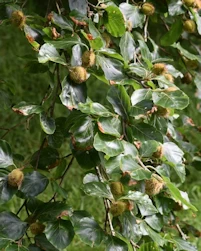
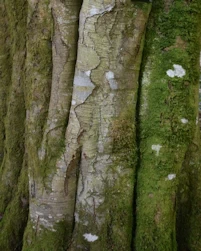
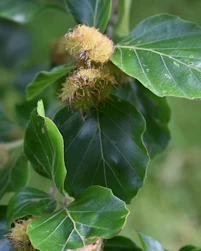
Fagus sylvatica Fagus - Latin for beech; sylvatica -from Latin silvanus, of the forest
Beech
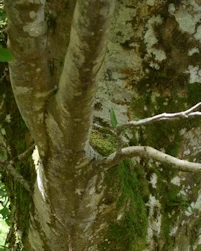
Native across Europe, growing to a height of more than 40 m and develop a huge domed crown. The reddish brown, torpedo-shaped leaf buds form on short stalks and have a distinctive criss-cross pattern. Beech is monoeciousboth male and female flowers grow on the same tree . In April and May the tassel-like male catkins hang from long stalks at the end of twigs, while female flowers grow in pairs, surrounded by a cup. Beech woodland is shady and characterised by a dense carpet of fallen leaves and mast husks which prevent most woodland plants from growing. Only specialist shade-tolerant plants can survive beneath a beech canopy.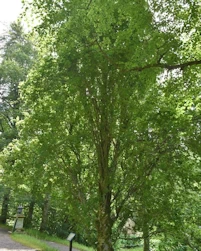 August 2024
 August 2024
 August 2024
 August 2024
 August 2024
Fagus sylvatica Dawyck Fagus - Latin for beech; sylvatica -from Latin silvanus, of the forest Dawyck - hybrid found at Dawyck
Dawyck Beech
The information board says: This unusual upright form of the common European beech (Fagus sylvatica) was found by chance in the woodlands here at Dawyck during Naesmyths' tenure of the estat in the first part of the 19th century. Replanted to this location, closer to the house, this mother of all Dawyck beeches is now over 29m tall. It was from this plant in the early 20th century that new owner F R S Balfour began to make grafts and disribute material to other growers and eventually into the commercial nursery trade. As a result of his endeavours the tree became more widely cultivated and, in 1912, the clone was formally named Fagus sylvatica Dawyck. Such propogation of the Dawyck beech is the only way to perpetuate the unique character of this tree, which will not breed true from seed. A number of smaller specimens derived from the Dawyck original can be seen growing in various parts of the Garden, including at the car par entrance (17.5m tall) and on the south embankment above the Dutch Bridge (19m tall). Garden Delights The unusual architecture, with its restricted space requirement, has made the Dawyck beech a popular form to grow in gardens. In the late 20th century a Dutch nurseryman managed to generate both golden F. sylvatica Dawyck Gold - characterised by bright golden young leaves in spring, and purple Dawyck Purple - distinguished by striking deep purple foliage. All three forms received the RHS Award of Merit in 2002.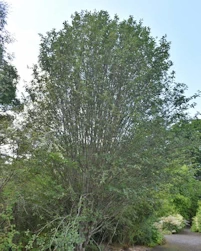 August 2024
 August 2024
 August 2024
 August 2024
Hedlundia pseudofennica Hedlundia - after Swedish botanist Josef Teodor Hendlund; pseudofennica - false Finnish, as it resembles a sorbus native to Finland
Arran service-tree thought to derive from the Latin word for beer, cervisia because the fruits were used by the Romans to flavour beer.
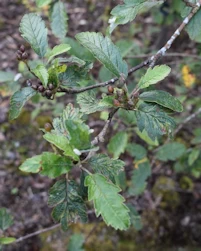
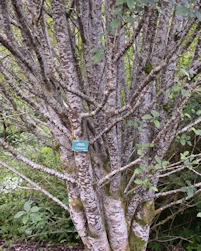
A.k.a. Arran cut-leaved whitebeam, a rare tree endemic to the Isle of Arran in Scotland, threatened by habitat loss. It is thought to be a naturally occurring hybrid between H. arranensis and Sorbus aucuparia. Hedlundia arranensis is itself a hybrid between Aria rupicola and sorbus aucuparia. Apomixis asexual development of seed or embryo without fertilization and hybridisation are common in some groups of sorbus species.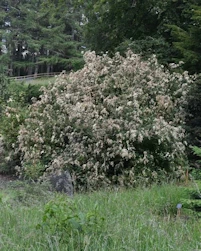 August 2024
 August 2024
 August 2024
Holodiscus discolor var.franciscus Holodiscus - from Greek holo - whole; discus - disc; referring to the unlobed disc lining the hypanthium. discolor: dis - two; color - colour; referring to the different colouring of the upper and lower surface of the leaf
Oceanspray - relating to the cascades of cream coloured flowers
A.k.a. creambush - relating to the cascades of cream coloured flowers , or ironwood, a shrub native to W North America growing to 2 m, a common understory shrub in woodlands. It is of special value as a pollinator plant for native bees and butterflies. Historically raw and cooked seeds were eaten, and leaves were used as seasoning. Noted for the strength of its wood, it was often used for making digging sticks, spears, arrows, bows, harpoons and nails.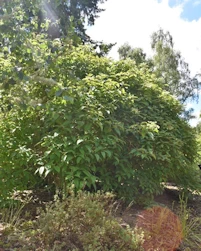 August 2024
 August 2024
Hydrangea heteromalla Hydrangea: Derived from the Greek words hydor meaning water and aggeion meaning vessel. The name refers to the shape of the seed capsules, which resemble cups or jars. heteromalla comes from the Greek words heteros meaning another or different and mallos meaning wool. This refers to the leaves, which are covered in a dense, woolly layer of hairs (tomentose).
Woolly hydrangea
A.k.a. Himalayan hydrangea or Chinese hydrangea. A large shrub or small tree native to the Himalayas and China, growing to 5m in cultivation. It bears broad flat flower heads from late spring to early summer, with loose clusters of small true flowers surrounded by larger florets, usually white but sometimes turning pink as they mature. August 2024
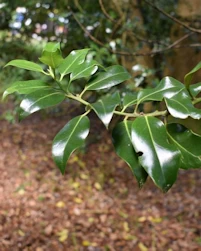 August 2024
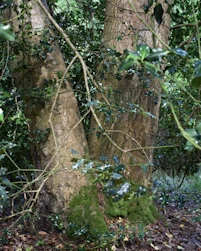 August 2024
Ilex aquifolium Ilex: Derived from the Latin word for holm-oak, which it resembles. aquifolium comes from acus meaning needle and folium meaning leaf..
Holly
The Scottish Tree Trail information board says: Holly. (Gaelic: cuileann) With its prickly evergreen leaves, holly is possibly the easiest Scottish tree to recognise, although in mature trees the leaves can be quite smooth. It occurs naturally as an understory in deciduous woodlands. Its clean white wood is popular for use as inlays in furntiure making. Holly has separate male and female plants, with only the female bearing the lustrous red berries that have become a part of midwinter and Christmas festive decorations.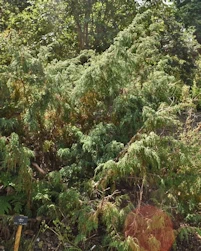 August 2024
 August 2024
Juniperus recurva Juniperus - derived from the Latin/Greek word for the tree; recurva - means bent backwards, referring to the drooping branches
Himalayan juniper
A.k.a. drooping juniper, a large shrub or small tree growing to 20 m, native to the Himalaya, from N Pakistan, through India, Nepal and Bhutan, to SW China. It is usually broadly pyramidal in shape, and clothed to the ground with branches, which are curved downwards at the ends. The glossy blue-black cones are berry-like, globose to ovoid, containing one seed, maturing over 18 months. The small male cones shed their pollen in early spring. It is largely monoecious pollen and seed cones produced on the same plants . August 2024
 August 2024
Juniperus squamata Juniperus - derived from the Latin/Greek word for the tree; squamata - means scaly or flaky, referring to the leaves and bark
Himalayan juniper
A.k.a. flaky juniper. An evergreen shrub or small tree growing to 10 m, native to Himalaya and China. with flaky brown bark,. The cones are glossy black berry-like, globose to ovoid, containing one seed, which matures in about 18 months. The small male cones shed their pollen in early spring. It is largely dioecious pollen and seed cones produced on separate plants . August 2024
 August 2024
Kalopanax septemlobus Kalopanax - unkown origin; septemlobus - means seven lobes, referring to the leaves maximowiczii - after Russian botanist Carl Maximowicz
Tree Aralia
A.k.a. castor oil tree, Prickly castor oil tree The thick twigs are covered with sharp spines when young. A medium to large sized tree growing to 10-15 m, The individual flowers are arranged in globular bundles, which together form panicles loose branching clusters of flowers 30 cm long and wide, followed by small blue-black berries. The trunk can be 1m diameter, usually single-stemmed but prone to suckering in disturbed ground. The bark is thick, grey-brown, soon developing longitudinal ridges, prominently ridged and furrowed on old trees.. August 2024
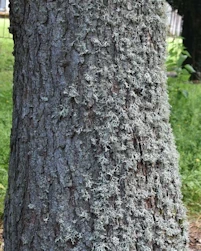 August 2024
Larix - the Latin name for larch; principis-rupprechtii - after Prince Rupprecht of Bavaria, a keen botanist who collected this particular larch variety.
Prince Rupprecht's larch
A.k.a. Larix gmelinii - after botanist Johann Georg Gmelin var. principis-rupprechtii, is a vigorous form of larch native to the mountainous regions of the Shanxi and Hebei provinces of N China. In the wild, it grows to 20m, with a broad conic but open crown and horizontal branching. Bright green needles 3 cm long in brush-like clusters appear at the ends of spur-like shoots along the branches. Cones slightly larger than the species emerge purple but mature to light brown. August 2024
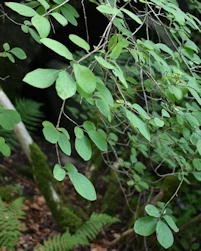 August 2024
Lonicera xylosteum - lonicera - after German botanist Adam Lonicera (1528 – 1586) ; xylon - wood, osteum - bone, referring to the bone like stems
Fly honeysuckle
A.k.a. European fly honeysuckle, dwarf honeysuckle, or fly woodbine; a dense, bushy, deciduous shrub, growing to 3m. It bears small, tubular, two-lipped, unscented creamy-white flowers in pairs along the shoots in late spring and early summer, followed by showy red, or rarely yellow, berries. It is native to Europe, Asia Minor, and W. Siberia, found wild in parts of S.E. England, where it may be a true native. August 2024
 August 2024
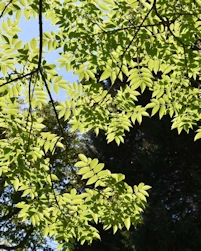
Metasequoia - meta - changed or transformed; so the genus name means like a sequoia glyptostroboides - oides is a Greek suffix meaning resembling, so the tree resembles glyptostrobus, the Chinese swamp cypress (glypto - carved, grooved, strobus - cone).
Dawn redwood
A vigorous, fast-growing deciduous conifer with fibrous, orange-brown bark, making a large, narrowly conical tree to 25m tall. The globose pollen cones are 5–6 mm long, produced on long spikes in early spring, but only on trees growing in regions with hot summers. Older trees may form wide buttresses on the lower trunk. , and distinctive "armpits" under each branch. The bark is vertically fissured and tends to exfoliate in ribbon-like strips.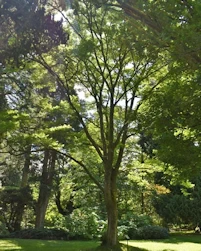 August 2024
 August 2024
 August 2024
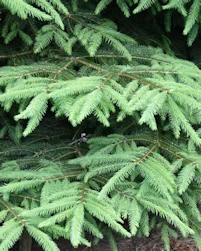
Phellodendron chinensis - from Greek phellos - cork, dendron - tree; chinensis - from China
Chinese cork tree
A deciduous tree growing to 10m, native to C China, with young shoots at first thinly downy, brown and glabrous the second year. Flowers are small, yellowish green, crowded on a short, very downy panicle, followed by black, globose, aromatic fruits. It is known as Huang Bai in China, as is the bark, a fundamental herb in traditional Chinese medicine. August 2024
 August 2024
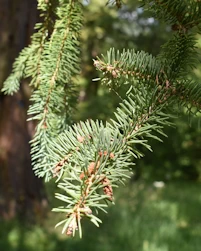
Picea abies picea- from Latin pix - pitch, meaning pitch pine, abies - from the Latin for fir tree, referring to the tree's original classification or similarity to a fir
Norway spruce
A fast-growing evergreen conifer which can reach 40m and live for up to 1,000 years. They are tall and straight and of a triangular appearance, with a pointed crown. The young bark is a coppery grey-brown and appears smooth, but is rough with papery scales. Mature trees have dark purple-brown bark, with cracks and small plates. Twigs are orange-brown, grooved and hairless. Male flowers consist of clusters of stamens, which turn from red to yellow in spring when laden with pollen. Female flowers are red, upright and oval, and tend to form at the top of the tree. Once pollinated by wind, female flowers turn green and enlarge to become red-brown cones with diamond-shaped, rounded scales. Seeds are released in spring. [Woodland Trust] August 2024
 August 2024
 August 2024
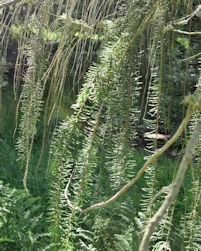
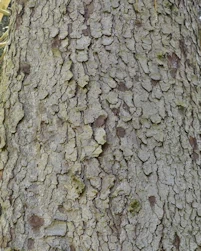
Picea asperata picea- from Latin pix - pitch, meaning pitch pine, aspera - rough, sharp, or sour, which likely refers to the needles being sharp and stiff.
Dragon spruce
A medium-sized evergreen tree growing to 25–40 m, with a trunk diameter of up to 1.5 m, native to W China. The cones are cylindric-conic, 6–15 cm long maturing pale brown 5–7 months after pollination, and have stiff, rounded scales.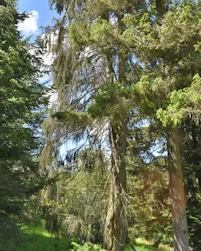 August 2024
 August 2024
 August 2024
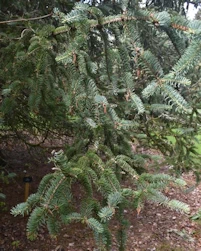
Picea breweriana picea- from Latin pix - pitch, meaning pitch pine, breweriana - honours William Henry Brewer (1828-1910), American botanist and professor of agriculture at Yale.
Brewer's spruce
A.k.a. Brewer's weeping spruce, or weeping spruce, a slow-growing large evergreen conifer growing to 20–40 m with a trunk diameter of up to 1.5 m, native to W North America, where it is one of the rarest on the continent. The pendulous foliage only develops when the tree grows to about 1.5–2 m tall; young trees smaller than this are open-crowned with sparse, level branchlets. The cones are longer than most other North American spruces, pendulous, cylindrical, 8–15 centimetres long. Immature cones are dark purple, maturing red-brown 5–7 months after pollination.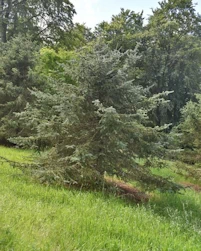 August 2024
 August 2024
Picea crassifolia picea- from Latin pix - pitch, meaning pitch pine, crassifolia - from Latin crassus - thick, folia -leaf, reflecting the nature of the needles.
Qinghai an inland province of NW China spruce
An evergreen conifer growing to 25 m, native to China, with a pyramidal or conical crown, becoming rather open in mature trees. The bark is orange-brown, smooth then flaking in young trees, becoming red-brown, rough and scaly in older trees. Cones are terminal, solitary, sessile, ovoid-oblong or cylindrical, initially green to purplish red, later green with purple margins to seed scales.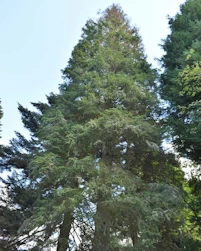 August 2024
 August 2024
 August 2024
Picea engelmannii picea- from Latin pix - pitch, meaning pitch pine, Engelmannii - a patronym, honouring George Engelmann (1809-1884), a German-born physician and botanist who lived in St. Louis.
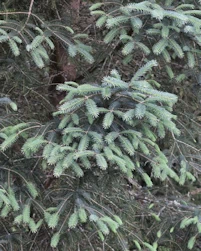
Englemann's spruce
A.k.a. silver spruce, white spruce, mountain spruce, épinette d'Engelmann (Canadian French), pino real (Spanish). A large coniferous tree growing to 60 m, native to W North America, with a narrowly conical crown. Seed cones are deep purple, ripening to buff-brown, 7 cm long, with diamond-shaped scales. The wood is highly prized for producing distinctive tone wood for acoustic guitars and other instruments. August 2024
 August 2024
 August 2024
 August 2024
Picea likiangensis picea- from Latin pix - pitch, meaning pitch pine, likiangensis - refers to the Lijiang range in Yunnan, W China, where the type specimen was collected by Delavay.
Lijiang spruce
A conical or columnar coniferous tree, growing to 25m tall, a native of Bhutan and China. Bark becomes grey and fissured with age. The ovoid cones, up to 10cm long, are red when young maturing to a pale brown. Its population has been reduced by 30% in 75 years by logging, and the species is therefore categorised as vulnerable by the IUCN International Union for Conservation of Nature. . Cones are ovoid, 6 cm long, with flexible scales. P. likiangensis pubescens is a variety characterized by its downy or hairy young shoots, cones, and other parts. August 2024
 August 2024
Picea purpurea picea - from Latin pix - pitch, meaning pitch pine, purpurea - purple, referring to the purple cones.
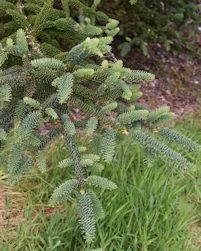
Purple cone spruce
A columnar, coniferous tree growing to 20m, native to China. It is likely to be a hybrid species produced by crosses between p. likiangensis and p. wilsonii. It has flaky, orange-brown bark divided into rather thin, scaly plates and produces ovoid, purple seed cones, which later turn brown. August 2024
 August 2024
Picea schrenkiana picea - from Latin pix - pitch, meaning pitch pine, schrenkiana - in honour of German/Russian botanist Alexander von Schrenk (1816–1876)
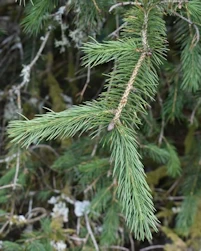
Schrenk's spruce
A.k.a Asian spruce, a large evergreen conifer growing to 40–50 m, native to Kazakhstan, Kyrgyzstan and W China. It has a narrow conical crown with level branches and sometimes pendulous branchlets. The cones are cylindrical to conical, up to 12 cm long, purple when young, with moderately stiff, smoothly rounded scales. August 2024
 August 2024
Picea smithiana picea - from Latin pix - pitch, meaning pitch pine, smithiana - after James Edward Smith (1759-1828), an English botanist and the founder of the Linnaean Society
Morinda the Nepalese name for the tree spruce
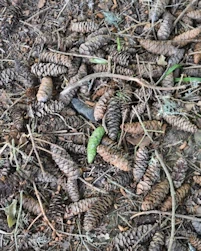
A.k.a West Himalayan spruce, a large evergreen conifer growing to 40–55 m. native to the W Himalaya and adjacent mountains. It has a conical crown with level branches and pendulous branchlets. The cones are cylindrical to conical, up to 16 cm long, green when young, maturing buff-brown, with stiff, smoothly rounded scales. August 2024
 August 2024
 August 2024
Picea maximowiczii picea - from Latin pix - pitch, meaning pitch pine, maximowiczii - after Russian botanist Carl Maximowicz (1827 - 1891)
Japanese bush spruce
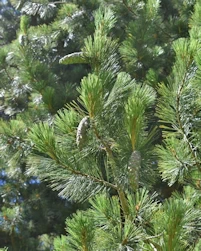
The Majestic Tree trail information board says: Maximowicz's spruce has a highly restricted distribution in central Honshu, Japan. This species has suffered from overexploitation and removal of native spruce forests in favour of larch plantations. It is currently listed on the IUCN Red List of Threatened Plants as Endangered IUCN - International Union for Conservation of Nature. Categories: EX, EW, CR, EN, VU, NT, CD, LC, DD, NE. ENdangered , but most of the remaining populations are now in protected areas. The name of this species honours the Russian botanist Carl Johann Maximowicz. August 2024
 August 2024
 August 2024
 August 2024
Pinus peuce pinus - Latin for pine; peuce - from Greek peuke, pine trees
Aspen
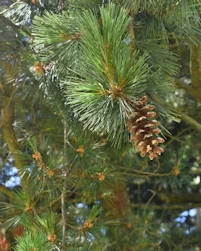
The Majestic Tree trail information board says: In common with many other members of the white pine group, Macedonian pine has long slender cones that hang downwards. This species is native to mountains in the southwest Balkans. White pine blister rust is a serious problem for North American white pines and Macedonian pine has been used in breeding programmes to introduce disease resistance. This species is only rarely used for timber production in Britain.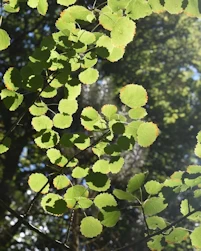 August 2024
Populus tremula populuss - Latin for poplar; tremula -Latin for trembling or shaking, reflecting the characteristic movement of the leaves.
Aspen
The Scottish Tree trail information board says: Aspen. (Gaelic: critheann). Populus tremula (Willow family). Aspen leaves tremble, even in the slightest breeze. This has given rise to many of its common names, including its Gaelic form, which means 'quivering one'. Old beliefs suggest that it had been cursed by the devil and so could never rest. The tree often occurs in grous derived from a 'suckering' root system The timber is of poor quality, but has been used for matches and basic crates.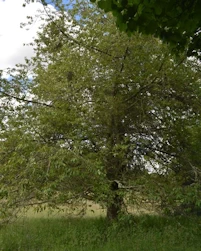 August 2024
 August 2024
 August 2024
Prunus avium prunus - Latin for plum tree; avium -rs referring to the birds that eat the cherries, hence the birds' plum tree.
Gean
The Scottish Tree trail information board says: Gean. (Gaelic: geanais). Prunus avium (Rose family). The gean is a familiar presence in natural decidusous woodland, where its leggy form and above all its loose clusters of creamy-white summer flowers make it very recognisable. It is often encountered in hedgerows and has been widely planted in many urban areas. Its beautiful timber is highly prized by furniture makers and it is often used as a veneer. It is also much sought after by the makers of musical instruments. It is commonly known as wild cherry or sweet cherry. August 2024
 August 2024
 August 2024
 August 2024
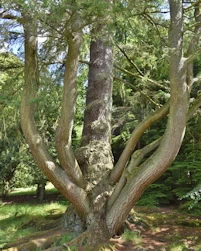
Pseudotsuga menziesii pseudo - Greek for false; tsuga -Japanese for hemlock; menziesii - after Scottish botanist Archibald Menzies (1754-1842).
Douglas fir - after Scottish botanist David Douglas, who introduced the tree to cultivation in Britain in 1827.
A tall, conical-shaped evergreen conifer that can grow to 55m and live for more than 1,000 years, native to W North America. The scales on cones are distinctive, with three pointed tips. When crushed, the leaves have a sweet resin smell. Its bark is non-flammable, offering good resistance to forest fires. August 2024
 August 2024
 August 2024
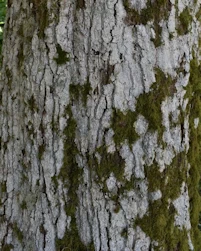
Quercus petraea quercus - Latin name for oak, derived from the Proto-Indo-European root kwerkwu; petraea - Latin, meaning of rocky places.
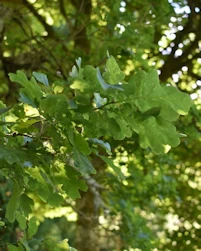
Sessile oak - Latin sessile - stalkless, referring to the acorns being directly attached to twigs at their base, without a peduncle
The Scottish Tree Trail information board says: SESSILE OAK (Gaelic: darach) Quercus petraea (Beech family). Oak is a very important tree in northern European mythology, representing strength and power. Our two native species are readily identified by the stalks of their fruit (acorns). Sessile oak has very short stalks; those of the English oak (Q robur), which occur in drier parts of eastern Scotland, are long. In the past oak was an important timber, used for ships, buildings and barrels.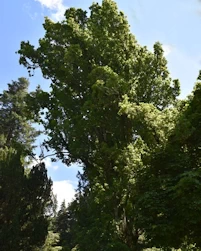 August 2024
 August 2024
 August 2024
Quercus robur fastigiata quercus - Latin name for oak, derived from the Proto-Indo-European root kwerkwu; robur - Latin for robust or strong, referencing the tree's sturdiness; fastigiata - from Latin fastigo meaning pointed or upright, which describes the tree's characteristic columnar growth habit.
Fastigiate oak
English oak is native to mixed woodland areas from the British Isles to the Caucasus, and has been widely planted in North America since the 1600s. It is a large, majestic, deciduous tree of the white oak group that typically grows in cultivation to 30 m with a broad-spreading, rounded crown. Insignificant monoecious separate male and female catkins appear on the same tree yellow-green flowers appear in spring as the leaves emerge. Fruits are oval acorns 2.5 cm long, on long stalks (peduncles). Forma fastigiata is a narrow-upright, columnar form of English oak featuring dense, upright branching that rises at a sharp and narrow angle from the trunk. It typically matures to 20 m. August 2024
 August 2024
Rhododendron rhodon - Greek name for rose; dendron - Greek for tree; alutaceum iodes alutaceum - like soft leather, which describes the texture of the leaves; iodes - Greek for violet.
Rhododendron
An evergreen shrub native to Tibet and SW China, growing to 4m. The campanulate flowers, 10–20 in a dense truss, are white to pink, with crimson flecks and a purplish-red basal blotch, blossoming in April-May. The variety iodes is intermediate between var. alutaceum and var. russotinctum.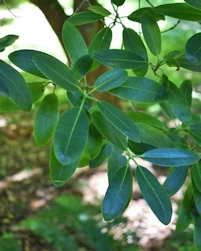 August 2024
 August 2024
Rhododendron oreodoxa rhodon - Greek name for rose; dendron - Greek for tree; oreodoxa: Greek oros - mountain, doxa - glory; thus glory of the mountains.
Rhododendron
An evergreen shrub growing to 5 m, native to China. Eight to ten tubular bell-shaped flowers occur in a rounded truss 10 cm across. In the bud state the flower is almost blood-red, changing when open to carmine, then to a lilac shade. August 2024
 August 2024
Salix caprea Salix - Latin for willow; caprea - Latin for goat; possibly connected to historical use of the plant as goat fodder.
Goat willow
The Scottish Tree Trail information board says: Goat Willow (Gaelic: geal-sheileach). Salix caprea (Willow family) Regarded a weed by foresters, the goat-willow is actually one of our most valuable trees for wildlife. During early spring trees produce male and female flowers in separate catkins. Male catkins or 'pussy willows' are covered in silky hairs. Willow is a source of salicin, a compound chemically close to the painkiller Aspirin. The physician Hippocrates wrote of the medicinal benefits of willow bark and leaves in the 5th century BC.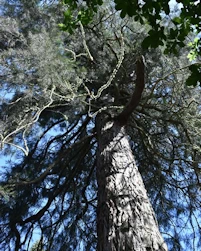 August 2024
 August 2024
 August 2024
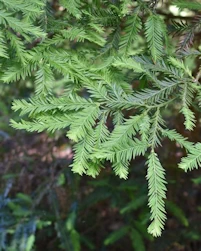
Sequoiadendron giganteum Sequoia - probably relating to the cherokee tribe, possibly from Latin sequi, relating the sequence of seeds per cone; dendron - tree; giganteum - giant.
Giant redwood
The Majestic Tree Trail information board says: Giant Redwood Sequoiadendron giganteum (Cypress family) Giant Redwood is arguably the world's most impressive tree. It is the largest tree by volume and can live for more than 3000 years. Publication of its discovery in the Sierra Nevada. California, in 1852 caused a sensation. The first seed to reach Europe arrived in Scotland in August 1853 with Joh Matthew, narrowly beating a consignment for Veitch Nurseries in Exeter. The main use of this tree is as a grand specimen, but some experimental forestry has been conducted in Britain. August 2024
 August 2024
Sequoia Sequoia - probably relating to the cherokee tribe, possibly from Latin sequi, relating the sequence of seeds per cone sempervirens semper virens - always green.
Coast redwood
The sole living species of the genus Sequoia, capable of living 1,200 – 2,200 years or more. This species includes the tallest living trees on Earth, reaching up to 115 m. The bark can be very thick, up to 35 cm, quite soft and fibrous, with a bright red-brown color when freshly exposed (hence the name redwood). The species is monoecious pollen and seed cones on the same plant . Seed cones are ovoid, up to 32 mm long. Seeds are released when the cone scales dry and open at maturity. August 2024
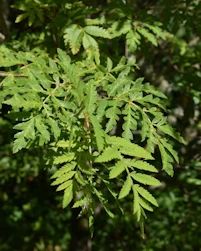 August 2024
Sorbus aucuparia from Latin: sorbus - service tree; avis, bird and capere catching , reportedly describing the use of the fruit as bait for fowling. beissneri - honouring German botanist Karl Beissner.
Rowan
A.k.a. mountain ash, a deciduous tree or shrub growing to 15m, native to Europe, Asia and N Africa. It is monoecious male and female flowers grow on the same tree , blossoming from May to June in dense corymbs of small yellowish white flowers and develops small red pomes as fruit that ripen from August to October, eaten by many bird species. The fruit and foliage have been used in the creation of dishes and beverages, as a folk medicine, and as fodder for livestock. Its tough and flexible wood has traditionally been used for woodworking. Yellowish grey, gleaming bark becomes grey-black with lengthwise cracks in advanced age, with lenticels in the bark elongated and coloured a bright ochre. The plant does not often grow older than 80 years.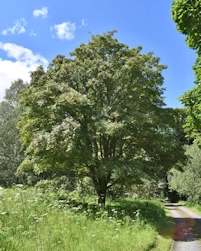 August 2024
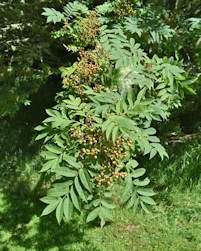 August 2024
 August 2024
Sorbus commixta from Greek: sorbus - service tree; commixta, - mixed or mingled together, possibly referring to the variation within the species.
Japanese Rowan
A.k.a. Japanese mountain ash, a small to medium-sized deciduous tree growing to 7–10 m, It has a rounded crown and brownish to silvery-grey bark. The flowers are 6–10 mm in diameter, with five white petals and 20 yellowish-white stamens; they are produced in corymbs a type of inflorescence in which the lower flowers have longer pedicels than the upper ones, creating a flat-topped appearance. 9–15 cm in diameter in late spring to early summer. The fruit is a bright orange to red pome a fruit consisting of a fleshy enlarged receptacle and a tough central core containing the seeds, e.g. an apple, pear, quince, rowan 7–8 mm in diameter, maturing in autumn. August 2024
 August 2024
Sorbus kusnetzowii from Greek: sorbus - service tree; kunetzovii, - after Russian botanist Ivan Kusnetzov.
Kuznetsov's mountain ash
A.k.a. S. kusnetzowii, and possibly s. umbellifera, a small tree or large shrub native to Turkey and Caucasia, with creamy white flowers followed by colorful berries in autumn. It has most recently been assessed by the IUCN International Union for Conservation of Nature Red List as Near Threatened.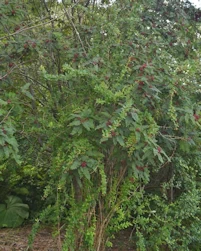 August 2024
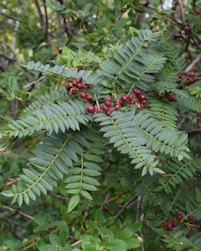 August 2024
Sorbus microphylla from Greek: sorbus - service tree; microphylla - small-leaved
Small-leaved rowan
A shrub or small tree usually under 6 m in the wild, native to Himalaya. Flowers are pink or even red, few in a narrow, lax cluster. Fruits are white or pinkish, globular, 5 mm wide (but red on this specimen? Labelled s. microphylla agg., the agg. referring to a group of similar small leaved rowans.).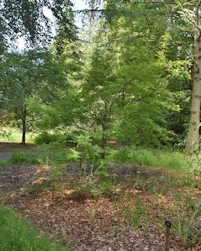 August 2024
 August 2024
 August 2024
Sorbus monbeigii from Greek: sorbus - service tree; monbeigii - after French missionary Jean-Théodore Monbeig (1875-1914)
Monbeig's rowan
A shrub or small tree growing to 10 m, native to China. Leaves are narrow and small, white flowers followed by pink-white berries, hanging in drooping bunches. August 2024
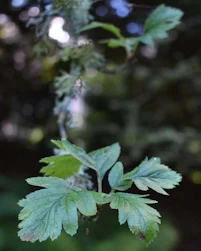 August 2024
 August 2024
Sorbus pseudofennica from Greek: sorbus - service tree; pseudofennica - false Finnish, as it resembles a sorbus native to Finland
Arran service-tree
A.k.a. Hedlundia pseudofennica the taxonomy has been updated, with S. pseudofennica now classified within the newly created genus Hedlundia. and Arran cut-leaved whitebeam, a rare tree endemic to the Isle of Arran in Scotland, threatened by habitat loss. It is thought to be a naturally occurring hybrid between H. arranensis and Sorbus aucuparia. Hedlundia arranensis is itself a hybrid between Aria rupicola and sorbus aucuparia. Apomixis asexual development of seed or embryo without fertilization and hybridisation are common in some groups of sorbus species. There are at least two of these trees in the Garden, one labelled Hedlundia pseudofennica, the other sorbus pseudofennica.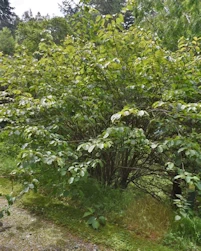 August 2024
 August 2024
Stachyurus chinensis from Greek stachys - ear of corn or spike; oura - tail, referring to the plant's cup-shaped pale yellow flower tassels that hang like a tail; chinensis - Chinese
Chinese stachyurus
A spreading deciduous shrub or small tree growing to 3 - 4 m, native to China and Taiwan, with pendant racemes of 4-petalled flowers that appear on bare branches before the leaves emerge.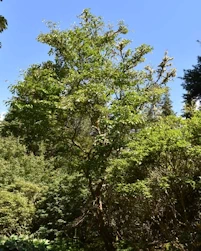 August 2024
 August 2024
 August 2024
Stewartia pseudocamellia koreana stewartia - after John Stuart, earl of Bute; pseudocamellia - false camellia, because the flowers resemble those of the camellia; koreana - referring to the Korean origin of this variety
Korean stewartia
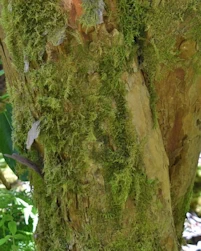
A.k.a. deciduous camellia, nogaknamu overripe cucumber tree in Korean , a small, open deciduous tree with flaking bark and broad-ovate leaves which turn red and orange in autumn. Solitary or paired, wide-open five-petalled white flowers 7cm in width appear in summer. August 2024
Stewartia sinensis stewartia - after John Stuart, earl of Bute; sinensis - Chinese
Chinese stewartia
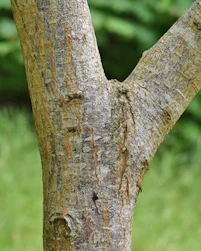
A small deciduous tree, growing to about 9 m, native to C and E China. It has smooth, peeling, papery brown and purple bark, and ovate leaves 5-10 cm long, turning bright crimson in autumn. Slightly fragrant white flowers 4-5cm across, open in mid summer. August 2024
 August 2024
Ulmus glabra ulmus - traces back to the Proto-Indo-European root hélem - mountain elm. ; glabra - smooth, referring to the bark of the tree.
Wych elm
The Scottish tree trail information board says: WYCH ELM (Gaelic: ailm; leamhan) Ulmus glabra (Elm family) Wych elm mainly survives in northern and western Scotland, beyond the range of Dutch elm disease, which has destroyed so many elms elsewhere in Britain. Wych is from the Saxon wice, which means pliable. Elm timber is flexible, strong and rot resistant and so had many traditional uses including boat building, making drains and troughs, wheel hubs and longbows. Elms have easily recognised foliage, with a distinctive asymmetrical leaf base. August 2024
 August 2024
 August 2024