×
![woodturning]()

Trees Gallery - Royal Botanic Garden Edinburgh (RBGE) - page 1

Royal Botanic Gardens, Edinburgh (RBGE)
The Royal Botanic Gardens in Edinburgh is set in over 70 acres of beautiful landscape jus,t one mile north of the city centre. The Botanics, as the Garden is affectionately known locally, is breathtaking at any time of year. Entry if FREE! Garden highlights include the Rock Garden, the Alpine Houses, Woodland Garden, Pond, the Arboretum, the Chinese Hillside, the Rhododendron Collection and the Scottish Native Plants Collection in the Heath Garden. The RBGE website is excellent, -especially when you go past the promotional links and get to the Garden Explorer pages, where every one of the 12341 taxa a group of one or more populations of an organism or organisms seen by taxonomists to form a unit in the gardens are catalogued, described, and located on a map of the gardens.
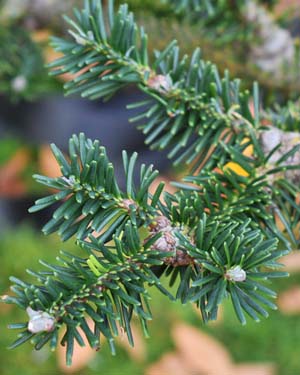
Abies forrestii georgei
George fir
A.k.a. changbao lengshan, a. delavayi var. georgei, a. georgei. A native of Yunan province in China, where it was found by Scottish plant hunter George Forrest. An upright evergreen conifer to 40m tall, with stout, densely hairy shoots. It produces upright cyclindrical, purplish blue cones, with protruding blue bracts, 7-12 x 3.5-6cm tall, in late spring which mature to dark purplish brown in late summer [RHS]. There are 50 photos on the RBGE Garden Explorer website.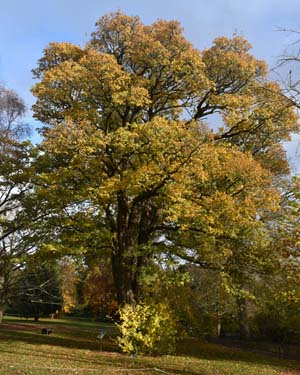
Acer campestre
Field maple
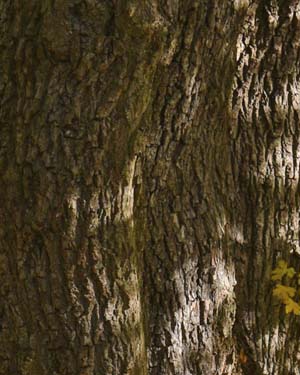
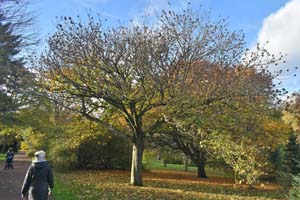
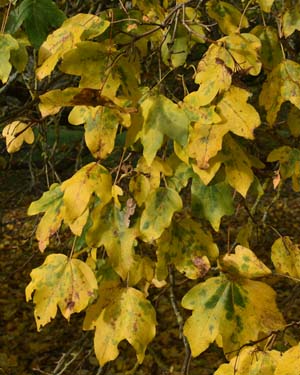
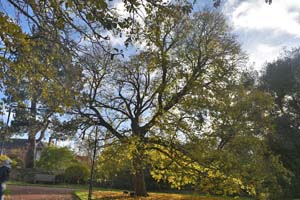
A.k.a. common maple or hedge maple. Native to the UK. An information board at RBGE says: Flavour is not affected by maple, so for many centuries the wood has been used to make plates and bowls. In medieval Britain mazers drinking bowls were made from field maple. Romans used it to support grapevines, while the wood's visual qualities, strength and resonance combine to make it an important tonewood for making instruments like lutes, harps and violins. As well as timber it provides good honey, good autumn colour and roots that can prevent soil erosion. There are 14 photos on the RBGE Garden Explorer website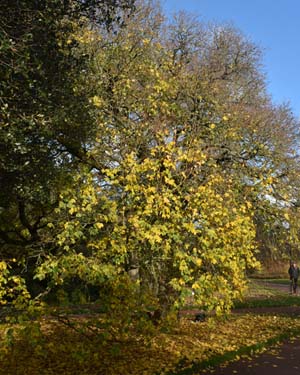
Acer campestre var. tauricum
Taurian field maple
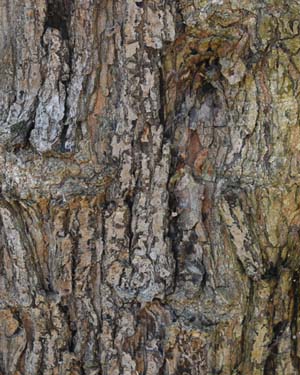
A deciduous small tree or large shrub, this variety of field maple has paired, often palmately-lobed leaves and small green flowers that are followed by characteristic winged fruits. A selection described by Loudon in 1842, ‘Tauricum’ is a squat plant, often wider than tall with the lobes of the leaves more acuminate than typically found in A. campestre. There are 17 photos on the RBGE Garden Explorer website.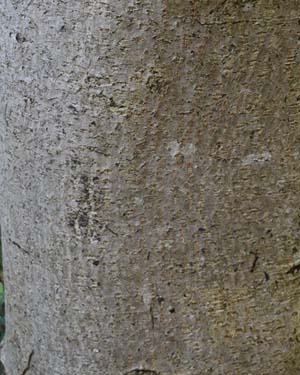
Acer cappadocicum
Caucasian Chinese maple
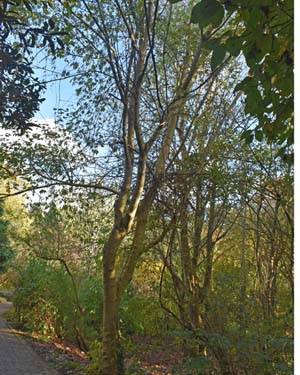
Subspecies sinicum differs from the typical subspecies in its smaller (5–8 × 6–8 cm) more narrow and deeply 5-lobed leaves, purple samaras spreading at an acute angle, with shorter (2.5–3 cm) wings, with nutlets nearly flattened and concave on one side [from Trees and Shrubs Online]. It was difficult to stand back and take a photo of the whole tree, but there are 8 different specimens in the gardens, and 41 photos on the RBGE Garden Explorer website.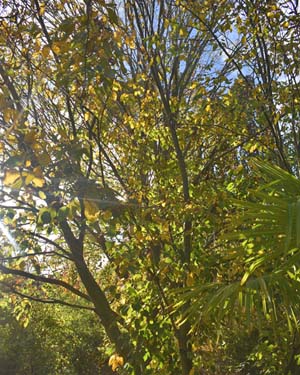
Acer davidii
Pere David's maple
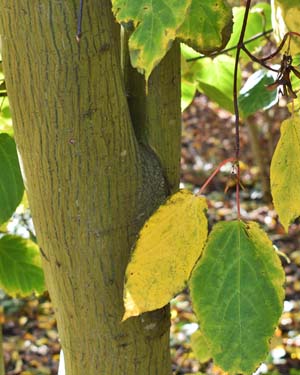
A.k.a. snake bark maple, a native of N and C China. A deciduous tree with arching branches and green and white streaked bark. Leaves can be ovate, unlobed or shallowly lobed, and are mid-green to 15cm in length. In autumn, leaves turn orange to yellow, when pink-brown fruits are also borne. [RHS]. There are 58 photos on the RBGE Garden Explorer website.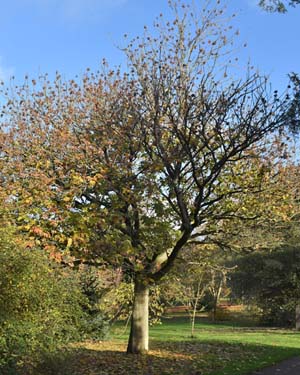

Acer diabolicum
Devil's maple
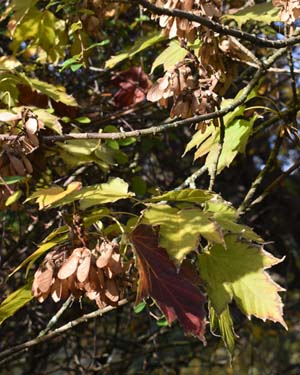
A.k.a. horned maple, due to the two hornlike appearance of the protruding curly stigmas of its flowers, which are retained on its winged seeds. It is native to Japan, where it grows on mountain slopes. It is dioecious having male and female reproductive parts on separate plants , with brick red flowers appearing in early spring before the leaves fully unfurl. The samaras hang from pendulous racemes a flower cluster with the separate flowers attached by short equal stalks at equal distances along a central stem. , and drop in October. There are 6 specimens in the gardens, and 31 photos on the RBGE Garden Explorer website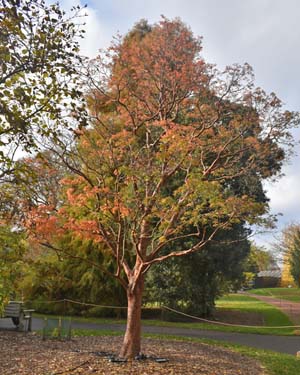

Acer griseum
Paper bark maple
A native to C China, where it is on the IUCN International Union for Conservation of Nature. red list in its native area. A small deciduous tree with peeling, papery chestnut-brown bark. Leaves with 3 leaflets, downy and whitish beneath, turning brilliant red and orange in autumn. Small flowers lead to small paired samaras. There are 86 photos on the RBGE Garden Explorer website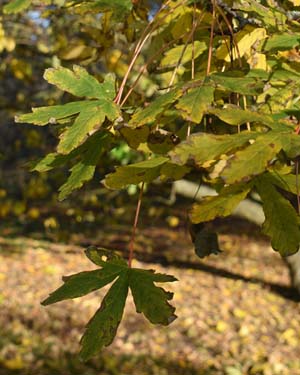
Acer heldreichii var. macropterum
Heldreich's maple
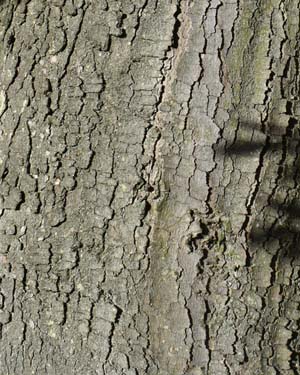
Native to the Balkans and SW Asia. A deciduous tree about 10-15m in height. Yellow spring flowers are produced in clusters and these are followed by larger than typical winged fruits in autumn (which give it the macropterum large winged variety name). Theodor von Heldreich (1822 - 1902) was a German botanist. There are 34 photos on the RBGE Garden Explorer website.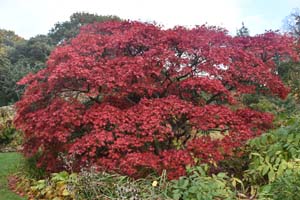
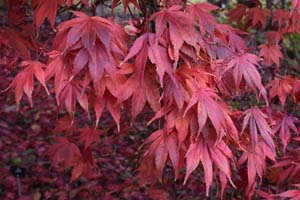
Acer palmatum
Japanese maple
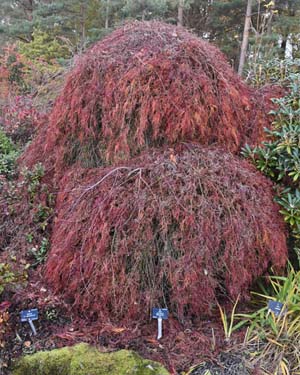
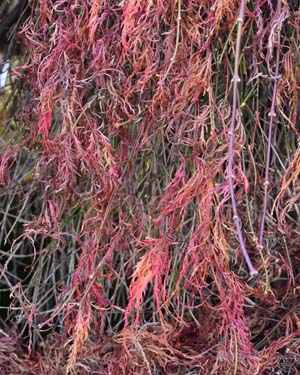
Native to China, Japan and Korea. An understory tree in shady woodlands in the wild, it has been cultivated for centuries in Japan, and across the world since the 1800s, resulting in many cultivars. This one's label only describes it as a. palmatum. SHowing the deep red colouring of the leaves just before dropping in late autumn. There are 58 photos of acer palmatum on the RBGE Garden Explorer website.