×
![woodturning]()

Trees Gallery - Royal Botanic Gardens Edinburgh (RBGE) - page 8
 November 2023
 November 2023
 November 2023
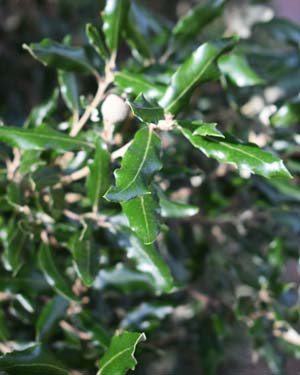
Quercus ilex 'Fordii'
Holm oak
A.k.a. Evergreen oak, q. ilex angustifolia. The type can grow to 30 m in height. The crown is broad, domed, with ascending branches and often with low stems, trunk short and thick. It can also grow as a flattened, suckering shrub. Catkins are dense and pendulous, pale green, opening in a mass of yellow stamens. These are followed by acorns borne on a downy peduncle a stalk bearing a flower or fruit , singly or in groups of up to three, ripening in the first year. The cup is light green with appressed scales, enclosing one third to one half of the nut. The 'Fordii' variety was named after one of the proprietors of Lucombe and Prince’s Nursery. There are 7 photos on the RBGE Garden Explorer website.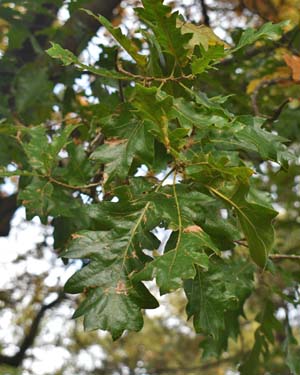 November 2023
 November 2023
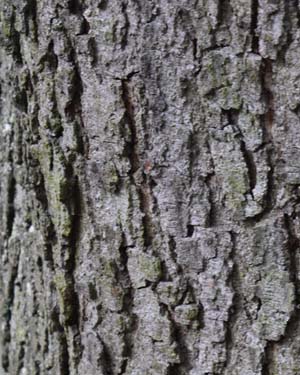
Quercus ithaburensis macrolepis
Valonia oak
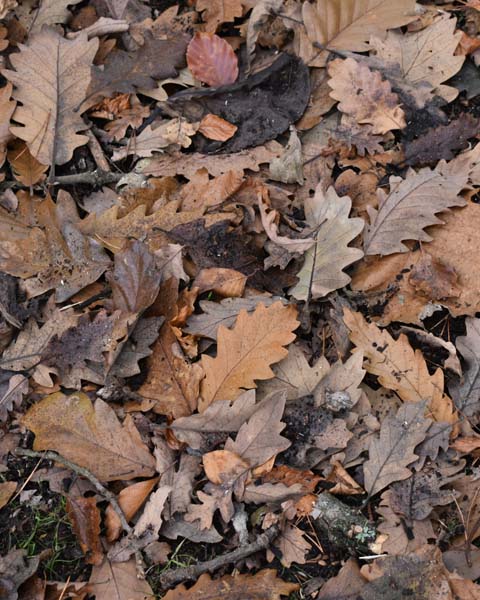
Native to SE Italy, Asia minor and N Africa. A deciduous, monoecious tree growing to 15m. The acorns are solitary or in clusters of 2 or 3, sessile or borne on a very short, thick peduncle. They ripen in their second year. They have a large cupule, hemispherical or turbinate, with thick scales. About a third of the acorn is enclosed in the cupule.The cups, known as valonia, are used for tanning and dyeing, as are the unripe acorns called camata or camatina. The ripe acorns can be eaten raw or boiled. There are 21 photos on the RBGE Garden Explorer website.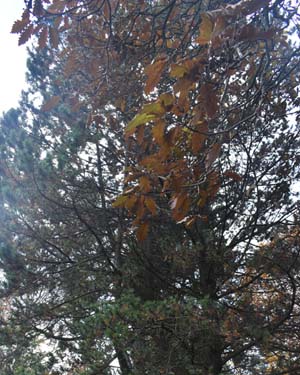 November 2023
 November 2023
 November 2023
Quercus macranthera x petrea
Caucasian oak
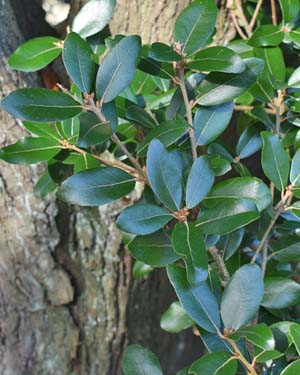
A.k.a. Persian oak. A deciduous tree up to 20m. The acorns are barely stalked, the lower half enclosed by a cup which is covered outside with erect, lanceolate, downy scales. This specimen has hybridised with q. petrea, There are no photos on the RBGE Garden Explorer website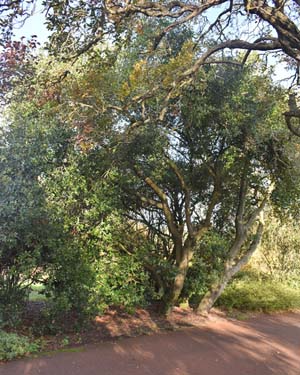 November 2023
 November 2023
Quercus phillyreoides
Ubame oak
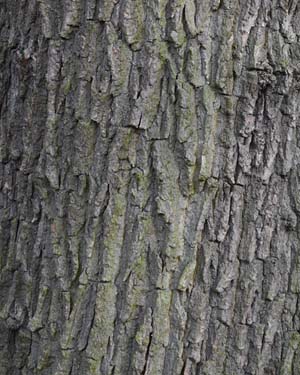
A native of China and Japan. An evergreen shrub or small tree growing to 5m tall. The bark is dark gray or blackish brown, flaky, with superficial longitudinal fissures. Young shoots slender, grayish brown pubescent, later glabrescent. Female inflorescences are followed by acorns born singly or in pairs with one third enclosed by a cup-shaped cupule. This species is widely cultivated and is found in collections around the world. It is commonly planted in Japanese gardens, often as a hedge or as clipped topiary. It bears a superficial resemblance to Phillyrea latifolia, after which it is named. There are 12 photos on the RBGE Garden Explorer website. November 2023
 November 2023
Quercus robur
Common oak
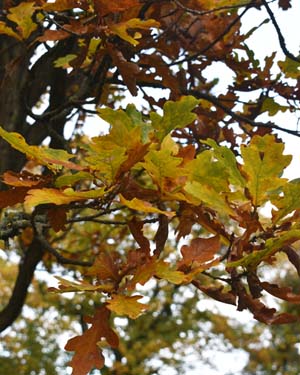
A.k.a. Pedunculate Oak, English Oak, German Oak, Truffle Oak, Darach (Gaelic) Native to Europe, N Africa, SW Asia. A large, deciduous tree growing up to 40m. Leaves have 4–5 deep lobes with smooth edges. Leaf-burst occurs mid-May, with leaves having almost no stem, growing in bunches. Long, yellow hanging catkins spread pollen into the air. Acorns are on long stalks and in cupules the cup-shaped base of the acorn . As it ripens, the green acorn turns brown, loosens from the cupule and falls to the canopy below, sprouting the following spring. There are 16 photos on the RBGE Garden Explorer website.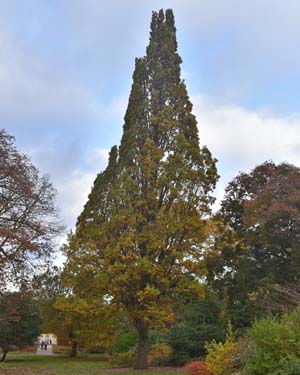 November 2023
 November 2023
 November 2023
Quercus robur forma fastigiata
Cypress oak
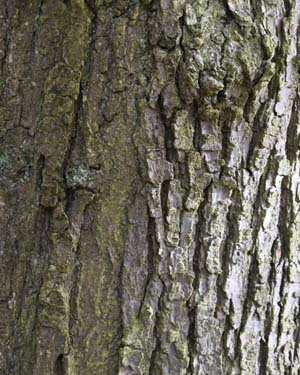
A.k.a. fastigiate oak or pyramid oak. A very upright form of oak that makes a tall column to 20m, appearing almost like a conifer from a distance. Indeed, the common name Cypress Oak refers to its passing resemblance to the Italian cypress, although the leaves are classic English oak shape and not anything like needles or scales. There are 13 photos on the RBGE Garden Explorer website.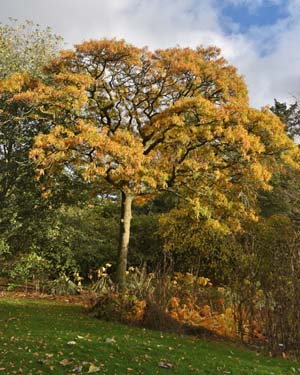 November 2023
 November 2023
 November 2023
Quercus robur filicifolia
Cut leaved oak
A variety said to have been found wild in S Germany in the 1850s. Filicifolia refers to the deeply cut leaves The acorns are pedunculate having a peduncle (a stalk bearing a flower or fruit) , as in Q. robur, and the leaves are short-stalked as in that species. There are 5 photos on the RBGE Garden Explorer website November 2023
 November 2023
Rhododendron calophytum var. calophytum
Beautiful face rhododendron
SW China (Yunnan, Sichuan), where it lives at altitudes of 1,400–4,000 m. A substantial evergreen shrub growing to 12m. The leathery leaves are narrow and up to 30cm long. In early Spring trusses of 15 to 30 bell-shaped, pale pink flowers, spotted with maroon inside, are produced. There are 61 photos on the RBGE Garden Explorer website.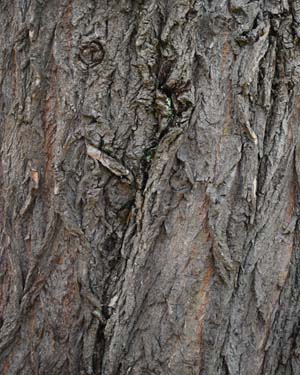 November 2023
 November 2023
Salix alba rockanje
White willow
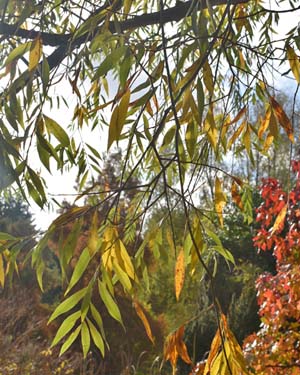
A deciduous tree typically grows to a height of 25m. Spring catkins measuring 4-6cm emerge alongside the leaves. S. rockanje has particularly silver haired young shoots; probably named after a village in S Holland. There are 11 photos on the RBGE website.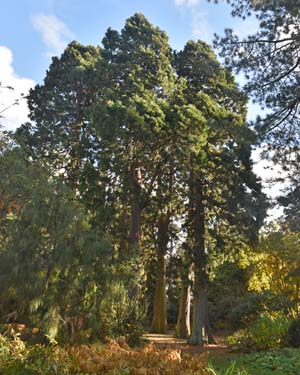 November 2023
 November 2023
 November 2023
 November 2023
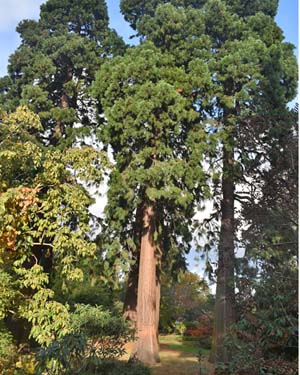
Sequoiadendron giganteum
Giant redwood
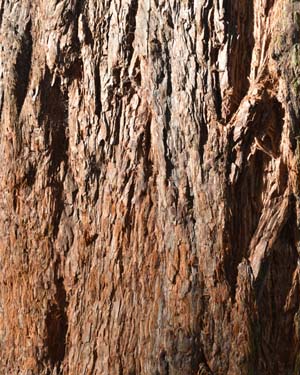
A.k.a. California Big Tree, Mammoth Tree, Sierra Redwood, Wellingtonia. A massive, monoecious, evergreen, coniferous tree to 90–95 m tall, native to the USA (California), where it is on the IUCN International Union for Conservation of Nature red list as endangered. Leaves are spirally arranged in 3 ranks, very variable in size according to the age of the branch they are on. Pollen cones are terminal, on the same branches as seed cones. There are 87 photos on the RBGE Garden Explorer website. November 2023