×
![woodturning]()

Trees Gallery - Royal Botanic Gardens Edinburgh (RBGE)- page 3
 November 2023
 November 2023
 November 2023
Alnus x mayrii
Japanese alder
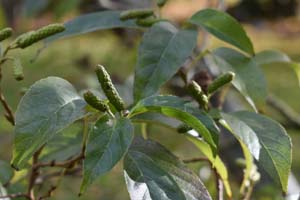
A naturally occurring alder hybrid, probably the result of a cross between A. hirsuta and A. japonica. It resembles A. japonica, but the leaves are broader and elliptic to oblong rather than lanceolate or narrowly ovate. The hybrid has dense, ferruginous pubescence rusty coloured hairs on the branchlets, new shoots and lower leaf surfaces, as in A. hirsuta. It is native to Japan and Korea. There are eleven photos on the RBGE Garden Explorer website.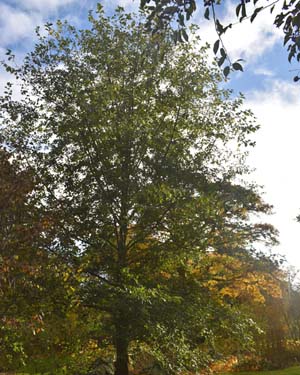 November 2023
 November 2023
Alnus rubra
Red alder
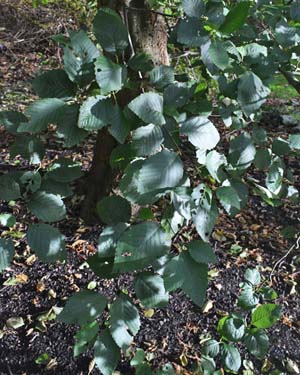
A deciduous broadleaf tree native to western North America, the largest species of alder in North America and one of the largest in the world, reaching heights of 20 to 30 metres. The bark is mottled, ashy-gray and smooth, often colonized by white lichen and moss. The leaves are revolute curled backwards or downwards , a diagnostic character which distinguishes it from all other alders. Rather than turning yellow in autumn, its leaves darken in colour and wither before they are shed are . The male flowers are dangling reddish catkins 10 to 15 cm (4 to 6 in) long in early spring. Female catkins are erect during anthesis the period during which a flower is fully open and functional , but otherwise pendant. They develop into small, woody, superficially cone-like oval dry fruit. The seeds develop between the woody bracts of the 'cones' and are shed in late autumn and winter. Seeds have a membranous winged margin that allows long-distance dispersal. [Wikipedia]. There are 5 photos on the RBGE Garden Explorer website November 2023
 November 2023
Betula papyrifera
Paper birch
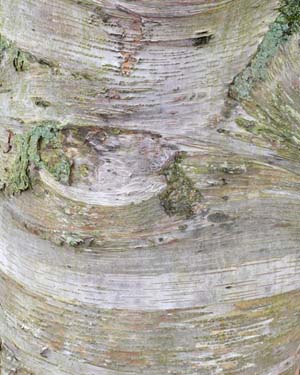
A.k.a. Canoe Birch, Cluster Birch and White Birch, it is native to N America. A medium-sized deciduous tree typically reaching 20 metres tall, and exceptionally to 40 m .Within forests, it often grows with a single trunk but when grown as a landscape tree it may develop multiple trunks or branch close to the ground. Paper birch is often one of the first species to colonize a burned area. It is used for boltwood hardwood cut into bolts - usually 4' lengths and sawlogs, while secondary products include firewood and pulpwood. There are 51 photos on the RBGE Garden Explorer website.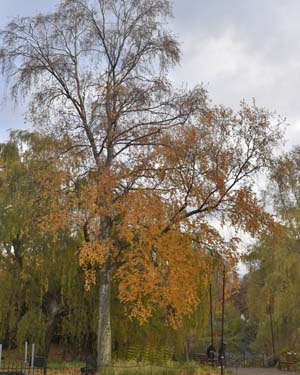 November 2023
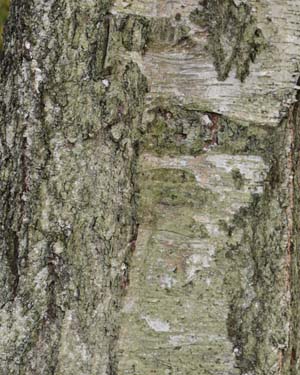 November 2023
 November 2023
Betula pendula
Silver birch
A.k.a. Lady Of The Woods, European Birch, White Birch, European White Birch, warty birch, and in Gaelic, Beith Dhubhach. The species is monoecious male and female reproductive parts are on the same plant Some shoots are long and bear the male catkins at the tip, while others are short and bear female catkins. The immature male catkins are present during the winter, but the female catkins develop in the spring, soon after the leaves unfurl. There are 55 photos on the RBGE Garden Explorer website.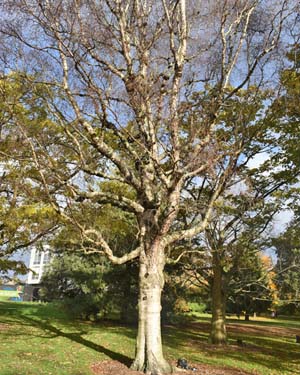 November 2023
 November 2023
Betula pubescens glabrata
Downy birch
A.k.a. b. pubescens carpatica, moor birch, white birch, European white birch or hairy birch. B. pubescens is a deciduous tree growing to 20m, with a slender crown and downy shoots. The leaves are ovate-acute with a finely serrated margin. It bears wind-pollinated catkins in early spring before the leaves. Downy birch is more upright than its close relative the silver birch and the bark is browner in colour with more obvious horizontal grooves and lacking the papery quality of the silver birch. It has smooth, downy shoots, which are hairless and warty in silver birch, though to complicate matters, with variety glabrata the shoots soon become glabrous free from hair or down; smooth. . The leaf margins also differ, finely serrated in downy birch, coarsely double-toothed in silver birch. Glabrata has a more shrubby habit than the species. There are 5 photos on the RBGE Garden Explorer website.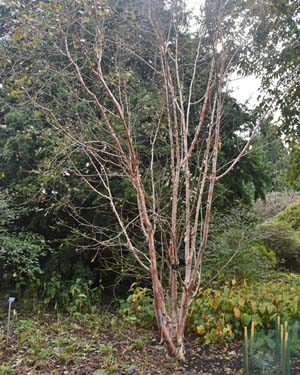 November 2023
 November 2023
Betula utilis
Himalayan birch
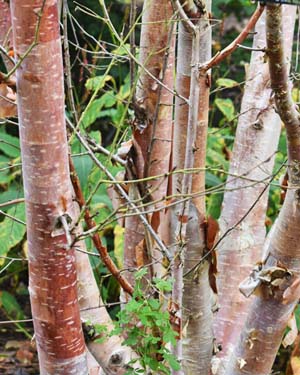
In its native habitat it form forests, growing as a shrub or tree reaching up to 20m, frequently growing amongst conifers. Leaves are ovate, with serrated margins, and slightly hairy. Its flowers are a few male catkins, and short, single (sometimes paired) female catkins. The bark peels off in broad, horizontal belts, making it very usable for creating even large pages for texts. There are 250 photos on the RBGE Garden Explorer website.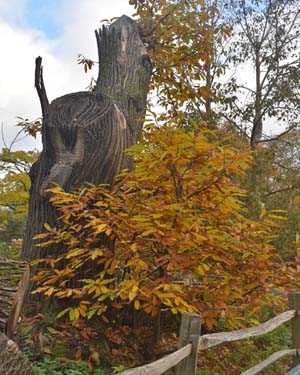 November 2023
Castanea sativa
Sweet chestnut
A.k.a. Spanish chestnut, and in Gaelic, Craobh Geanm-chnò. A noticeboard tells us: this was one of the oldest trees in the garden when it started to die back. Rather than completely removing the tree, we decided to make it safe and keep as much of the wood on site as possible. Over time, this will become a valuable habitat. Fungi and bacteria will decompose the wood over the next few decades. We have created artificial root structures using a chanisaw so bats can continue using the tree as a habitat. There are 57 photos on the RBGE Garden Explorer website. November 2023
Catalpa ovata
Yellow catalpa
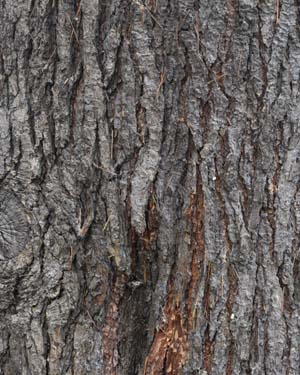
Native to China, reaching heights between 6 to 9m. Inflorescences form in mid to late summer, with sprays of creamy white flowers with a yellow tinge and orange and purple spots in the throat, followed by long, narrow, hanging, bean-like pods. Its bark is deepy furrowed. Leaves are long (up to 25cm), broadly ovate with a heart-shaped base, often three-lobed, each lobe with a short, slender point; pale green and at first finely downy above, permanently downy on the veins beneath. November 2023
 November 2023
 November 2023
Cedrus deodara
Deodar cedar
A.k.a. Himalayan cedar. An evergreen conifer making a large tree, at first conical with a drooping leading shoot, later broad-crowned. The needles grow 3 - 5cm, are slightly glaucous, mostly whorled in clusters of up to 30. The cones can be 10cm in length, and are broadly ovoid. There are 57 photos on the RBGE Garden Explorer website.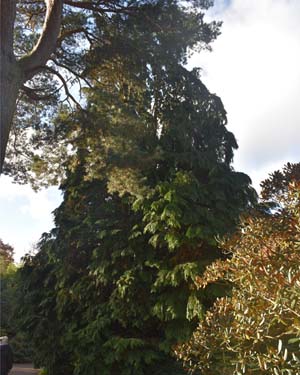 November 2023
 November 2023
 November 2023
Chamaecyparis lawsoniana
Lawson's cypress
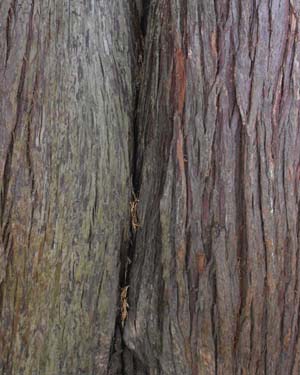
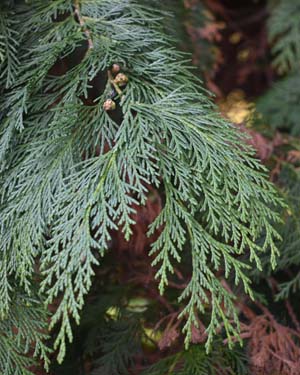
A tall tree up to 60m in the wild, with a trunk that can be 2m or more in diameter. above the buttressed base; bark reddish brown. As seen in cultivation it is a slenderly to broadly pyramidal tree, densely furnished to the ground with frondlike branches. The leaf-bearing branchlets are borne in two horizontally spreading ranks, usually more or less pendulous at the ends. It is native to western N. America in Oregon and California; introduced in 1854 to Lawson’s nursery at Edinburgh. Despite being very common in gardens, it is on the IUCN red list as near-threatened in its native area. There are 24 photos on the RBGE Garden Explorer website.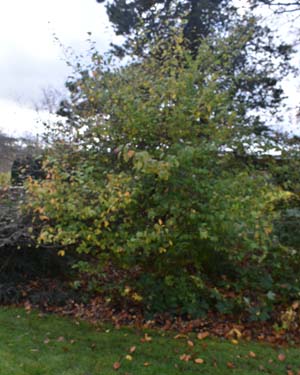 November 2023
 November 2023
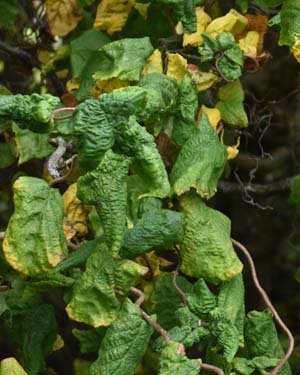
Corylopsis platypetala
Chinese winter hazel
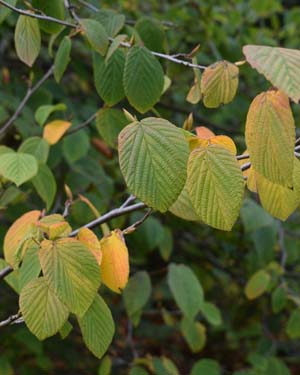
A native of China (Anhui, Hubei, Sichuan). A shrub up to 2m in the wild, but larger in cultivation. The flowers are pale yellow, fragrant, in racemes separate flowers attached by short equal stalks at equal distances along a central stem. Those at the base develop first composed of eight to twenty flowers. There are 10 photos on the RBGE Garden Explorer website November 2023
 November 2023
Corylus avellana contorta
Corkscrew hazel
A.k.a. Harry Lauder a famous Scottish singer (1870-1950) 's walking stick. 'Contorta' is a cultivar of the common hazel. It has a multi-trunk rounded habit, with contorted branches becoming drooping with age. It bears yellow spring catkins before the leaves unfurl. There are 9 photos on the RBGE Garden Explorer website.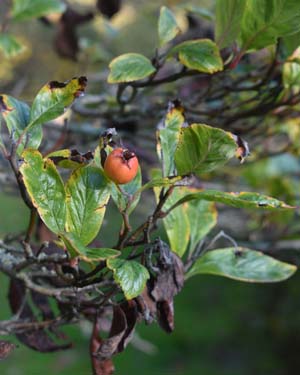 November 2023
 November 2023
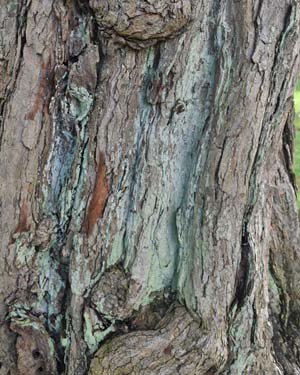
Crataegus x lavallei
Hybrid cockspur thorn
A large shrub or small tree with thorny branches.. Clusters of white flowers in spring are followed by orange or red fruits. It is a hybrid that arose between cultivated specimens of two species, C. mexicana and C. calpodendron (sometimes mistakenly called C. crus-galli). There are eight photos on the RBGE Garden Explorer website. November 2023
 November 2023