
Trees Gallery - Nunnington Hall
Ryedale, North Yorkshire
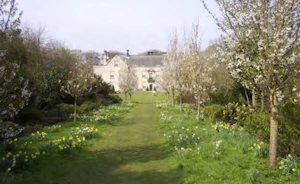
The Hall
Nunnington Hall is a National Trust property standing next to the River Rye in North Yorkshire. It has an orchard with spring bulbs, together with displays of geraniums, roses, clipped box and yew, irises, and a vegetable garden - a garden for ideas. There are some fine trees in its relatively small grounds (for a stately home - no parklands!). More from the National Trust Nunnington Hall site.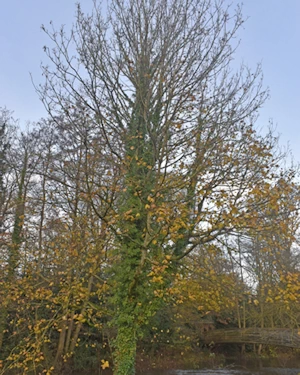 November 2023
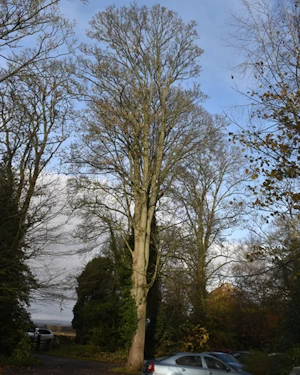 December 2023
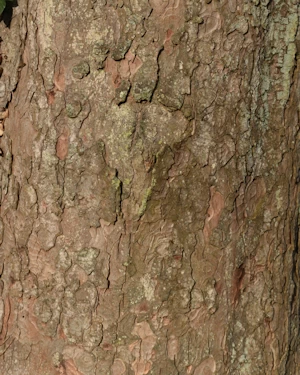 November 2023
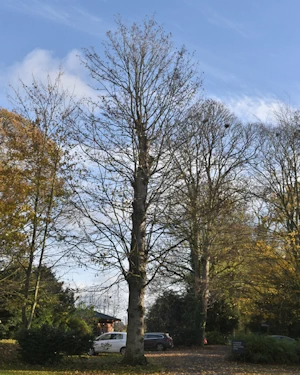 November 2023
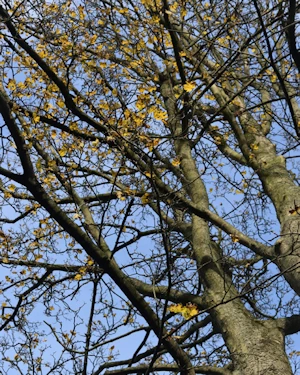 November 2023
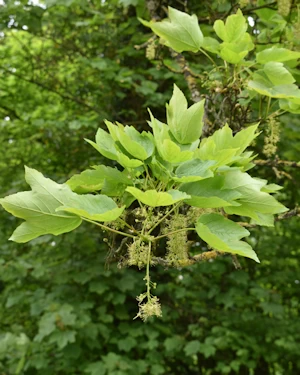 May 2024
Acer pseudoplatanus
Sycamore
One of our commonest trees, though not a true native, even considered an invasive “weed” by some. It may have arrived with the Romans, or possibly the 1500s. Whenever it came, it offers good food and habitat for insects, birds and mammals, and many fine old specimens are revered in local landscapes (consider the national headlines when an old tree was felled in an act of vandalism at Sycamore Gap, Hadrians Wall, 28 September 2023). There are 14 notable usually mature trees which may stand out in the local environment because they are large in comparison with other trees around them or veteran in the second and mature stage of their life sycamores around the car park area listed on the Ancient Tree Inventory.
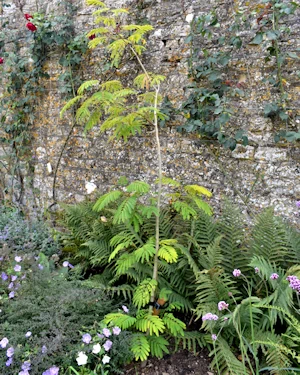 August 2025
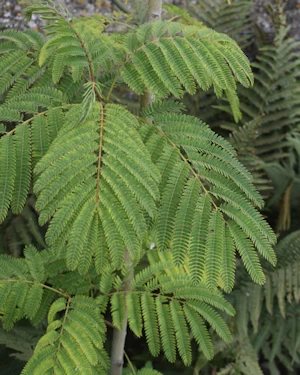 August 2025
Albizia julibrissin
Chinese silk tree
A.k.a. Persian silk tree, pink siris, mimosa, Lankaran acacia, and bastard tamarind. A small deciduous tree with a broad crown of level or arching branches, growing to 5–16 m. Its bark is dark greenish grey, becoming vertically striped with age. The flowers bloom throughout the summer in dense inflorescences, which resemble starbursts of pink silky threads. The true flowers have small calyx and corolla (except the central ones), with a tight cluster of prominent stamens, 2–3 cm long and white or pink with a white base. Its fruit is a flat brown pod 10–20 cm long, containing several seeds inside.
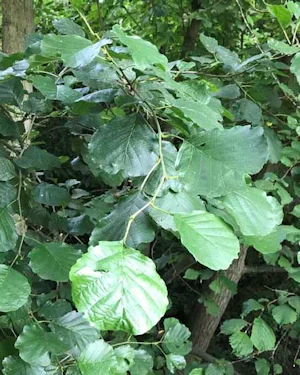 August 2021
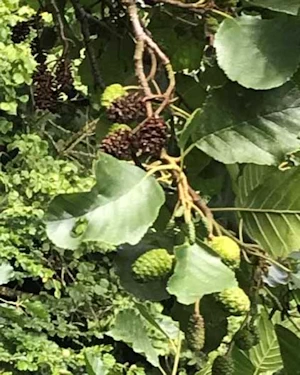 August 2021
Alnus glutinosa
Common alder
Sometimes called black alder. Native to the UK, it thrives in wet conditions. The "cones" turn brown and remain on the tree all the year round - they are the female catkins of the plant, not true cones. A number of alders line the banks of the River Rye.
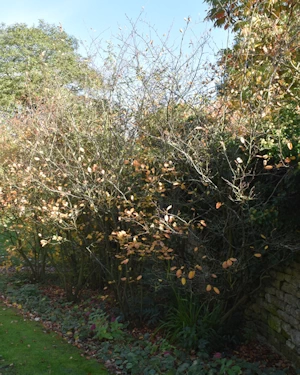 October 2025
 October 2025
Amelanchier
Serviceberry
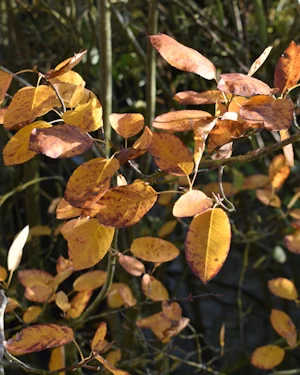
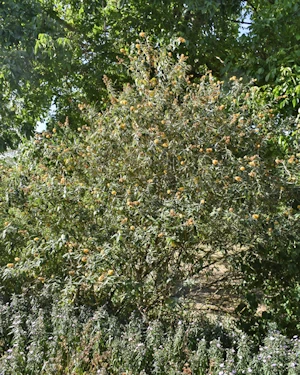
A.k.a. juneberry,shadbush, shadwood or shadblow, sarvisberry (or just sarvis), saskatoon, sugarplum, wild-plum or chuckley pear! The genus has about 20 species, I am unsure which one this is. Native to North America and Canada, they can grow from 0.2 to 20 m. The inflorescences are terminal, with 1–20 flowers, erect or drooping, either in clusters of one to four flowers, or in racemes with 4–20 white flowers. The fruit is a berrylike pome, red to purple to nearly black at maturity, insipid to delectably sweet, maturing in summer. [Wikipedia].
 August 2025
 August 2025
Buddleia globosa
Orange ball tree
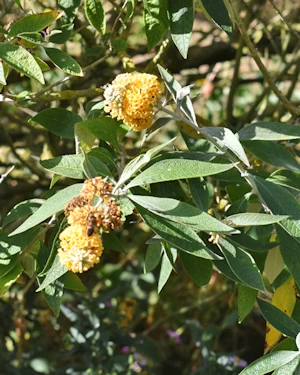
A.k.a. matico, native to Chile and Argentina, where it grows in dry and moist forest, from sea level to 2,000 m. A large shrub growing to 5 m, with grey fissured bark. The young branches are subquadrangular and tomentose, bearing sessile or subsessile lanceolate or elliptic leaves 5–15 cm long. In common with many New World Buddlejaceae species B. globosa is dioecious: although the flowers appear hermaphrodite.
 November 2023
 November 2023
 May 2024
 May 2024
Carpinus betulus
Hornbeam
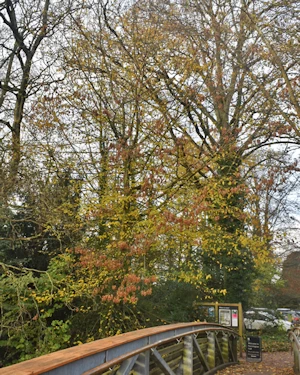
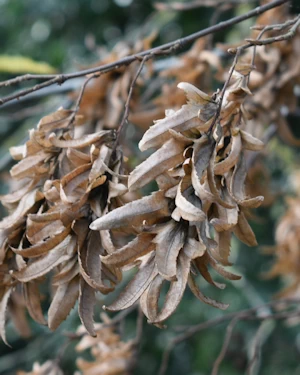
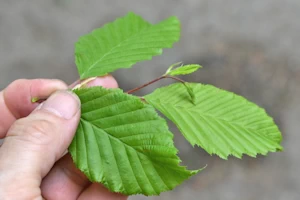
As you cross the bridge across the River Rye, on the right is a hornbeam tree, mixed in with alder and other bankside trees. Large clusters of three-lobed bracts appear in late summer, starting bright green, then turning yellow to brown in autumn.
 August 2025
 August 2025
Cotinus coggygria
Smoke bush
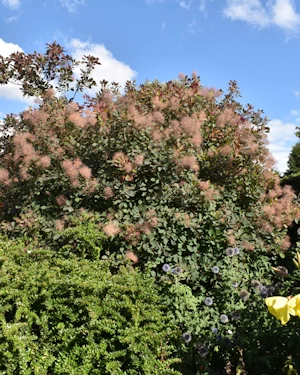
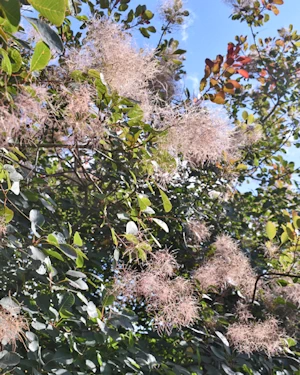
A.k.a Venetian sumach or dyer's sumach, a Eurasian multiple-branching deciduous shrub growing to 5–7 metres, with an open, spreading, irregular habit, only rarely forming a small tree. The flowers are numerous, produced in large inflorescences each flower 5–10mm in diameter, with five pale yellow petals. Most of the flowers in each inflorescence abort, elongating into yellowish-pink to pinkish-purple feathery plumes which have a wispy 'smoke-like' appearance, hence the common name.
 December 2024
 December 2024
Cotoneaster Rothschildianus
Yellow berried cotoneaster
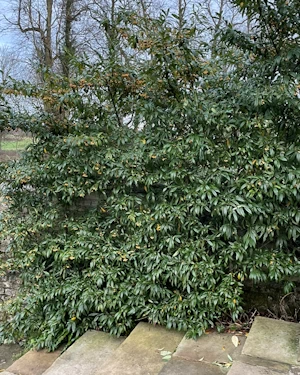
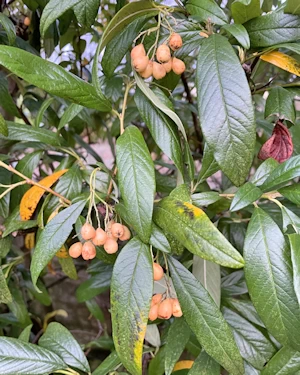
Spreading, deciduous or semi-evergreen shrub to 5m tall, with large, narrowly lance-shaped, deeply-veined leaves, and small white flowers in large clusters in early summer, followed by large clusters of creamy-yellow berries over a long period in autumn
 May 2024
Deutzia
Deutzia
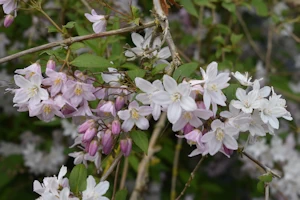
Deutzia is a versatile group of about 60 species of flowering shrubs, primarily native to Asia, particularly China and Japan. These shrubs are known for their beautiful white or pink blossoms that bloom in spring. Deutzia can vary in size, from dwarf ground covers to larger varieties reaching up to 10 feet tall. They are often used for hedging, privacy screening, and mass plantings. Deutzia is a member of the hydrangea family.
 November 2023
Fagus sylvatica
Beech hedge
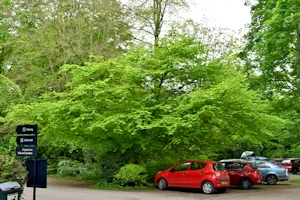
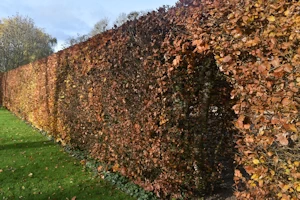
The large beech trees in the car park are probably a similar age to the stout hedge around the Hall courtyard. The top of the hedge has an annual haircut, and the sides are cut back in alternate years. Although the leaves die back in autumn, they retain the solid appearance of the hedge by staying on the branches, a feature known as marcescence retaining of leaves over winter on a deciduous (or "everciduous") tree, as on beech, hornbeam and sometimes oak .
 November 2023
 May 2024
 May 2024
 May 2024
 August 2025
 October 2025
Fraxinus ornus
Manna ash
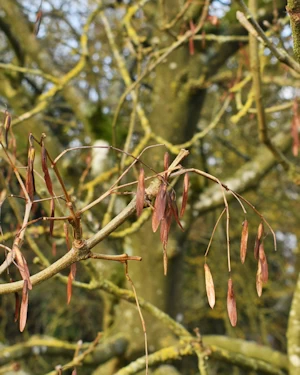
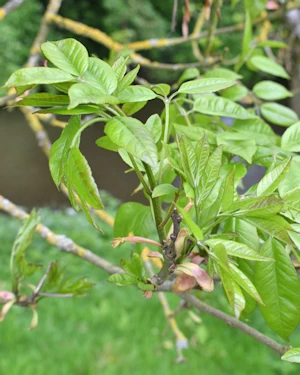
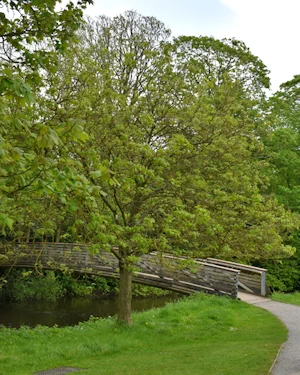
Also called flowering ash, as it produces an abundance of white flower panicles in May and June. It is smaller than our native ash, fraxinus excelsior, and the "keys" or samaras a winged achene, a type of fruit in which a flattened wing of fibrous, papery tissue develops from the ovary wall. , are also smaller and thinner. A sugary extract from the sap was historically compared to the biblical "manna from heaven", hence the common name. A native of SE Europe and S Asia.