
Trees Gallery - Nunnington Hall page 2
Ryedale, North Yorkshire
 November 2023
 November 2023
 December 2023
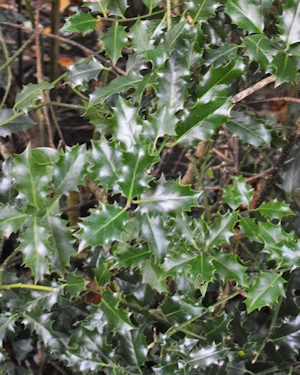
Ilex aquifolium
Holly
One of our native evergreens, recognised by its prickly leaves and bright red berries, a common sight everywhere. A dominant undershrub, but occasionally fulfilling its potential as a large tree as here. Look upwards and notice the leaves gradually lose their spikes, smoothing out to oval.
 August 2021
 August 2021
 August 2021
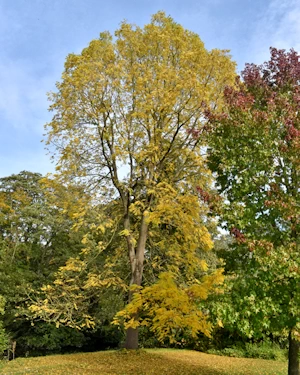 October 2025
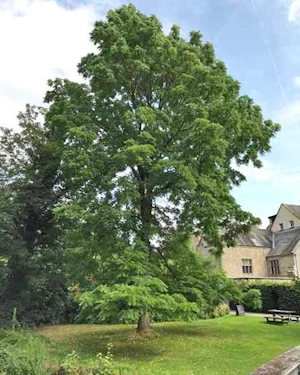
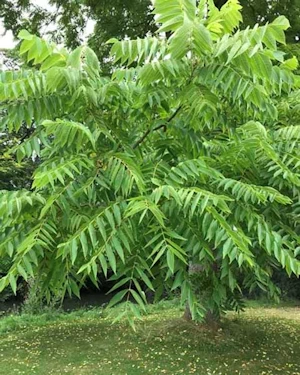
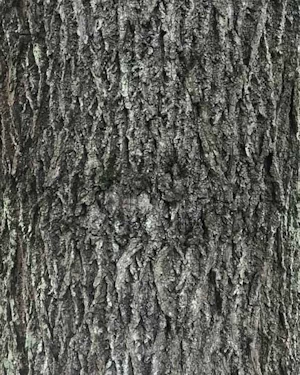
Juglans nigra
American Black Walnut
A native of eastern North America, introduced to Europe in the 1600s. The pinnate leaves have 15 - 21 fingers, like an ash leaf but more fingers, narrower than the common walnut, and more of them. The tree can grow 30m, with a 20m spread. "Black" refers to the dark bark. The tree is planted just to the left of the bridge when crossing from the car park to the hall.
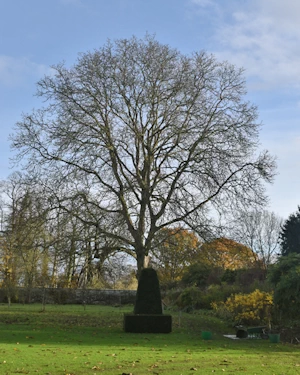 November 2023
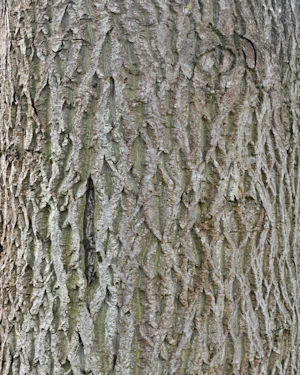 November 2023
 May 2024
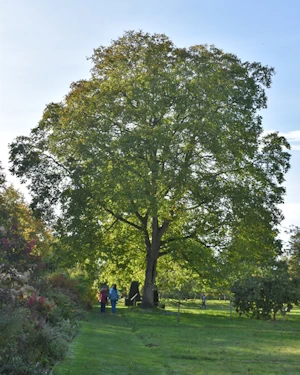 October 2025
 November 2023
Juglans regia
Common Walnut
There is a pair of European or (common) walnuts planted in the orchard, at the end of the lime avenue. Walnuts were probably introduced by the Romans who enjoyed their nuts, and are now widely naturalized across the country, in no small part due to the hoarding habits of squirrels. When the leaves are crushed a strong scent of furniture polish is released.
 November 2023
 November 2023
 May 2024
 May 2024
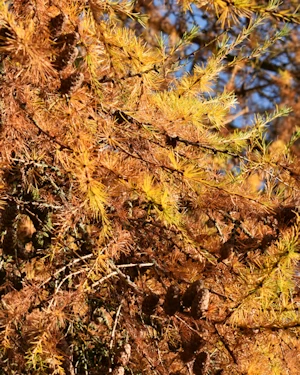
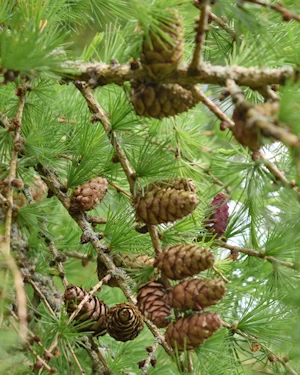
Larix decidua
European larch
One of the few conifers that are deciduous, the needles turning bright orange before falling in late autumn. A long-lived tree in the wild, 200 years being common, with some specimens reported as over 1000 years old. Native to the mountains of central Europe - the Alps, Carpathia and the Pyrennes.
 August 2025
 Augusr 2025
 December 2024
 December 2024
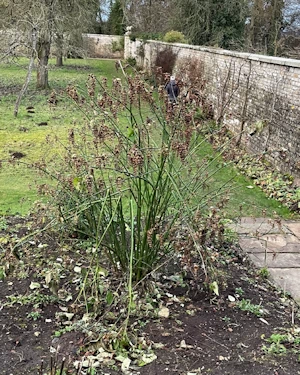
Leycesteria formosa
Himalayan honeysucke
A deciduous, sometimes evergreen, half-woody, shrub-like plant (intermediate between a shrub and a herbaceous perennial) with young stems that are soft, hollow and upright in various shades of green, salmon pink, maroon and purple. 1–3 m in height, which may only last for 2–5 years before collapsing and being replaced by new stems from the roots. Mature specimens, however, may have short, truly woody trunks clothed in rough, grey bark at the base. The leaves are opposite, dark green and usually cordate, with an entire, wavy or even deeply lobed margin and often an extended drip tip (commonly an adaptation to a wet climate). The flowers are produced on 5–10 cm long pendulous racemes; each flower is small, white, pale pink or rarely deep purplish pink, subtended by a purplish-pink bract, terminating – like the leaves – in a drip tip. The fruit is a berry, hard and deep pink when unripe, and fragile, soft (easily burst) and a deep purple-brown when ripe and measuring 1 cm in diameter. The berries are eaten avidly by birds, which disperse the seeds in their droppings. The berries are unpleasantly bitter when unripe, but, once soft and deep purple-brown in colour, are edible and sweet, having a mild flavour reminiscent of toffee or caramel. [Wikipedia]
 November 2023
 November 2023
 November 2023
 November 2023
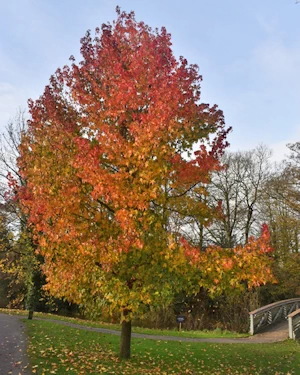
Liquidambar styraciflua
Sweet gum
The 5-lobed (occasionally 7-lobed) , maple like leaves put on a glorious show in autumn, turning every shade of red, orange and yellow. Both the common name and the Latin refer to the resin produced when the tree is bruised - a sweet scented turpentine-like gum. It is also known as American storax, hazel pine, bilsted, redgum, satin-walnut, star-leaved gum and alligator wood (on account of its plates of bark looking like alligator skin). A valuable forest tree in SE USA. It bears hard, spiked globed fruits.
 November 2023
 November 2023
Mahonia aquifolium
Oregon grape
A vigorous, low, spreading, evergreen shrub with glossy green, slightly prickly leaves becoming purplish in winter. Large clusters of yellow flowers begin to emerge in winter, followed by the small black berries which give it the common name. Native to W North America , it has recently been re-classified by POWO Plants of the World Online as Berberis aquifolium, without a distinct mahonia sub-species.
 October 2025
 October 2025
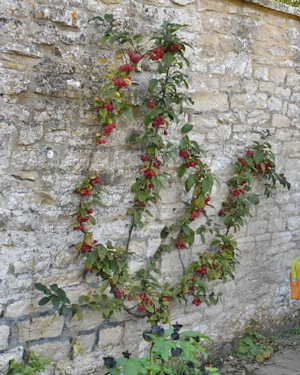
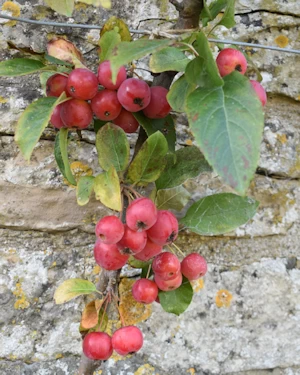
Malus red sentinel
Crab apple 'red sentinel'
A.k.a. malus x robusta red sentinel, a broadly upright tree to 7m in height, with dark green leaves to 8cm long, and single white flowers 3cm in width, followed by clusters of cherry-like, glossy, yellow-flushed, deep red fruits 2.5cm in width, which persist well into winter [RHS]
 August 2022
 November 2023
 November 2023
 May 2024
 May 2024
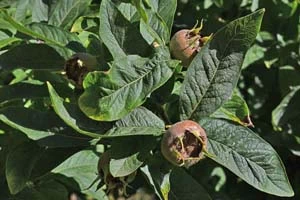
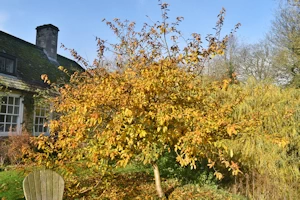
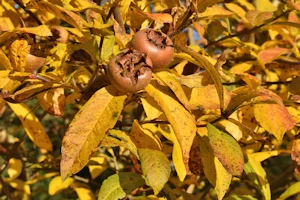
Mespilus germanica
Medlar tree
A medlar tree grows in the tea garden at the rear of the hall. An insignificant looking tree until these unusual, fascinating fruits form in summer, and the leaves turn brlliant colours in late autumn. A member of the rose family, the fruits are tart and need to be bletted placed in sawdust and left to rot until soft, releasing the sugars before eating. The open calyx led to some crude alternative names, such as "open-arse" – or in France, it was variously known as la partie postérieure de ce quadrupede (the posterior part of this quadruped), cu d'singe (monkey's bottom), cu d'ane (donkey's bottom), and cul de chien (dog's bottom).