
Trees Gallery - Nunnington Hall page 4
Ryedale, North Yorkshire
 November 2023
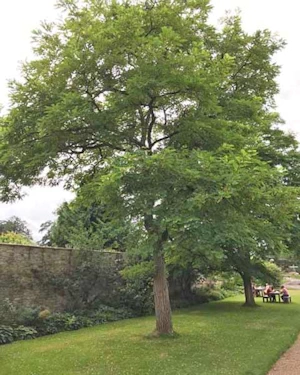 August 2021
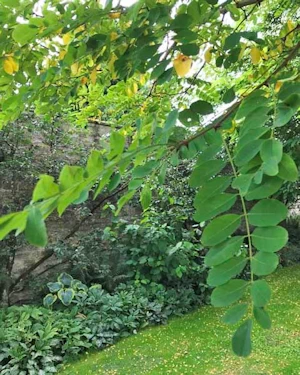 August 2021
 August 2021
Robinia pseudoacacia
False acacia
Two trees planted by the wall near the entrance to the garden. There used to be three here, but the end one suffered during severe flooding and had to be felled. There are 5 - 21 pairs of oval leaflets on the pinnate leaves. Fast growing, they can reach 25m in height. Native to North America, introduced to the UK in 1626, now a common feature on many urban roadsides. Also known as Black locust.
 November 2023
Rosa 'Madame Gregoire Staechelin'
Spanish Beauty rose
Not really a tree, but too good not to include these wonderful large rose hips on this climbing hybrid-tea rose. A vigorous climber cultivated by Pedro Dot, a Spanish rose breeder. I cannot find out who Madame Gregoire was.
As well as the glorious hips, this is one of the first roses to bloom in the garden, pink with a wonderful scent.
 October 2021
 October 2021
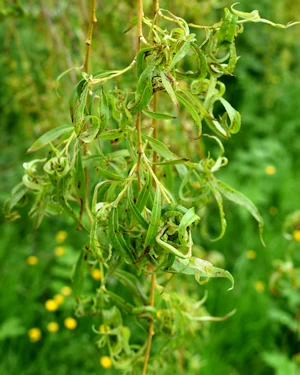 May 2024
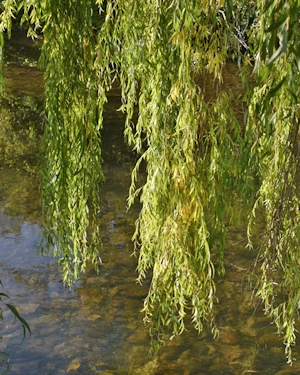 August 2024
Salix babylonica
Weeping willow
I am guessing at S. babylonica There are other species names for weeping willow, and many cultivars of S. babylonica. Native to China, a deciduous tree which grows rapidly but is relatively short lived (40-75 years). It is dioecious having male and female reproductive parts on separate plants , with male and female yellow catkins on different trees.
 May 2024
 May 2024
 October 2025
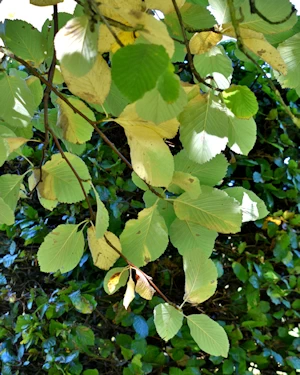
Sorbus aria
Whitebeam
A picture taken in springtime when the leaves show off their white undersides, and flower panicles a loose branching cluster of flowers are in abundance, and in early autumn when the profusion of red berries is in evidence. Whitebeam is native to scrub and open woodland in Britain, though is more commonly seen planted in parks and gardens than growing in the wild.
 May 2024
 May 2024
 May 2024
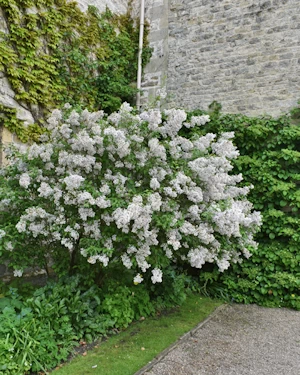
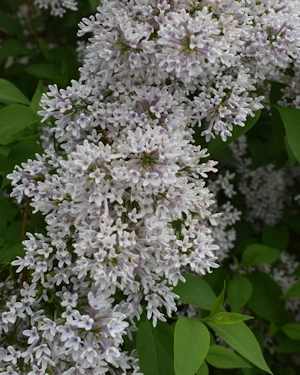
Syringa spp.
Lilac
Syringa (lilac) is a genus of roughly 12–20 species of deciduous shrubs and small trees in the olive family (Oleaceae), prized for their intensely fragrant, tubular flowers in spring. Native to Europe and Asia. This one looks like a dwarf variety.
 November 2023
 November 2023
 November 2023
 May 2024
 May 2024
 May 2024
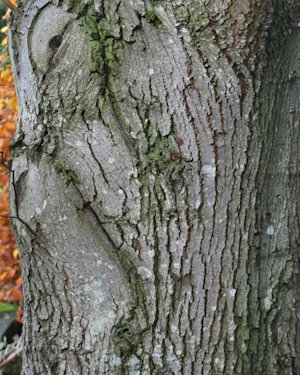
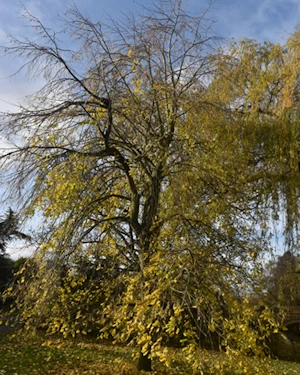
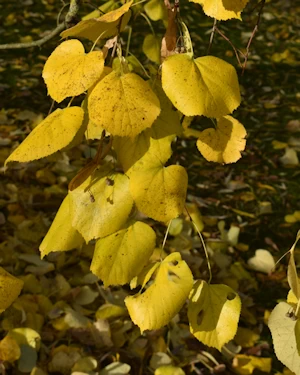
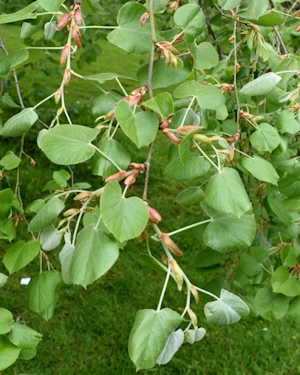
Tilia x europaea
Common lime
This lime and others in the garden are probably the common lime, a naturally occurring hybrid between the small leaved (T. cordata) and large leaved (T. platyphyllos) species. This one is near the bird observation area; more line the grassed hill leading to a view of the house, known as the lime avenue, a common feature in stately homes.
 November 2023
 November 2023
 May 2024
Tilia tomentosa petiolaris
Weeping silver lime
Planted as Nunnington’s Millenium tree (in 2000), this vigorous cultivar has turned from a young sapling into a large tree. 'Silver' refers to the underside of the leaves, which are felt-like, hairy and white. Tomentosa references the hairy leaves, petiolaris the small foot on the stalk below the leaves. It has a modest weeping habit - though some branches are heading upwards rather than drooping down. When I visited in November 2023, head gardener Nick Fraser suggested these may need trimming to retain the pendulous habit.
 May 2024
 May 2024
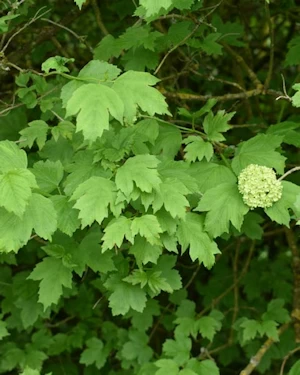
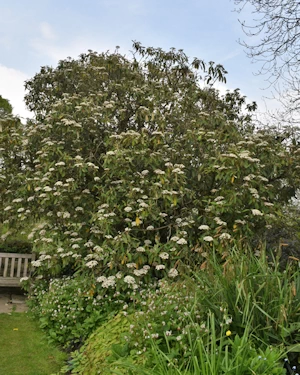
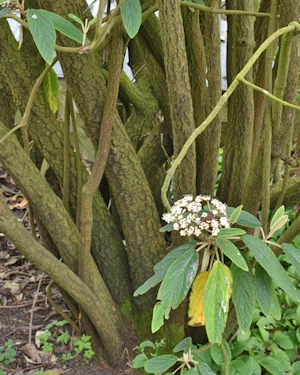
Viburnum opulus roseum
Snowball tree
A large, bushy deciduous shrub to about 3m in height, with dark green lobed leaves tinted purplish-red in autumn. Abundant, greenish-white or white flowers in dense rounded clusters to 6cm across, occasionally maturing to pink, are produced in late spring or early summer; the flowers are sterile so no fruit is produced. [AI]
 May 2024
 May 2024
 May 2024
 December 2024
Viburnum rhytidophyllum
Leatherleaf viburnum
A vigorous, coarsely textured evergreen shrub or small tree with an upright habit, growing to 4.5 m, native to Asia. In spring, fragrant creamy-white flowers bloom in clusters. Blue berries form in June and become plump through September, maturing to glossy black.
 November 2023
 November 2023
 November 2023
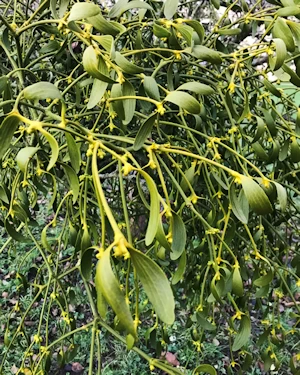
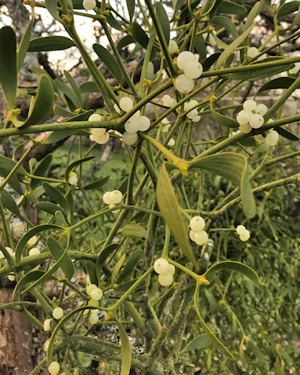
Viscus album
Mistletoe
A parasitic evergreen shrub that grows in abundance on the apple trees in the orchard. Mistletoe leaves, stems and berries are all poisonous. The fruit is a waxy, white berry which grows in clusters of two to six. The seeds inside are coated in a sticky substance which sticks to the beaks of birds feeding on the fruit, helping to spread the seeds as they try to wipe it off.
 October 2025
Vitis
Grapevine
Vitis (grapevine) is a genus of about 80 species of twining plants in the family Vitaceae. The genus consists of species predominantly from the Northern Hemisphere. It is economically important as the source of grapes, both for direct consumption of the fruit and for fermentation to produce wine. The study and cultivation of grapevines is called viticulture. [Wikipedia]