×
![woodturning]()

Trees Gallery - RHS Bridgewater
Worsley, Salford
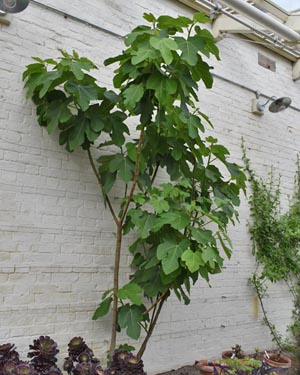
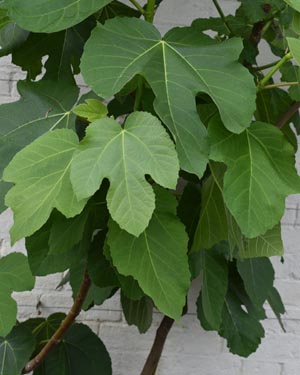
Ficus carica 'Peter's honey'
Honey Fig
A native of the Mediterranean, W and S Asia, a small deciduous tree or large shrub growing up to 10m. Its . Its tear-shaped fruit is a syconium fruit formed by an enlarged, fleshy, hollow receptacle with multiple ovaries on the inside , has a green skin that may ripen toward purple or brown, and sweet soft reddish flesh containing numerous crunchy seeds. The edible mature syconium develops into a fleshy false fruit bearing the numerous one-seeded fruits, which are technically drupelets a drupe is a fleshy fruit with thin skin and a central stone containing the seed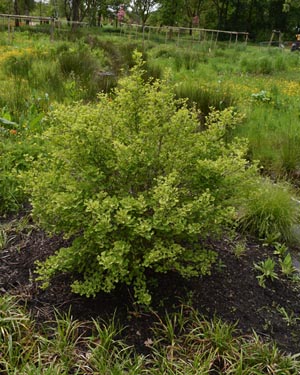
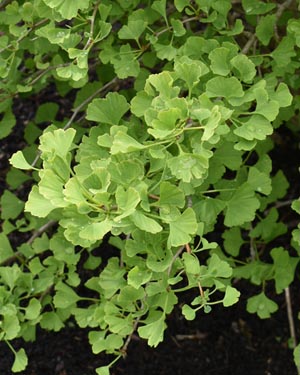
Ginkgo biloba
Maidenhair tree
A native of E Asia, usually a large tree capable of reaching 30m. This specimen is either a very young plant, or one of the dwarf varieties that have been cultivated, but I couldn't find a label to verify.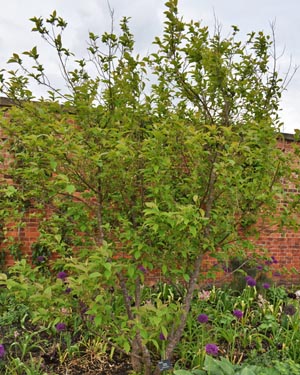
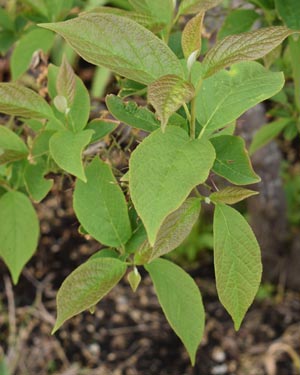
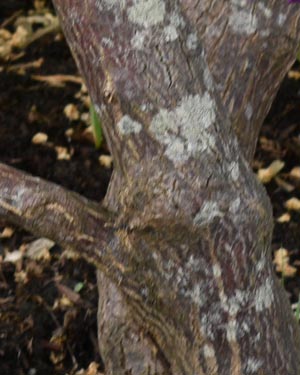
Halesia carolina
Carolina silverbells
A.k.a. Halesia parviflora, little silverbells and opossum wood. Native to SE USA, it is a vigorous, fast-growing deciduous shrub or tree growing to 8m, bearing masses of pendent, bell-shaped white flowers which appear in spring before the leaves. The flowers are followed by green, four-winged fruit. The leaves turn yellow in autumn.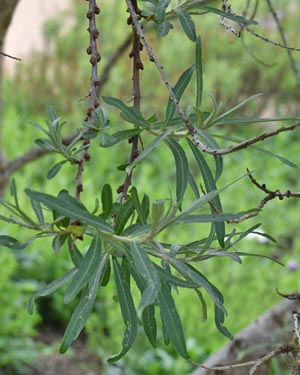

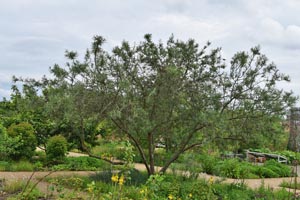
Hippophae rhamnoides
Sea buckthorn
A spiny deciduous, dioecious male and female flowers grow on different shrubs shrub, native of Europe and Asia, growing to 4m. The male inflorescence is built up of four to six apetalous having no petals flowers, while the female inflorescence normally consists of only one apetalous flower and contains one ovary and one ovule the part of the ovary of seed plants that contains the female germ cell and after fertilization becomes the seed. . It is solely wind pollinated, though it can reproduce rapidly via root suckers.
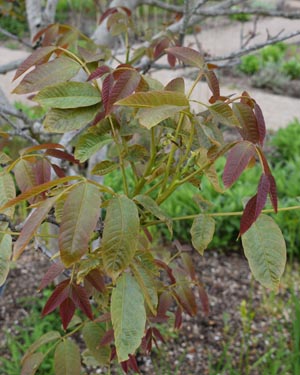
Juglans regia
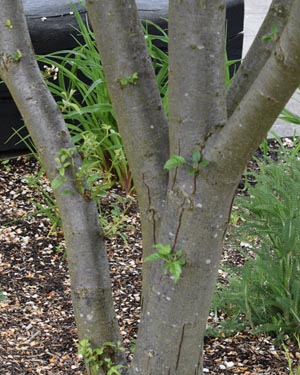
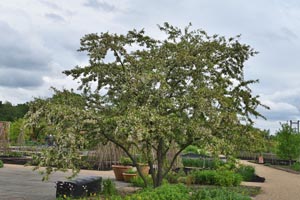
Walnut
A deciduous broadleaf tree which can grow to 35m. It is often self-sown as a result of the caching of seeds by grey squirrels and crows, especially in S and W Britain. Present in Britain since at least medieval times, perhaps as early as Roman times, a neophyte a plant not native to a region, introduced and escaped into the wild in recent history (after 1500). , or cultivated archaeophyte long established alien plant, ie found in the wild before 1500 . Its range is currently increasing, possibly due to climate change, and an increase in the abundance of grey squirrels and crows.
Lagerstroemia 'Sarah's favourite'
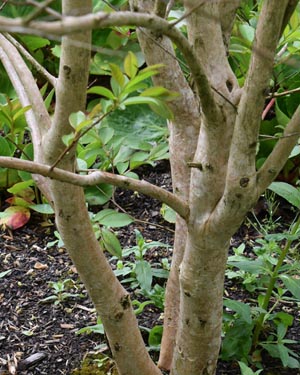
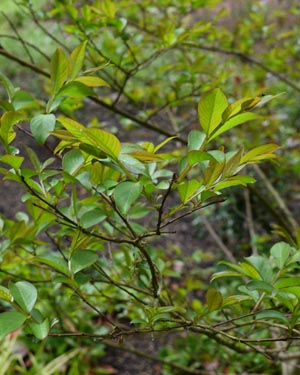
Crape myrtle (or crepe)
A small, deciduous, spreading tree to 6m, native to the tropical Indian subcontinent, SE Asia and N Australia. In summer, large conical panicles loose branching clusters of flowers of white flowers are produced (we visited a little early for these).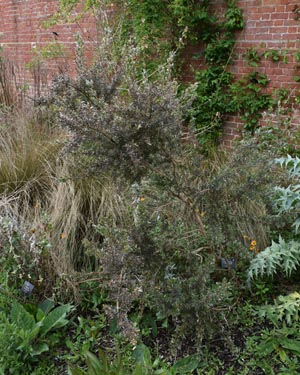

Leptospermum 'Silver Sheen'
Tea tree
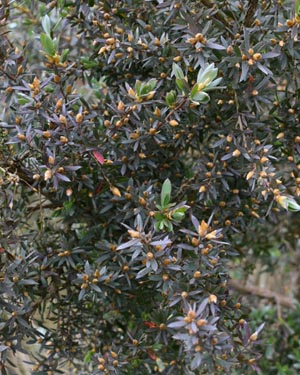
A.k.a. Manuka. A native of New Zealand, an erect evergreen shrub, with small, softly hairy, silvery leaves on reddish shoots, and 5-petalled white flowers in mid summer. often one of the first species to regenerate on cleared land. Its nectar is prized for manuka honey, and all parts are used for medicinal purposes.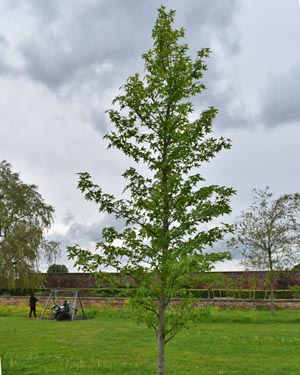

Liquidambar styraciflua Worplesdon
Gum tree
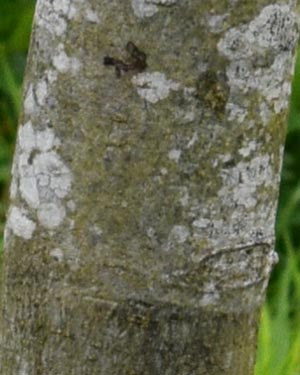
A variety of sweet gum, the species originating from the SE United States. It is a fairly fast growing tree with an even, upright, conical habit, often found near rivers, lakes and swamps. Conical, unisexual flowers are green and appear in conical masses. The fruit is a spiked, multicapsular spherical head and hangs on the branches during the winter.