×
![woodturning]()

Trees Gallery - Burnby Hall Gardens. Page 1
Pocklington
 July 2025
 July 2025
 July 2025
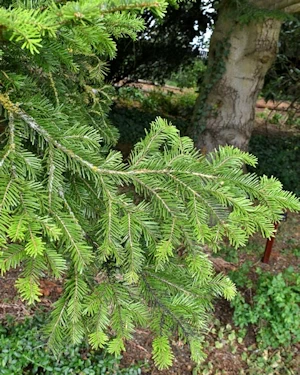
Abies aurea alba abies - from Latin abies or abire, meaning to rise. This refers to the great height and straight upward growth that many trees in this genus attain; aurea - Latin for golden or golden-yellow. This describes the colour of the foliage or new growth on these specific cultivars; alba Latin albus meaning white or bright, describing the characteristic silver-green hue on the underside of the needles.
Golden fir
This tree was donated by Captain and Mrs Jackson, Friends of the Gardens. Labelled as Abies auria alba, the description may not be acurate. Alba is an upright-growing evergreen conifer to 45m in height, with dark green needles that are silver underneath. The yellow-green cones which appear in late spring are cylindrical in shape and ripen to brown.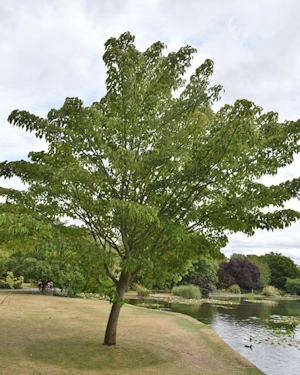 July 2025
 July 2025
 July 2025
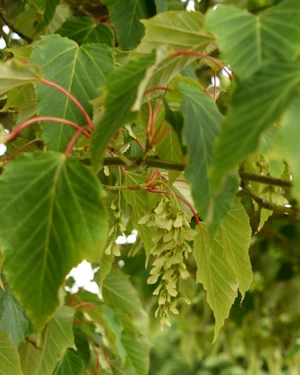
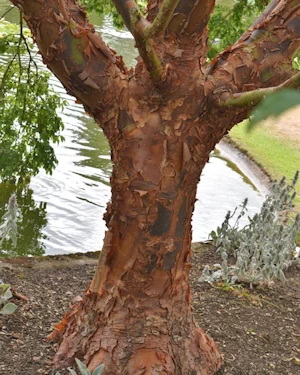
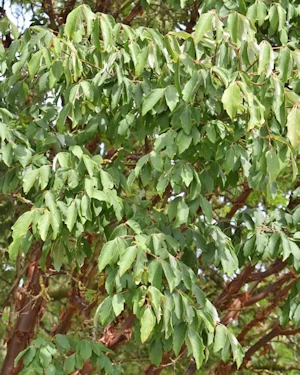
Acer davidii acer - maple; davidii after Armand David (Père David, 1826 - 1900), who documented the tree on his travels through China.
Snake bark maple
A.k.a. Père David's maple, a small deciduous tree native to China, with arching branches, growing 10–15 m tall with a trunk up to 40 cm in diameter, though often with multiple trunks. The small yellow flowers have five sepals and petals about 4 mm long, produced on arching 7–12 cm racemes in late spring, with male and female flowers on different racemes. "George Forrest" is perhaps the most common form, a fine, vigorous, often multistemmed tree with spreading branches and large leaves up to 20 cm long. These emerge red, the blades turning green later, with distinctively red petioles.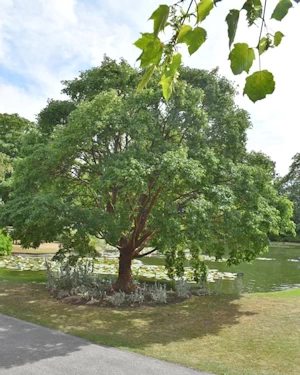 July 2025
 July 2025
 July 2025
Acer griseum acer - maple; griseum from L. griseus - grey, referring to the undersides of the leaves
Paper bark maple
A.k.a. blood-bark maple, a small to medium-sized, deciduous, oval rounded tree reaching 6–9 m, with slender upright branching, native to mixed forests in C China. The yellow flowers are androdioecious bearing only male (staminate) flowers on some plants and either bisexual or both male (staminate) and female (pistillate) flowers on other plants. , produced in small pendent corymbs in spring, the fruit being a paired samara with two winged seeds about 1cm long with a 3cm wing.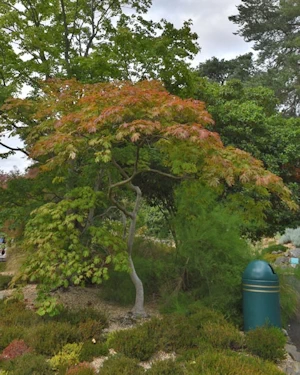 July 2025
 July 2025
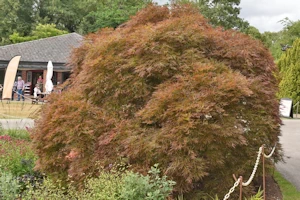
Acer palmatum acer - from the Latin for maple; palmatum, palm-like, referring to the 5 lobed hand shaped leaves atropurpureum from Latin, meaning very dark purple.
Japanese maple
A small tree of bushy habit, with bronze-crimson leaves divided into 5-7 lobes, and becoming brilliant red in autumn. Inconspicuous red-purple flowers in spring may be followed by winged, purple fruits.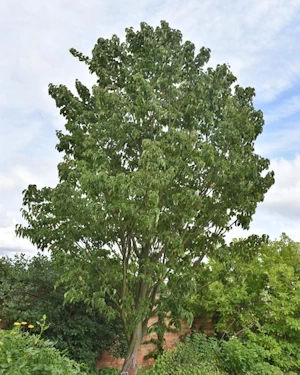 July 2025
 July 2025
 July 2025
Acer grosseri hersiiAcer: Latin for maple, derived from acer, meaning sharp, referring to the sharp points of the leaves; grosseri: after Hugo Grosser, a German amateur botanist; hersii: after Joseph Hers (1884–1965), a Belgian diplomat and avid plant collector who explored China in the early 20th century.
Snake-bark maple
A snakebark maple making a small deciduous broad-crowned tree with green bark striped with white. Leaves are broad-oval, 3-lobed, turning red or orange in autumn. Flowers green in long drooping racemes.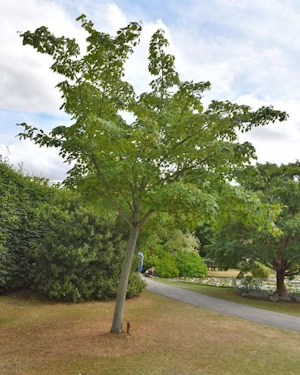 July 2025
 July 2025
Acer pensylvanicum Acer: Latin for maple, derived from acer, meaning sharp, referring to the sharp points of the leaves; pensylvanicum: Refers to Pennsylvania, where the specimen was collected. The single-n spelling is the accepted botanical name despite being a misspelling
Striped maple
A.k.a. snake-bark maple for its reptilian-like bark, moosewood/Moose maple because it is a preferred food for moose, whistlewood, or goosefoot maple. A small, slow-growing understory tree, and one of the most shade-tolerant species of maple. The striped maple is a sequential hermaphrodite meaning that it can change its sex throughout its lifetime, . It is the only species of snakebark maple native to North America.The tree at Burnby is dedicated to William Lee Appleyard.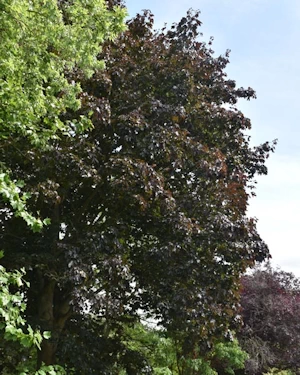 July 2025
 July 2025
 July 2025
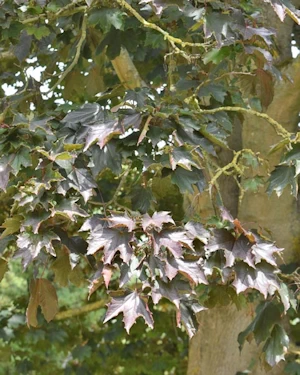
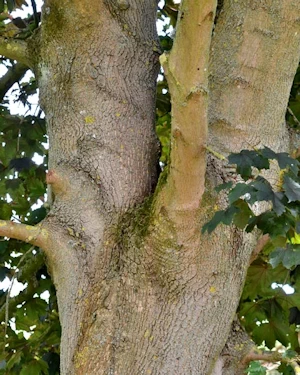
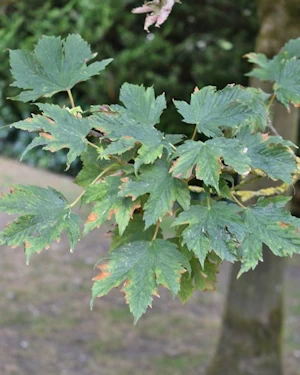
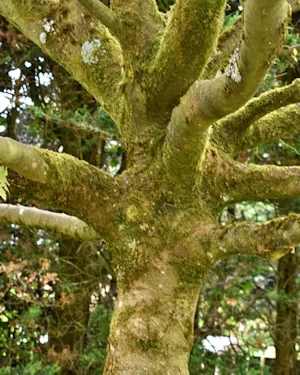
Acer platanoides Crimson King acer - from Latin for maple; platanoides - resembling the plane tree (platanus); Crimson King is the name of a purple cultivar raised in Belgium in the 1930s.
Norway maple
A deciduous tree growing to 30 m, native to E and C Europe and W Asia. The bark is grey-brown and shallowly grooved. Unlike many other maples, mature trees do not tend to develop a shaggy bark. Flowers are in corymbs a flower cluster whose lower stalks are proportionally longer so that the flowers form a flat or slightly convex head. of 15–30 together, yellow-green with five sepals and five petals; flowering occurs in early spring before the new leaves emerge. The fruit is a double samara with two winged seeds.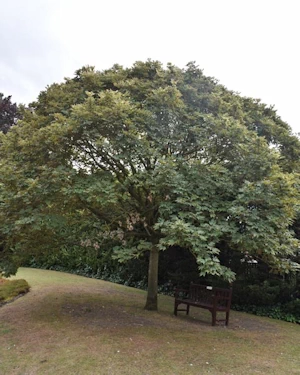 July 2025
 July 2025
 July 2025
Acer pseudoplatanus acer - maple; pseudoplatanus - false plane, referring to a superficial similarity of leaves and bark to those of plane trees (genus platanus)
Sycamore
Not native to Britain, but they have been here for many years and are well established across the country. These broadleaf trees can grow to 35m and live for 400 years. Twigs are pink-brown and hairless. Small, green-yellow flowers hang in spikes, or 'racemes'. After pollination by wind and insects, female flowers develop into distinctive winged fruits known as samaras.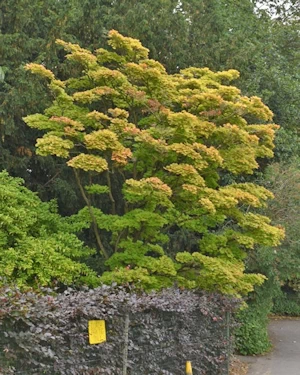 July 2025
 July 2025
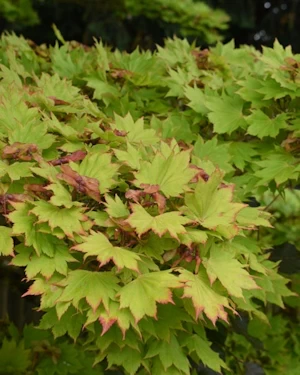
Acer shirasawanumafter Japanese botanist Homi Shirasawa; aureum - from Latin aurum - golden aureum
Full moon maple
A bushy, medium-sized deciduous shrub or small tree, native to Japan. Grown for its spectacular foliage - bright lime green in spring, brilliant yellow - orange - red in autumn. The flowers are 1 cm diameter, with five dark purplish-red sepals, five small whitish petals (soon lost), and red stamens. They are andromonoecious male (staminate) and hermaphrodite (bisexual) flowers are on the same plant , produced 10–20 together in erect terminal corymbs a type of inflorescence in which the lower flowers have longer pedicels than the upper ones, creating a flat-topped appearance. in early spring soon after the leaves appear. The fruit is a paired samara, bright red maturing brown.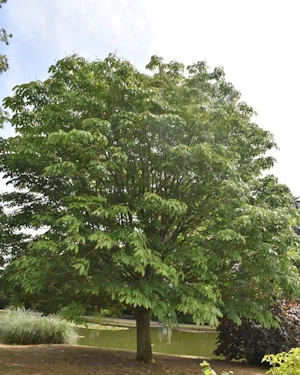 July 2025
 July 2025
 July 2025