×
![woodturning]()

Trees Gallery - Burnby Hall Gardens. Page 3
Pocklington
 July 2025
 July 2025
 July 2025
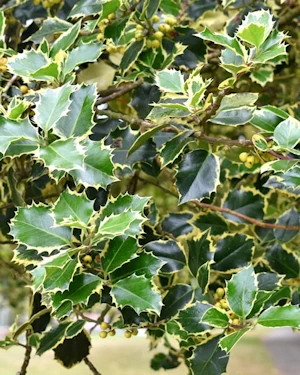
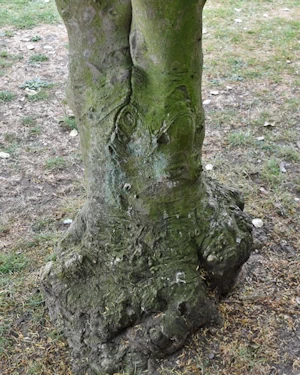
Ilex aquifolium ilex : - holm oak; aquifolium - acus 'needle', folium, 'leaf'
Variegated holly
One of very few native British hardwood evergreen trees. It can exceed 10 m in height, but is more often 2 - 3 m. It can live 500 years, but usually does not reach 100. The flowers are white, four-lobed, and pollinated by bees. Holly is dioecious there are male plants and female plants , with fruits only appearing on female plants, which require male plants nearby to fertilise them. The fruit is a bright red (or yellow) drupe stone fruit . This variety is a cultivar, a dioecioushaving male and female reproductive parts on separate plants female, with lots of red berries later in the season. Medium sized, about 8 - 12m. July 2025
 July 2025
 July 2025
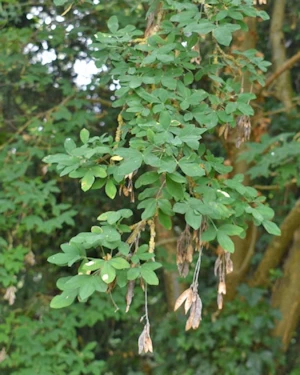
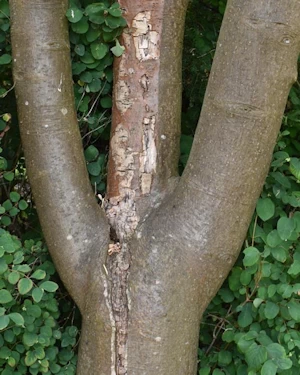
Laburnum anagyroides Laburnum : - possibly related to Lebanon, the tree's native region; anagyroides - resembling the genus Anagyris, a genus of shrubs in the pea family.
Laburnum
A.k.a. Cytisus laburnum, common laburnum, golden chain or golden rain. A small deciduous tree or large shrub growing to 7 m. , dark green spreading branches and pendulous and pubescent twigs. It has a fine flowering display during May and June, with pea-like, golden yellow flowers densely packed in pendulous racemes up to 25 cm long, but is rather drab the rest of the year. The black seeds contain cytisine, an alkaloid somewhat poisonous to humans as well as goats and horses, especially when not ripe. The wood is hard and heavy, of a yellow/brown colour, ideal for making posts, for woodturning and as fuel. The tree is also known as false ebony since the heartwood darkens with age to almost black, one of the few dark woods native to the UK.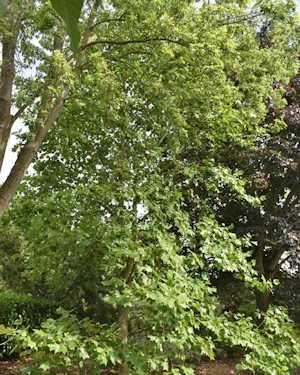 July 2025
 July 2025
Liriodendron Leirion - Greek (λιριο) for lily>; Dendron - (δένδρο) tree; Tulipa - tulip flower; fera - bearing or producing tulipifera
Tulip tree
. A.k.a. tulipwood, tuliptree, tulip poplar, whitewood, fiddletree, lynn-tree, hickory-poplar, and yellow-poplar; native to E North America. It can grow to more than 50 m, often with no limbs until it reaches 25 - 30 m, making it a very valuable timber tree. No longer called a hardwood, the term midwood was created expressly for the wood. The bark is brown, furrowed, aromatic and bitter. The wood is light yellow to brown, and the sapwood creamy white. In autumn they turn a clear, bright yellow. The flowers are pale green or yellow (rarely white), with an orange band on the tepals; they yield large quantities of nectar.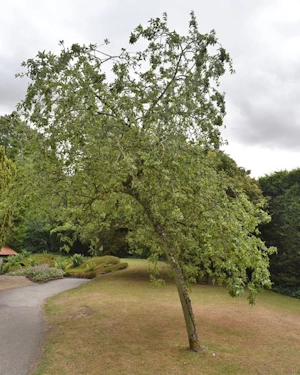 July 2025
 July 2025
Malus sylvestris Malus - from ancient Greek melon, which referred generally to fruit, or specifically to apples; sylvestris Latin meaning of the forest, wild, or pertaining to woods. It signifies that this is the wild species contrasting with the cultivated apple (Malus domestica).
Crab apple thought to derive from the Old Norse skrab, meaning small, thorny, or rough, referring to the tree's appearance.
A slow-growing, often gnarled tree that can live up to 100 years. It has a compact, dense, and thorny structure, with twigs that often develop spines. The hermaphroditecontaining both male and female floral organs: pistils and stamens flowers sppear in late spring (April-May), 5-petaled, and pink-tinged white. Fruits are small (2 - 3cm), yellow-green to yellow-red, bitter fruits which ripen in autumn. These are too sharp to eat raw but are used in jellies and for wildlife. The bark is grey-brown and often becomes flaked or fissured with age. July 2025
 July 2025
 July 2025
Metasequoia - meta - changed or transformed; so the genus name means like a sequoia glyptostroboides - oides is a Greek suffix meaning resembling, so the tree resembles glyptostrobus, the Chinese swamp cypress (glypto - carved, grooved, strobus - cone.
Dawn redwood
A vigorous, fast-growing deciduous conifer with fibrous, orange-brown bark, making a large, narrowly conical tree to 25m tall. The globose pollen cones are 5 - 6 mm long, produced on long spikes in early spring, but only on trees growing in regions with hot summers. Older trees may form wide buttresses on the lower trunk, and distinctive "armpits" under each branch. The bark is vertically fissured and tends to exfoliate in ribbon-like strips.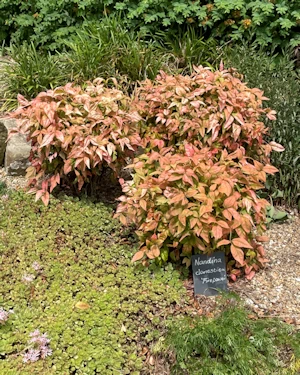 July 2026
Nandina Nandina - from nantian zhu, the Chinese name which translates to southern heavenly bamboo.domestica - from Latin domesticus, meaning of the household, referring to it being traditionally grown next to Japanese homes to ward off bad luck and welcome good spirits; firepower - cultivar name describing the explosive, fiery red and crimson colour that the lime-green leaves take on during the autumn and winter months. domestica firepower
Dwarf heavenly bamboo
A compact, low-growing evergreen shrub with year-round colour changes. Despite its common name it is a relative of the berberis family and is not a bamboo. It typically reaches a neat, mounded height and spread of 45 to 60 cm. In spring and summer, new compound leaves emerge with a soft lime-green, yellowish, or pinkish tint. In mid-summer, the plant produces conical clusters of small, star-shaped white flowers. In autumn and winter the foliage undergoes a dramatic transformation into brilliant shades of fiery red, orange, and deep burgundy. Some plants may also produce small clusters of shiny, round scarlet berries that persist through the cold months.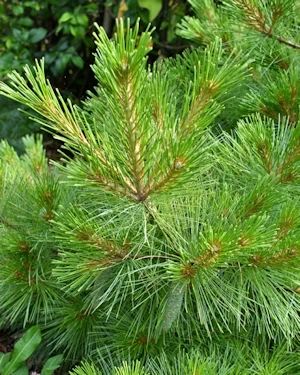
July 2026

July 2026
Pinus mugo pinus - Latin for pine, (pitu - resin); mugo - an old Tyrolese name, likely referring to a diminutive of musk, implying an aromatic or mossy quality mughus
Dwarf mountain pine
. A.k.a. mountain pine, scrub mountain pine, Swiss mountain pine, bog pine, creeping pine, or mugo pine. A native of S and E Alps and the Balkan peninsula, it is a low, shrubby, often multi-stemmed plant 3 - 6 m tall with matt-textured, thin-scaled nut-brown symmetrical cones. July 2025
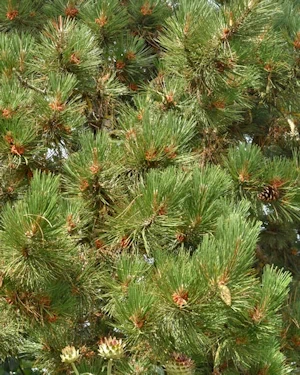 July 2025
Pinus sylvestris pinus- Latin for pine silva - woodland or forest, reflecting the tree's habitat.
Scots pine
An evergreen conifer native to northern Europe. Mature trees grow to 35m and can live for up to 700 years. The needle-like leaves are blue-green and slightly twisted, and grow in pairs on short side shoots. Scots pine is monoecious both male and female flowers grow on the same tree. Male flowers comprise clusters of yellow anthers at the base of shoots. Female flowers are small, red-purple and globular, and grow at the tips of new shoots. [Woodland Trust]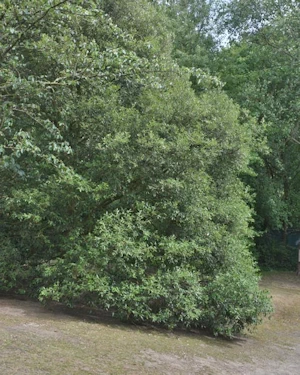 July 2025
 July 2025
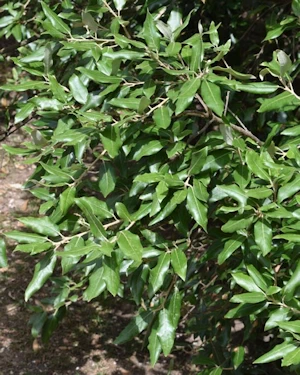
Quercus ilex quercus - Latin name for oak, derived from the Proto-Indo-European root kwerkwu; ilex - Latin for holm oak: evergreen leaves resemble those of holly (holm is an old English word for holly).
Holm oak
Also called holly oak or evergreen oak, due to the similarity of its leaves to the holly. A native of the mediterranean, it was planted extensively in Britain as tall hedging and coastal shelter belts, and is now naturalised across much of the suthern part of the country, a spread likely to continue northwards as climate change improves conditions for it here.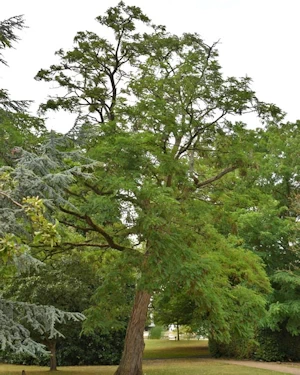 July 2025
 July 2025
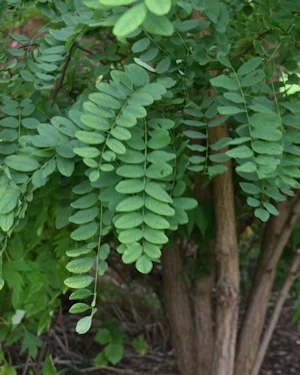
Robinia pseudoacacia Robinia after French herbalists Jean and Vespasian Robin who introduced the tree to Europe; pseudes - Greek, meaning false ; acacia, the leaf shape was initially mistaken for that of an acacia;
Black locust
A.k.a. False acacia. A native of the USA, but widely planted in other temperate countries, where it can be invasive and classed as a weed. It is a fast-growing, spreading tree to 25m tall with deeply furrowed rough bark and spines formed from stipules on twigs and suckers. The dark green leaves comprise 5-11 pairs of oval leaflets. Dense, drooping clusters of slightly scented white flowers, each 15-20mm long and with a yellow blotch at the base of the standard petal, are borne in late spring and summer and are followed in autumn by hairless, linear to oblong pods containing 4-10 seeds [RHS]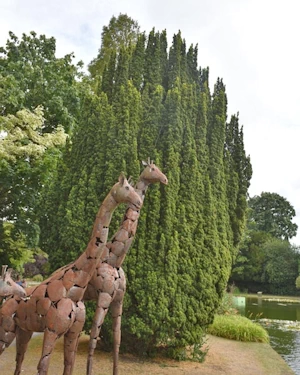 July 2025
 July 2025
 July 2025