×
![woodturning]()

Trees Gallery - Belsay Hall
Northumberland
 September 2024
 September 2024
 September 2024
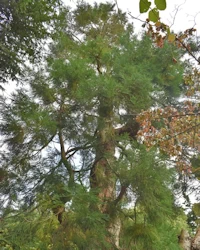
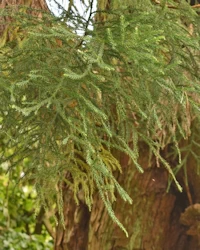
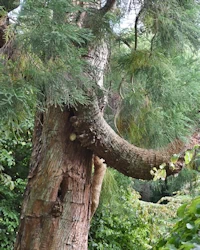
Cryptomeria japonica krypto - from Greek, hidden; meros - part; referring to the concealed reproductive parts japonica - of Japan.
Japanese cedar
A.k.a. Japanese redwood, a very large evergreen tree native to Japan, reaching up to 70 m with 4 m trunk diameter. It is superficially similar to the related giant sequoia (Sequoiadendron giganteum), from which it can be differentiated by the longer leaves and smaller cones, and the harder bark on the trunk (thick, soft and spongy in giant sequoia).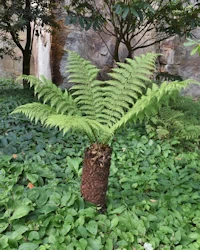 September 2024
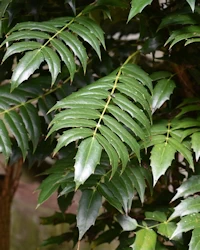
Dicksonia antarctica Dicksonia - after Scottish nurseryman James Dickson (1738-1822) antarctica - Latin term meaning 'southern' referring to the fern's origin in the southern hemisphere rather than Antarctica itself.
Woolly tree fern
A.k.a. man fern or soft tree fern. Native to S Australia. It can grow to 15 m, but more typically 5m. It has an erect rhizome forming a trunk, which is very hairy at the base and the crown. The 'trunk' of this fern is merely the decaying remains of earlier growth of the plant and forms a medium through which the roots grow. The large, dark green, roughly-textured fronds spread in a canopy of 2–6m across. Reproduction is primarily from spores, but it can also be grown from plantlets occurring around the base of the rhizome. September 2024
 September 2024
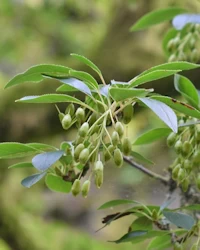
Enkianthus enkyos - Greek meaning 'pregnant', anthos meaning flower, in reference to the prominent swelling at the base of each flower; campanulatus Latin, referring to the bell-shaped flowers.campanulatus
Redvein enkianthus
A large, upright, deciduous shrub up to 5 m, with clusters of small cream or reddish, bell-shaped flowers, with red veins, similar to pieris.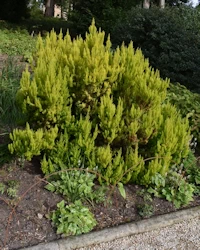 September 2024
 September 2024
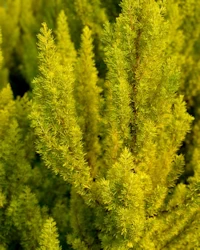
Erica arborea ereikē - Greek meaning 'heath', arborea from Latin meaning tree-like, reflecting the plant's tendency to grow into a small tree rather than a low shrub. Albert's gold.
Tree heather
An upright evergreen shrub or small tree growing to 1 - 4 m in cultivation, native to the Mediterranean. It is a calcifuge preferring acid soil. There are several cultivars and hybrids: this could be e. Estrella Gold, or more likely e. arborea var. alpina f. aureifolia 'Albert's Gold' September 2024
 September 2024
Erica arborea ereikē - Greek meaning 'heath', arborea from Latin meaning tree-like, reflecting the plant's tendency to grow into a small tree rather than a low shrub. alpina.
Tree heather
An upright evergreen shrub or small tree growing to 2 m in cultivation, native to the Mediterranean. It is a calcifuge preferring acid soil. There are several cultivars and hybrids: this one was helpfully labelled as e. arborea alpina. September 2024
 September 2024
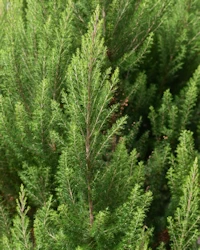
Erica cinerea ereikē - Greek meaning 'heath', cinerea from Latin meaning ash-grey; pallas - Latin for pale, referring to the flowers. pallas.
Bell heather
A low, spreading shrub growing to 60 cm, native to Europe. The flowers are bell-shaped, purple (rarely white), produced in mid to late summer. It mostly occurs on moors and heathland with relatively dry, acidic, nutrient poor soils. It occurs in coastal dune heath and dune slack and occasionally in woodland. This one was helpfully labelled as e. cinerea pallas. September 2024
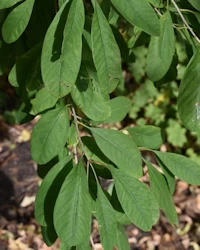 September 2024
Exochorda giraldii exo - Greek meaning 'outside', chorda meaning cord or string, probably referring to the unusual bony seed capsule structure; giraldii - after 19th century Italian botanist Luigi Giraldi..
Pearlbush
Exochorda are deciduous shrubs growing to 2–4 m. The flowers are white, with five petals, produced in spring on the ends of the branches. The fruit is a dry coccetum a type of fruit composed of multiple carpels from a single flower that separate at maturity, each dehiscing along two sutures, and is also sometimes described as a capsule consisting of five fused carpels, which split to release the flattened seeds."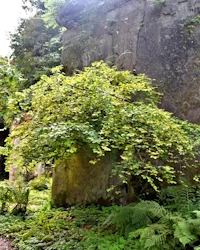 September 2024
 September 2024
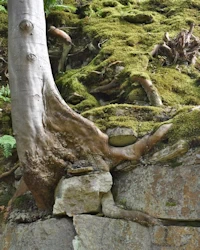 September 2024
Fagus sylvatica Fagus - Latin for beech; sylvatica - from Latin silvanus, of the forest
Common beech
Native across Europe, growing to a height of more than 40 m and develop a huge domed crown. The reddish brown, torpedo-shaped leaf buds form on short stalks and have a distinctive criss-cross pattern. Beech is monoeciousboth male and female flowers grow on the same tree . In April and May the tassel-like male catkins hang from long stalks at the end of twigs, while female flowers grow in pairs, surrounded by a cup. Beech woodland is shady and characterised by a dense carpet of fallen leaves and mast husks which prevent most woodland plants from growing. Only specialist shade-tolerant plants can survive beneath a beech canopy.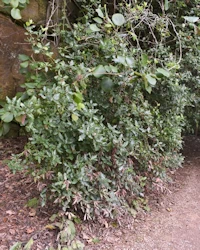 September 2024
 September 2024
Garrya elliptica garrya - after Nicholas Garry, Secretary of the Hudson's Bay Company, who aided botanist David Douglas;elliptica - from Greek meaning 'twice as long as broad' or 'oblong with rounded ends' describing the plant's distinctive ellipse-shaped leaves.
Silk tassel bush
An erect, bushy, evergreen shrub reaching 2–5 m, native to the coastal ranges of California and S Oregon. Dioecious flowers are concentrated in inflorescences which cascade downward. The pendant male catkins are much more showy than the shorter female versions, grey-green and up to 30 cm long. The plant shown here is a female version, with ripened purplish black fruit.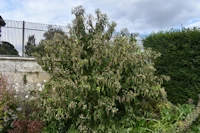 September 2024
 September 2024
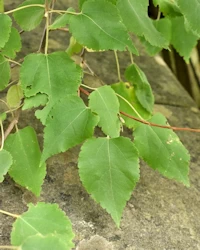
Heptacodium - hepta, seven; codeia, poppy head;- so it has seven structures resembling poppy heads; miconioides, resembling the genus miconia, due to its boldly veined leaves.miconioides
Seven Son Flower a translation of the plant's Chinese name, also referencing the seven-part flower clusters
A deciduous large shrub or small tree, growing to 9 m. The upright, spreading branches give the plant a rounded, often irregular shape. In September it produces large shows of small fragrant five-petalled white flowers. When the white corollas have fallen, the calyces develop into deep red expanded lobes which persist into November. The bark of the trunk is papery and thin, light tan in colour, and exfoliates in strips or sheets. September 2024
 September 2024
Hoheria glabrata - hoheria Latinization of the Māori name 'houhere; glabrata, Latin meaning 'hairless' or 'smooth', referring to the plant's leaves.
Mountain lacebark
A.k.a. ribbonwood. A small spreading soft-wooded deciduous tree inhabiting wetter mountain areas of the western South Island and Mt Taranaki in New Zealand. Flowers are white, cupped, developing into a dry narrowly-winged fruit.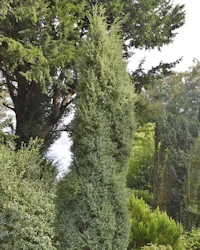 September 2024
 September 2024
Juniper juniper is the Latin name for the genus
Juniper
This columnar juniper could be j. scopulorum, a small evergreen tree that in favorable conditions may reach as much as 20 m. Younger trees have a narrow pyramidal shape, but develop into a rounded, oval, or spreading and irregular crown when older. They may have a single trunk or multiple stems. The texture of the bark is rough and comes away in shreds on the trunk with brown bark showing in the cracks at times. The seed cones are dark blue-black, berry-like, round to somewhat irregular in shape with two lobes. September 2024
 September 2024
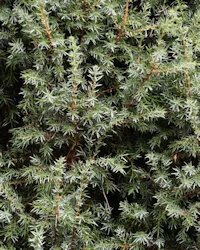
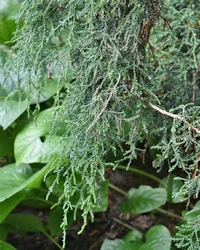
Juniper recurva juniper is the Latin name for the genus; recurva meaning 'curved backward', relating to its branches; 'coxii', after E. H. M. Cox (1893–1977), who introduced it to cultivation. coxii
Himalayan juniper
A.k.a. drooping juniper, a large shrub or tree reaching 6 - 20 m, with a trunk up to 2 m in diameter and a broadly conical to rounded or irregular crown. The cones are berry-like, globose, glossy blue-black, and contain one seed. Male cones are 3 - 4 mm long, and shed their pollen in early spring. It is largely monoecious with pollen and seed cones produced on the same plants. September 2024
 September 2024
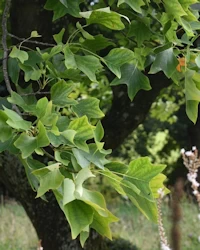
Liriodendron tulipifera from Greek leirion - 'lily'; dendron - tree; tulipifera - tulip-bearing, referencing the flower's appearance
Tulip tree
A.k.a. whitewood, fiddletree, lynn-tree, hickory-poplar, and yellow-poplar. A large, deciduous tree native to North America, growing to 50 m. In late spring or early summer, mature tulip trees produce upright, cup-shaped flowers with yellow-green petals and orange markings inside. The tree's overall shape is pyramidal or broadly conical. Fast growing with a tall straight trunk, it is very commercially valuable timber.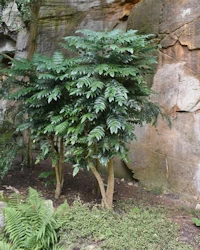 September 2024
 September 2024