×
![woodturning]()

Trees Gallery - Mellerstain
Near Kelso, Mellerstain
 September 2024
 September 2024
 September 2024
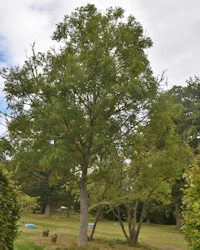
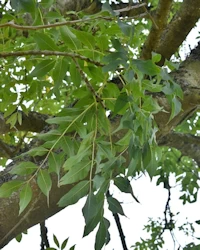
Fraxinus excelsior Fraxinus - Latin for ash tree; excelsior - higher or taller
Ash
Native to Europe, Asia Minor and Africa, reaching 35m. Tall and graceful, they often grow together, forming a domed canopy. The bark is pale brown to grey and fissures as the tree ages. The tree is easily identified in winter by its smooth twigs that have distinctive black, velvety leaf buds arranged opposite each other. Ash is dioecious male and female flowers typically grow on different trees although a single tree can also have male and female flowers on different branches. Both male and female flowers are purple and appear before the leaves in spring, growing in spiked clusters at the tips of twigs. Once the female flowers have been pollinated by wind, they develop into conspicuous winged fruits, or 'keys', in late summer and autumn. [Woodland Trust] September 2024
 September 2024
Liriodendron tulipifera Leirion - Greek (λιριο) for lily>; Dendron - (δένδρο) tree; Tulipa - tulip flower; fera - bearing or producing
Tulip tree
. A.k.a. tulipwood, tuliptree, tulip poplar, whitewood, fiddletree, lynn-tree, hickory-poplar, and yellow-poplar; native to E North America. It can grow to more than 50 m, often with no limbs until it reaches 25–30 m, making it a very valuable timber tree. No longer called a hardwood, the term midwood was created expressly for the wood. The bark is brown, furrowed, aromatic and bitter. The wood is light yellow to brown, and the sapwood creamy white. Leaves are alternate, simple, pinnately veined, with four lobes. In autumn they turn a clear, bright yellow. The flowers are pale green or yellow (rarely white), with an orange band on the tepals; they yield large quantities of nectar.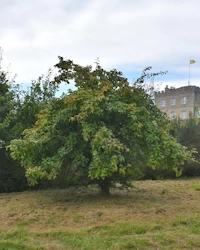 September 2024
 September 2024
Mespilus germanica from Greek mesos, half and pilos, felt or ball, referring to the fruit's shape; germanica, meaning German, though the plant is indigenous to SW Asia and SE Europe, having been introduced to Germany and other parts of Europe via the Romans.
Medlar
A large shrub or small tree, cultivated since Roman times for its peculiar fruit, which is usually eaten after bletting a process of softening fleshy fruits beyond ripening - with medlars leaving them in sawdust for several weeks It may be eaten raw and in a range of cooked dishes. The wild form is a thorny shrub to 4m. In the cultivated forms, the thorns are usually reduced or absent. The wood has a fine texture, very hard, with a white, slightly pink-tinted sapwood and a brownish core. The annual rings are clearly visible.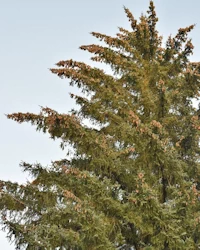 September 2024
Picea sitchensis - pix, meaning pitch, referring to the tree's resin; sitchensis is a geographical reference to Sitka, Alaska, which in itself is named after a local Native American tribe.
Sitka spruce
Native to Sitka in SE Alaska, and W coast of Canada and USA. It can exceed 90 m in height. Its name is derived from the community of Sitka in southeast Alaska, where it is prevalent. It accounts for around half of UK commercial plantations. Cones have crinkled and toothed margins; needles are flattened when viewed in a cross section, and have a woody peg at the base of every needle. September 2024
 September 2024
Prunus laurocerasus prunus Latin name for the plum tree, which was borrowed from the Ancient Greek word proúnē. "Laurocerasus" combines the Latin words laurus, laurel, and cerasus, cherry, referring to the plant's laurel-like leaves and cherry-like fruit.
Cherry laurel
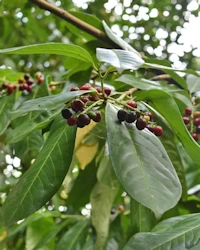
A.k.a. common laurel, an evergreen shrub or small to medium tree, growing to 5 to 15 m, native to regions bordering the Black Sea in SW Asia and SE Europe. The fruit is a small cherry 1–2 cm broad, turning black when ripe in early autumn. It is considered an invasive species in Britain, where it forms dense thickets in woodlands and on hillsides. September 2024
 September 2024
Pseudotsuga menziesii pseudo - Greek for false; tsuga - hemlock - the tree resembles hemlock but isn't hemlock menziesii - after Archibald Menzies, a Scottish naturalist and physician who first documented the tree on Vancouver Island in 1791
Douglas Fir after David Douglas, another Scottish botanist who collected and sent seeds of the tree back to Britain in 1827.
A tall, conical-shaped evergreen conifer that can grow to 55m and live for more than 1,000 years, native to W North America. The scales on cones are distinctive, with three pointed tips. When crushed, the leaves have a sweet resin smell. Its bark is non-flammable, offering good resistance to forest fires.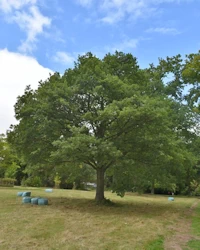 September 2024
 September 2024
Quercus robur quercus - Latin name for oak, derived from the Proto-Indo-European root kwerkwu; robur - Latin for robust or strong, referencing the tree's sturdiness;
English oak
Native to mixed woodland areas from the British Isles to the Caucasus, and it has been widely planted in North America since the 1600s. It is a large, majestic, deciduous tree of the white oak group that typically grows in cultivation to 30 m with a broad-spreading, rounded crown. Insignificant monoecious separate male and female catkins appear on the same tree yellow-green flowers appear in spring as the leaves emerge. Fruits are oval acorns 2.5 cm long, on long stalks (peduncles). September 2024
 September 2024
Robinia pseudoacacia Robinia after French herbalists Jean and Vespasian Robin who introduced the tree to Europe; pseudes - Greek, meaning false ; acacia, the leaf shape was initially mistaken for that of an acacia; Frisia is a cultivar name referring to its golden-yellow or chartreuse foliage.
False acacia
A.k.a. golden locust tree, a bushy, upright, medium-sized deciduous tree growing to 8m, with bright greenish-yellow, pinnate leaves, which become more vivid in summer and turn orange-yellow in autumn. It seldom flowers freely, but when it does has racemes of white pea-like fragrant flowers in May and June. Popular for its bright pinnate foliage, which resemble acacia blossom. The flowers are followed by dark brown seeds. September 2024
 September 2024
Salix alba Salix the Latin name for willow alba - white, referring to the underside of the leaves.
White willow
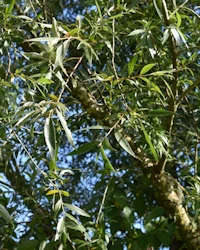
The largest species of willow, growing up to 25m. They often have an irregular, leaning crown. The bark is grey-brown and develops deep fissures with age, and twigs are slender, flexible and grey-brown. In winter it has green to yellow-brown, hairy, narrow buds which are pressed close to the twig.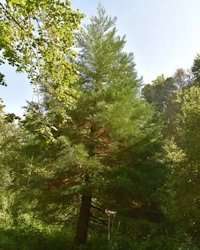 September 2024
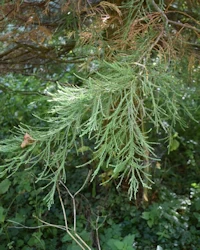 September 2024
Sequoiadendron Sequoia - probably relating to the cherokee tribe, possibly from Latin sequoia, relating the sequence of seeds per cone; dendron - tree; giganteum - giant. giganteum
Giant redwood
Giant Redwood is arguably the world's most impressive tree. It is the largest tree by volume and can live for more than 3000 years. Publication of its discovery in the Sierra Nevada. California, in 1852 caused a sensation. The first seed to reach Europe arrived in Scotland in August 1853 with John Matthew, narrowly beating a consignment for Veitch Nurseries in Exeter. The main use of this tree is as a grand specimen, but some experimental forestry has been conducted in Britain.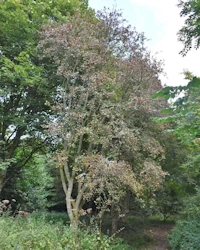 September 2024
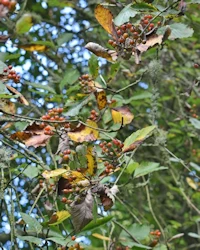 September 2024
 September 2024
Sorbus aucuparia from Latin: sorbus - service tree; avis, bird and capere catching , reportedly describing the use of the fruit as bait for fowling.
Rowan
A.k.a. mountain ash, a deciduous tree or shrub growing to 15m, native to Europe, Asia and N Africa. It is monoecious male and female flowers grow on the same tree , blossoming from May to June in dense corymbs of small yellowish white flowers and develops small red pomes as fruit that ripen from August to October, eaten by many bird species. The fruit and foliage have been used in the creation of dishes and beverages, as a folk medicine, and as fodder for livestock. Its tough and flexible wood has traditionally been used for woodworking. Yellowish grey, gleaming bark becomes grey-black with lengthwise cracks in advanced age, with lenticels in the bark elongated and coloured a bright ochre. The plant does not often grow older than 80 years.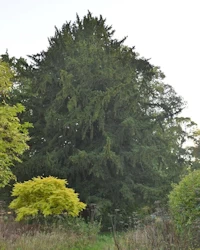 September 2024
 September 2024
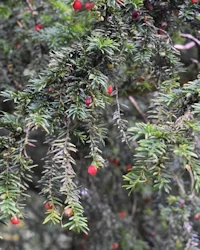
Taxus baccata Taxus - from Greek 'toxus' or 'toxon'," meaning bow; or 'toxikon' meaning poisonous; baccata - Latin for 'bearing berries'.
Common Yew
Ancient, morbid, toxic. Yew is one of the longest-lived native species in Europe. This has made it a symbol of death and doom, but it provides food and shelter for woodland animals. Mature yew trees can grow to 20m. The yew is probably the most long-lived tree in northern Europe. It has evergreen needle-like leaves which grow in two rows along a twig. Underneath, the needles each have a raised central vein. Unlike many other conifers, the common yew does not actually bear its seeds in a cone. Instead, each seed is enclosed in a red, fleshy, berry-like structure known as an aril which is open at the tip. [Woodland Trust] September 2024
 September 2024
Tilia europaea tilia - Latin name for the lime tree europaea, - European.
Common lime?
Always difficult to tell which of the three main species of lime is here, but this could be t. europaea, the European lime or linden: a hybrid of two native limes - small and large leaved. Selected for its ornamental properties, it is propagated by layering or root cuttings, so every common lime is genetically identical. The trees produced are very uniform and are popular for planting in avenues. Highly attractive to bees when in flower, common limes produce an abundance of shoots from the base of their trunks. Ironically, despite being a selected variety or cultivar, most gardeners cut off these sprouts to reveal clear, if scarred, bark. Beneath that bark limes produce a fibre called bast, once important for rope-making. Today limes still produce piano keys, sound boards for instruments and refreshing tea.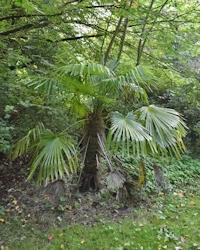 September 2024