×
![woodturning]()

Trees Gallery - Harmony and Priorwood gardens, Melrose
Scottish Borders

Melrose
There are 3½ acres of gardens at Harmony Hall in Melrose, a walled garden with neatly clipped lawns, scented borders and fruit and vegetable beds spread out from a beautifully proportioned Georgian manor house – available as holiday accommodation. Across the road, next to Melrose Abbey, is Priorwood Garden, alos managed by the National Trust for Scotland, which used to be dedicated to growing and processing dried flowers. There is still a herbaceous border, but most of the garden is an orchard cultivating many historical apple varieties, as well as plums, pears, damsons and greengages. There is a relatively small shady woodland area bringing a touch of untamed wildness to the garden.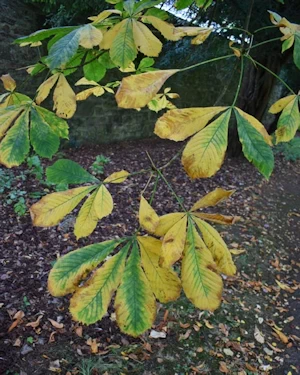 September 2024
 September 2024
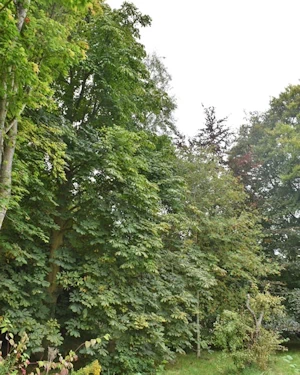
Aesculus aesculus - an old Latin name for oak or mast bearing tree (or possibly an edible acorn); hipposcastanum - from Greek hippos - horse and kastanos - chestnut, reflecting similarity of the two unrelated species' nuts. Horse could be due to a medicinal use with horses (doubtful), or the older meaning of horse as 'strong'. hippocastanum
Horse chestnut
I think this is horse chestnut, a.k.a. buckeye and conker tree. A large tree, growing to 39 m with a domed crown of stout branches, native to the Balkans. On old trees, the outer branches are often pendulous with curled-up tips. The flowers are usually white with a yellow to pink blotch at the base of the petals; they are produced in spring in erect panicles a loose branching cluster of flowers 10–30 cm tall with 20–50 flowers on each panicle, from which 1-5 conkers develop in green, spiky capsules. Each conker is 2–4 cm in diameter, glossy nut-brown with a whitish scar at the base.[Wikipedia]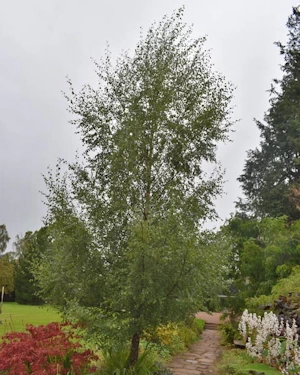 September 2024
 September 2024
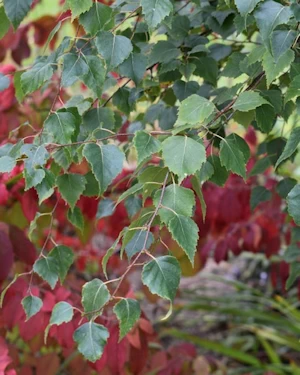
Betula pendula betula - birch, possibly from betu, meaning tar or bitumen, which can be extracted from the tree, pendula - hanging down (L.)
Silver birch
Leaves are light green, small and triangular-shaped with a toothed edge, which fade to yellow in autumn. Monoecious both male and female flowers (catkins) are found on the same tree catkins emerge from April to May, the male catkins long, yellow-brown, hanging in groups of two to four, like lambs' tails. Female catkins are smaller, short, bright green and erect.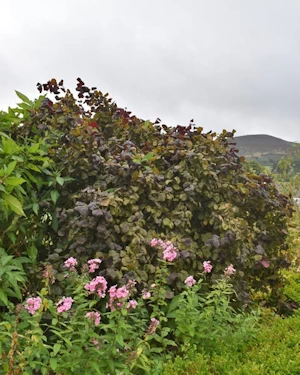 September 2024
 September 2024
Corylus avellana korys - Greek for helmet or hood, referring to the shape of the husk aroun the nut; avellana after the town of Avella in the Italian province of Avellino, which was known for its hazelnut production
Purple hazel
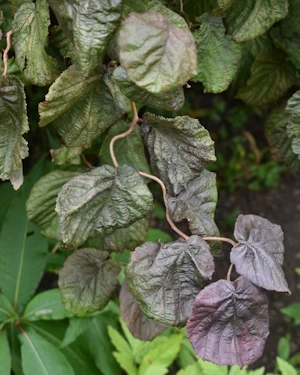
Hazel is a shrub growing 3–8 m on multiple stems, native to Europe and Western Asia. The hazelnut, or cob nut, the kernel of the seed, is edible and used raw, roasted, or ground into a paste. The nut is round, in contrast to the longer filbert nut. Historically, the shrub was an important component of the hedgerows used as field boundaries in lowland England. This purple variety is probably Red Majestic: a compact, spreading to semi-weeping small tree with dark purple leaves, becoming green flushed as the season progresses and twisted branches. In late winter it bears purplish-pink catkins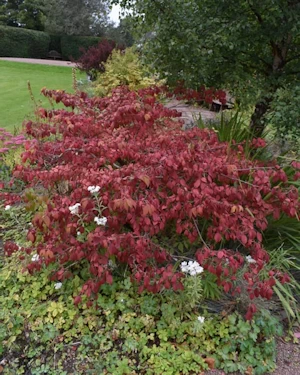 September 2024
 September 2024
Euonymous alatus euonymous - Latin meaning 'good name', alatus, 'winged', referring to the distinctive corky ridges that protrude from its branches like wings;
Burning bush
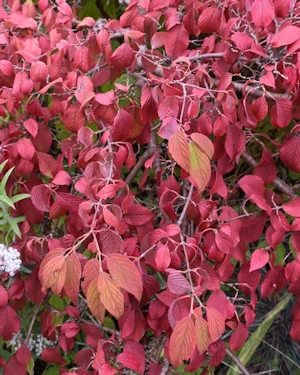
A.k.a. winged spindle, a native of C and N China, Japan, and Korea. It is prized for its bright red autumn colour - hence the common name - and also for its bright orange or pink fruits. The leaves were surprisingly red on this specimen when we visited in August. Its other name, winged spindle, comes from the corky wings along the stems.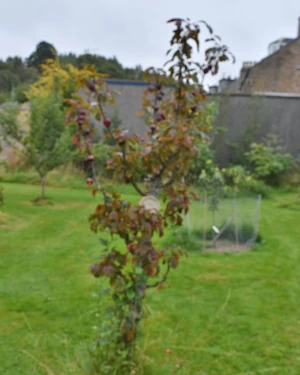 August 2024
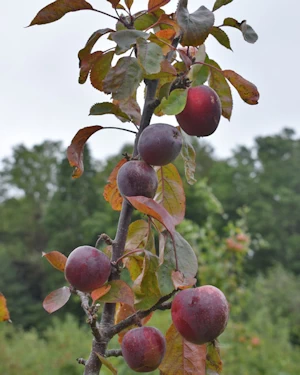 August 2024
Malus domestica Malus : - Latin for apple tree; domestica - Latin, indicating cultivated
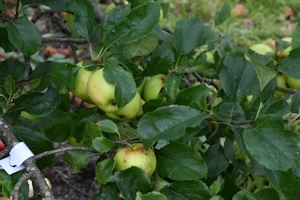
Crab apple Maypole
A deciduous crab apple tree, with a narrowly upright habit (it belongs to the ballerina group) and oval-shaped green leaves that are tinted red when young, and turn dark red before dropping in autumn. Masses of fragrant pink flowers are produced in spring, followed in early autumn by small red fruits.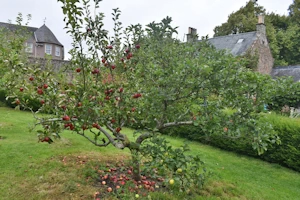 September 2024
 September 2024
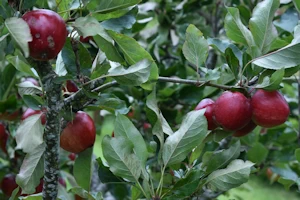 September 2024
Malus domestica Malus : - Latin for apple tree; domestica - Latin, indicating cultivated
Family tree apple tree
One of the apple trees in the orchard is a "family tree" made up of the ‘Katja’, ‘Discovery’ and ‘Greensleeves’ varieties. Family trees are created using a technique where three different varieties of apple are grafted onto one tree. The apples are selected so they cross-pollinate well and provide a staggered harvest of fruits.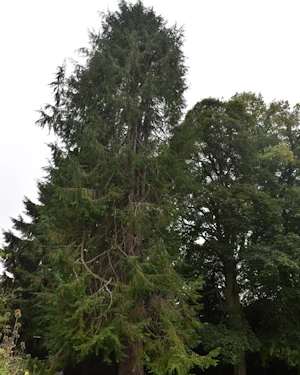 September 2024
 September 2024
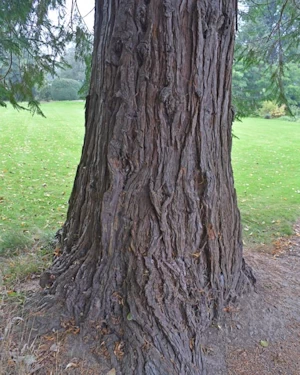
Chamaecyparis Chamaecyparis: - dwarf cypress; lawsoniana - after Scottish nurseryman Charles Lawsonlawsoniana
Lawson's cypress
A large evergreen tree growing to 50 m with trunk up to 2 m in diameter. The bark is silver-brown, vertically furrowed, and up to 25 cm thick at the base. The seed cones are globose, 7–14 mm in diameter, green at first, maturing brown in autumn. Trees can live up to about 600 years of age.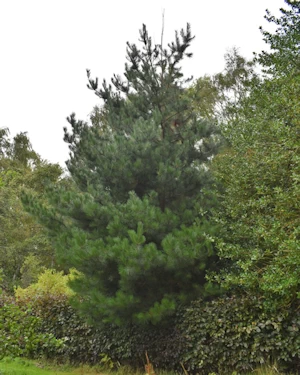 September 2024
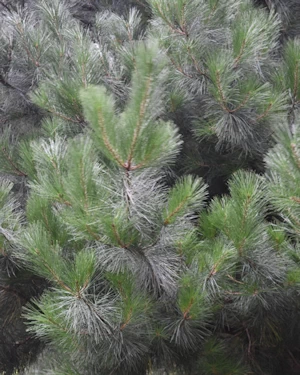 September 2024
Pinus nigra? pinus - Latin for pine; nigra - black, referring to the dark colour of its bar
Austrian pine
A.k.a. black pine. A native of the coastal areas of SE Europe, but planted in Britain in graveyards and for forestry. Fast growing and long lived - 500 years is not uncommon. Can grow to 50 m tall and 14 m wide.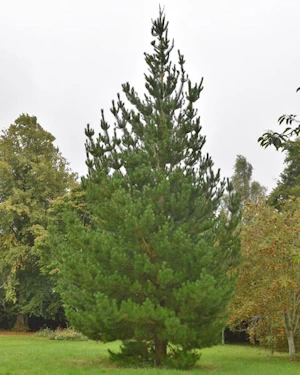 September 2024
 September 2024
Pinus peuce pinus - Latin for pine; peuce - from Greek peuke, pine trees
Macedonian pine
This is probably p. peuce, but I am not certain. In common with many other members of the white pine group, Macedonian pine has long slender cones that hang downwards. This species is native to mountains in the southwest Balkans. White pine blister rust is a serious problem for North American white pines and Macedonian pine has been used in breeding programmes to introduce disease resistance. This species is only rarely used for timber production in Britain.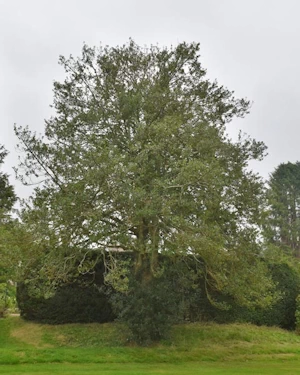 September 2024
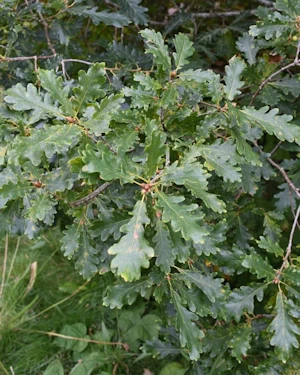 September 2024
Quercus robur quercus - Latin name for oak, derived from the Proto-Indo-European root kwerkwu; robur - Latin for robust or strong, referencing the tree's sturdiness.
English oak
A native of mixed woodland areas from the British Isles to the Caucasus, and has been widely planted in North America since the 1600s. It is a large, majestic, deciduous tree of the white oak group that typically grows in cultivation to 30 m with a broad-spreading, rounded crown. Insignificant monoecious separate male and female catkins appear on the same tree yellow-green flowers appear in spring as the leaves emerge. Fruits are oval acorns 2.5 cm long, on long stalks (peduncles).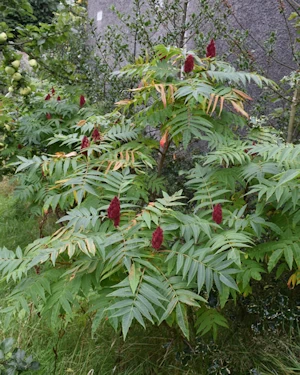 September 2024
Rhus typhina rhus - Greek for the sumac tree, typhina from Latin meaning antler-like. This refers to the plant's velvety young branches that resemble antlers in velvet.
Staghorn sumac
A dioecious having male and female reproductive parts on separate plants , deciduous shrub or small tree growing up to 5 m, native to E North America. It is an invasive species in some parts of the world. It has alternate, pinnately compound leaves. The velvety texture and the forking pattern of the branches, reminiscent of antlers, give it the common name. Small, greenish-white flowers occur in dense terminal panicles a loose branching cluster of flowers from May to July. It spreads by seeds and rhizomes and can form large groups of clones often with the older shoots in the center and younger shoots around central older ones.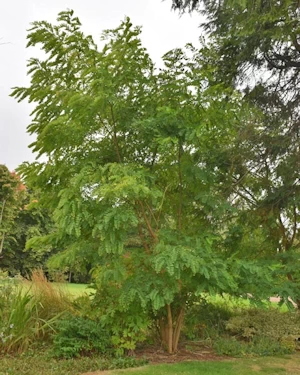 September 2024
 September 2024
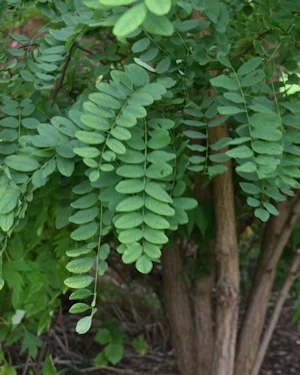
Robinia pseudoacacia Robinia after French herbalists Jean and Vespasian Robin who introduced the tree to Europe; pseudes - Greek, meaning false ; acacia, the leaf shape was initially mistaken for that of an acacia;
Black locust
A.k.a. False acacia. A native of the USA, but widely planted in other temperate countries, where it can be invasive and classed as a weed. It is a fast-growing, spreading tree to 25m tall with deeply furrowed rough bark and spines formed from stipules on twigs and suckers. The dark green leaves comprise 5-11 pairs of oval leaflets. Dense, drooping clusters of slightly scented white flowers, each 15-20mm long and with a yellow blotch at the base of the standard petal, are borne in late spring and summer and are followed in autumn by hairless, linear to oblong pods containing 4-10 seeds [RHS]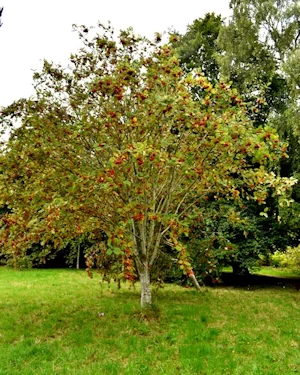 September 2024
 September 2024
 September 2024
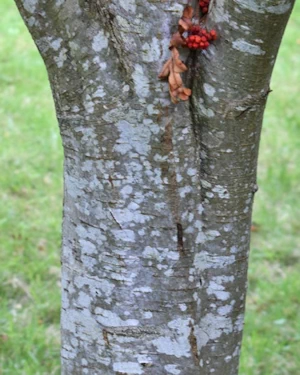
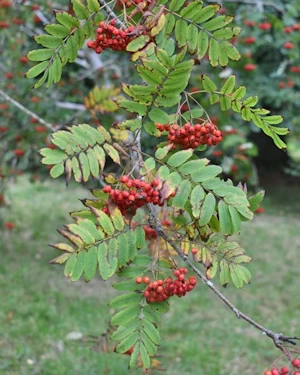
Sorbus aucuparia from Latin: sorbus - service tree; avis, bird and capere catching , reportedly describing the use of the fruit as bait for fowling.
Rowan
A.k.a. mountain ash, a deciduous tree or shrub growing to 15m, native to Europe, Asia and N Africa. It is monoecious male and female flowers grow on the same tree , blossoming from May to June in dense corymbs of small yellowish white flowers and develops small red pomes as fruit that ripen from August to October, eaten by many bird species. The fruit and foliage have been used in the creation of dishes and beverages, as a folk medicine, and as fodder for livestock. Its tough and flexible wood has traditionally been used for woodworking. Yellowish grey, gleaming bark becomes grey-black with lengthwise cracks in advanced age, with lenticels in the bark elongated and coloured a bright ochre. The plant does not often grow older than 80 years.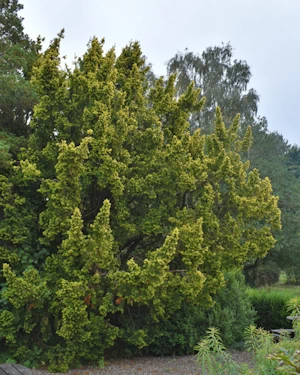 September 2024
 September 2024
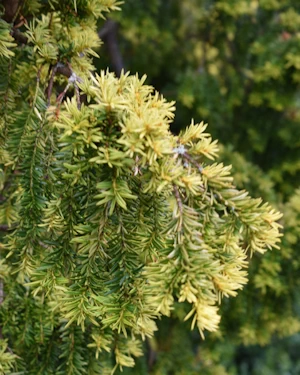
Taxus baccata - taxon Greek for bow; baccata, Latin for bearing berr; aurea, Latin for golden or variegated, referring to the plant's golden-yellow foliage aurea
Golden yew
Taxus baccata is a species of evergreen tree in the family Taxaceae, native to W, C and S Europe, as well as NW Africa and SW Asia. The plant is poisonous, with toxins that can be absorbed through inhalation, ingestion, and transpiration through the skin. Consuming any part of the tree, excluding the aril, can be deadly. T. baccata aurea is a group of slow growing evergreen conifers, with golden yellow or yellow-striped needles when young, turning green as they mature.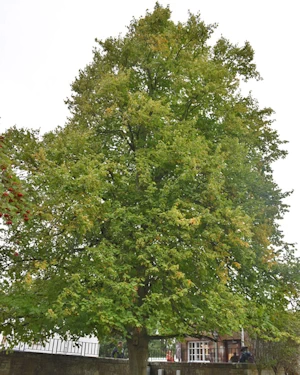 September 2024
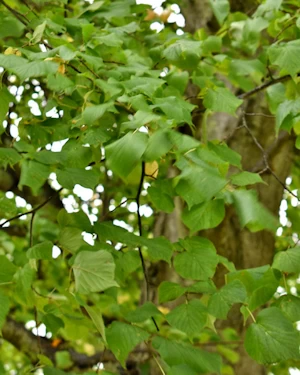 September 2024
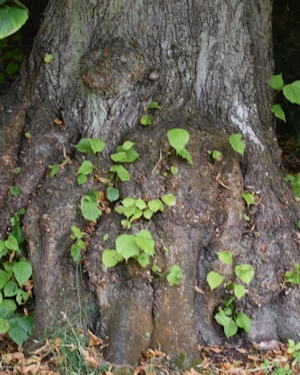 September 2024