×
![woodturning]()

Trees Gallery - Mertoun Gardens
Scottish Borders
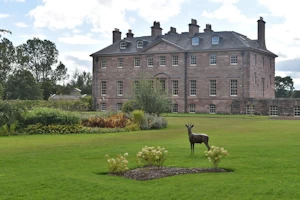
Mertoun Gardens
Mertoun House was built in 1703-05 on a high bank overlooking the River Tweed. Gvien the great age of many of the specimen trees, the gardens were probably laid out at the same time the mansion was built. The gardens have been run since 1984 by the Mertoun Gardens Trust charity, and extend to about 26 acres. There is an arboretum, established over the last 60 years, with a great variety of both conifers and hardwoods, (though sadly no labels!).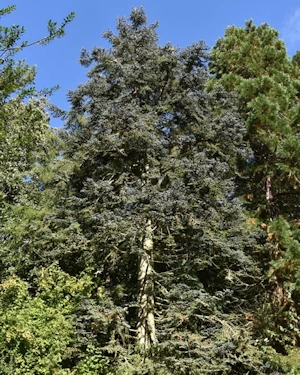 September 2024
 September 2024
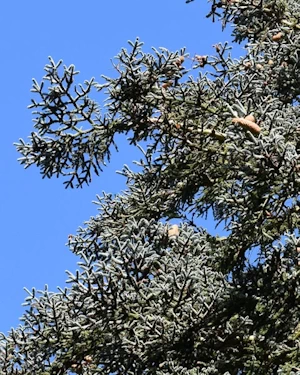
Abies procera abies - from L. abeo - to rise, to go up; procera - tall or long
Noble fir
Noble fir, a.k.a. a. procera, is restricted to the Cascade Mountains of Oregon and Washington. This large conifer was discovered in 1825 by the Scottish plant hunter David Douglas. In Scotland the noble fir thrives in wet conditions and poor acidic soils. As a result it has come to be an important component of plantation forestry in western Scotland. A form with blue needles (a. procera glauca) is a popular garden ornamental.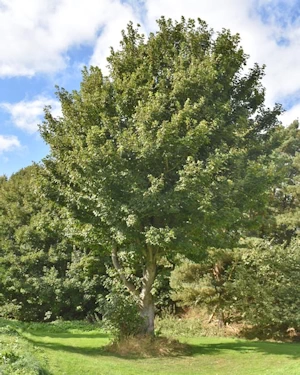 September 2024
 September 2024
 September 2024
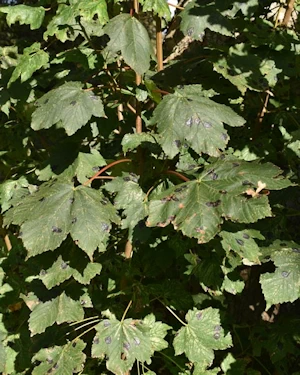
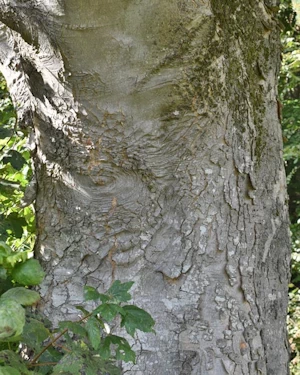
Acer pseudoplatanus acer - maple; pseudoplatanus - false plane, referring to a superficial similarity of leaves and bark to those of plane trees (genus platanus)
Sycamore
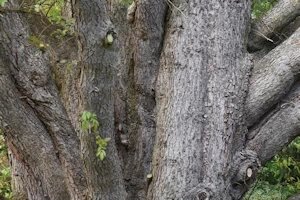
Not native to Britain, but they have been here for many years and are well established across the country. These broadleaf trees can grow to 35m and live for 400 years. Twigs are pink-brown and hairless. Small, green-yellow flowers hang in spikes, or 'racemes'. After pollination by wind and insects, female flowers develop into distinctive winged fruits known as samaras.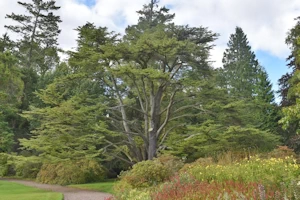 September 2024
 September 2024
 September 2024
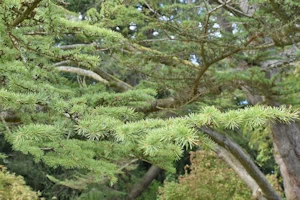
Cedrus libani - cedrus - from Greek kedros, cedar; libani - from Lebanon.
Cedar of Lebanon
A native to the mountains of the E Mediterranean basin, a large evergreen conifer (growing up to 40 m), the national emblem of Lebanon. The trunks of old, open-grown trees often fork into several large, erect branches. The rough and scaly bark is dark grey to blackish brown, and is run through by deep, horizontal fissures that peel in small chips. It grows rapidly until the age of 45 to 50 years, then growth becomes extremely slow after the age of 70.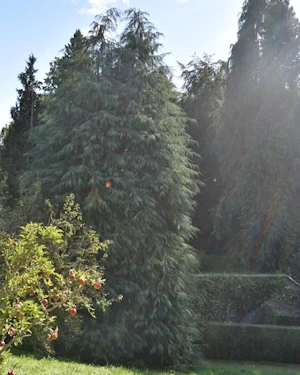 September 2024
 September 2024
 September 2024
 September 2024
 September 2024
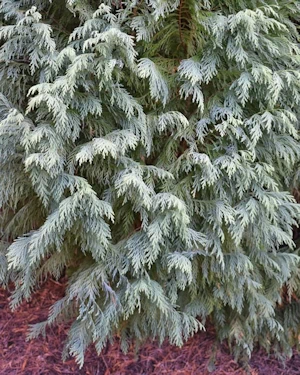
Chamaecyparis Chamaecyparis: - dwarf cypress; lawsoniana - after Scottish nurseryman Charles Lawsonlawsoniana
Lawson's cypress
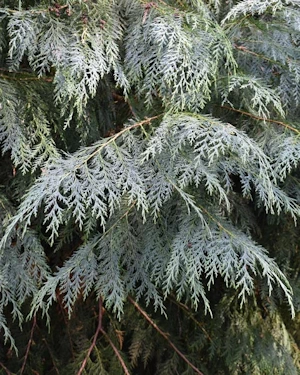
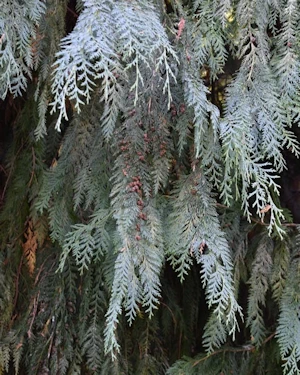
A large evergreen tree growing to 50 m with trunk up to 2 m in diameter. The bark is silver-brown, vertically furrowed, and up to 25 cm thick at the base. The seed cones are globose, 7–14 mm in diameter, green at first, maturing brown in autumn. Trees can live up to about 600 years of age.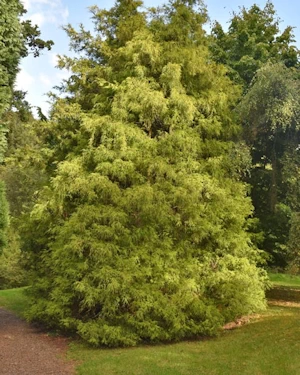 September 2024
 September 2024
Chamaecyparis pisifera from Greek chamai, dwarf or on the ground, and kyparissos, cypress; then from Latin pisi, pea and fero to bear, referring to the plant's small, pea-like cones.
Sawara cypress
A slow-growing coniferous tree growing to 35–50 m tall with a trunk up to 2 m in diameter. The bark is red-brown, vertically fissured and with a stringy texture. The cones are globose, 4–8 mm diameter, with 6–10 scales arranged in opposite pairs, maturing in autumn about 7–8 months after pollination.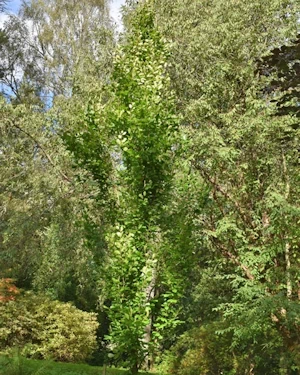 September 2024
 September 2024
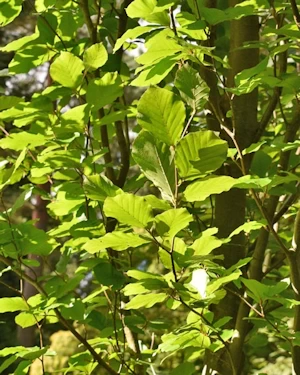
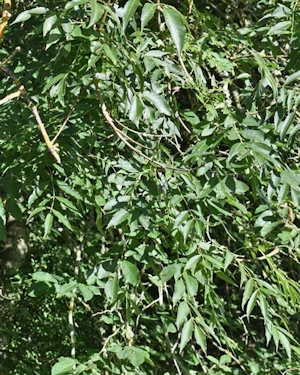
Fagus sylvatica Dawyck Fagus - Latin for beech; sylvatica -from Latin silvanus, of the forest Dawyck - hybrid found at Dawyck
Dawyck Beech
An unusual upright form of the common European beech (Fagus sylvatica), found by chance in the woodlands in the first part of the 19th century. It was from this plant in the early 20th century that new owner F R S Balfour began to make grafts and disribute material to other growers and eventually into the commercial nursery trade. As a result of his endeavours the tree became more widely cultivated and, in 1912, the clone was formally named Fagus sylvatica Dawyck. Such propogation of the Dawyck beech is the only way to perpetuate the unique character of this tree, which will not breed true from seed.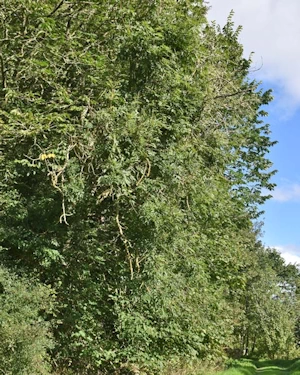 September 2024
 September 2024
Fraxinus excelsior Fraxinus - Latin for ash tree; excelsior - higher or taller
Ash
Native to Europe, Asia Minor and Africa, reaching 35m. Tall and graceful, they often grow together, forming a domed canopy. The bark is pale brown to grey and fissures as the tree ages. The tree is easily identified in winter by its smooth twigs that have distinctive black, velvety leaf buds arranged opposite each other. Ash is dioecious male and female flowers typically grow on different trees although a single tree can also have male and female flowers on different branches. Both male and female flowers are purple and appear before the leaves in spring, growing in spiked clusters at the tips of twigs. Once the female flowers have been pollinated by wind, they develop into conspicuous winged fruits, or 'keys', in late summer and autumn. [Woodland Trust]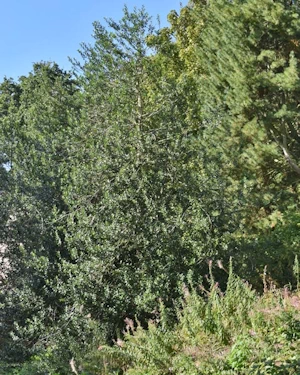 September 2024
 September 2024
Ilex aquifolium ilex : - holm oak; aquifolium - acus 'needle', folium, 'leaf'
Holly
One of very few native British hardwood evergreen trees. It can exceed 10 m in height, but is more often 2–3 m. It can live 500 years, but usually does not reach 100. The flowers are white, four-lobed, and pollinated by bees. Holly is dioecious there are male plants and female plants , with fruits only appearing on female plants, which require male plants nearby to fertilise them. The fruit is a bright red (or yellow) drupe stone fruit . September 2024
 September 2024
 September 2024
Liquidambar styraciflua - from Latin liquidus - liquid; and Arabic ambar, amber, referring to the liquid amber-like resin. Styraciflua - 'flowing with styrax' or 'flowing with resin'
Sweetgum
A deciduous tree growing to 20m, broadly conical in outline, with rather glossy, maple-like leaves. Unisexual, greenish flowers appear in spring and persist into autumn; with some persisting into winter. Staminate male flowers are in terminal racemes 5–8 cm long, pistillate female are in a solitary head on a slender peduncle borne in the axil of an upper leaf. The distinctive compound fruit is hard, dry, and globose, up to 40 mm in diameter, composed of numerous (40–60) capsules. August 2024
 August 2024
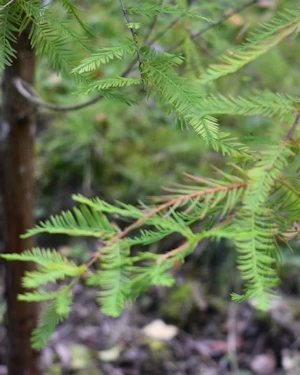
Metasequoia - meta - changed or transformed; so the genus name means like a sequoia glyptostroboides - oides is a Greek suffix meaning resembling, so the tree resembles glyptostrobus, the Chinese swamp cypress (glypto - carved, grooved, strobus - cone).
Dawn redwood
A vigorous, fast-growing deciduous conifer with fibrous, orange-brown bark, making a large, narrowly conical tree to 25m tall. The globose pollen cones are 5–6 mm long, produced on long spikes in early spring, but only on trees growing in regions with hot summers. Older trees may form wide buttresses on the lower trunk, and distinctive "armpits" under each branch. The bark is vertically fissured and tends to exfoliate in ribbon-like strips.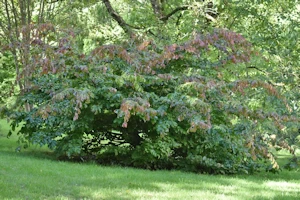 September 2024
 September 2024
Parrotia persica - named after Georg Friedrich Parrot (1767 - 1852), a German naturalist; and persica refers to the tree's native habitat, Iran (i.e. Persia).
Persian ironwood
A quick growing multi-stemmed tree growing to 30 m and 15 m wide. The bark is smooth, pinkish-brown flaking to leave a mosaic of cinnamon, pink, green, and pale yellow patches in a similar manner to plane trees. The flowers are somewhat similar to witch-hazel flowers but dark red; they are likewise produced in late winter on bare stems, but differ in having only four rounded sepals with no petals. The fruit is a two-part capsule containing two seeds, one in each half.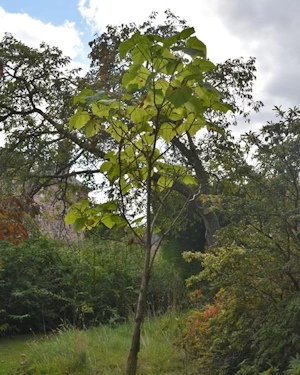 September 2024
 September 2024
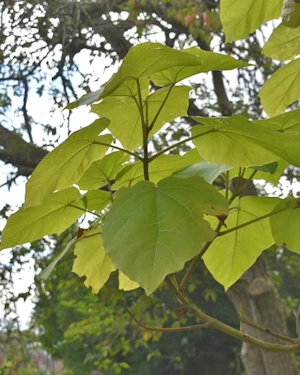
Paulownia tomentosa Paulownia - in honour of Anna Pavlovna (1795–1865), Russian Princess & Queen: She was the daughter of Czar Paul I of Russia and the Grand Duchess of Russia, and later became the Queen Consort of the Netherlands from 1840 to 1849. tomentosa - from Latin meaning 'covered in hairs', referring to the hairy undersides of the tree's large, heart-shaped leaves.
Empress tree
A.k.a. the foxglove tree (reflecting the purple flower shapes) or princess tree (named after Queen Anna Pavlovna of the Netherlands).The common name reflects the purple flower shapes. It is rapid growing, to 25m, and can be invasive - a neophyte in the UK. Fragrant flowers, large and violet-blue in colour are produced before the leaves in early spring, on panicles 10–30 cm long, with a tubular purple corolla 4–6 centimetres long resembling a foxglove flower.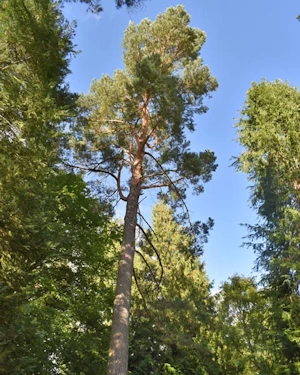 September 2024
Pinus sylvestris pinus- Latin for pine silva - woodland or forest, reflecting the tree's habitat.
Scots pine
An evergreen conifer native to northern Europe. Mature trees grow to 35m and can live for up to 700 years. The needle-like leaves are blue-green and slightly twisted, and grow in pairs on short side shoots. Scots pine is monoecious both male and female flowers grow on the same tree. Male flowers comprise clusters of yellow anthers at the base of shoots. Female flowers are small, red-purple and globular, and grow at the tips of new shoots. [Woodland Trust]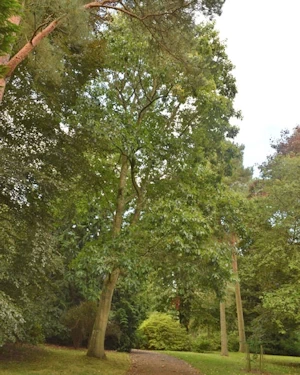 September 2024
 September 2024
 September 2024
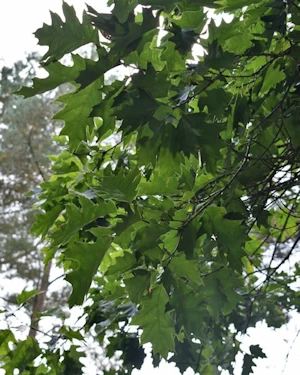
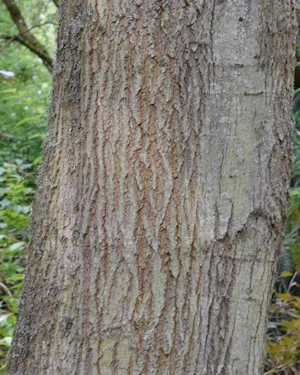
Quercus rubra quercus - Latin name for oak, derived from the Proto-Indo-European root kwerkwu; rubra - red;
Red oak
A deciduous tree native to N America and S Canada. It can grow 30 to 40m, with a trunk up to 2m in diameter, quite straight and not too spreading in habit. The acorns take two years to develop on the tree. It is considered invasive in Europe, and is a neophyte in Britain. September 2024
 September 2024
Sorbus (hupehensis?)Sorbus - Latin name for the mountain ash tree; hupehensis" refers to the Hupeh province in central China, where the species was first discovered and collected by botanist Ernest Wilson in 1910.
Hupeh rowan
A.k.a. Hubei rowan, a small deciduous tree growing to 5–10 m tall, with grey-brown to purplish-brown bark. The branches and shoots are slender. The flowers are 5–7 mm diameter, with five white petals and 20 yellowish-white stamens. The fruit is a pome 5–8 mm diameter, bright pink with persistent sepals, maturing in late autumn.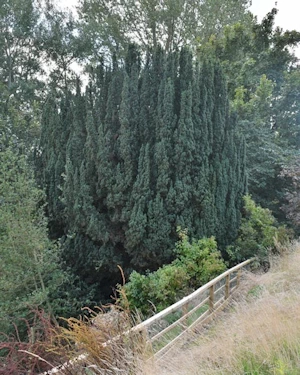 September 2024
 September 2024
Taxus baccata fastigiata Taxus - from Greek 'toxus' or 'toxon'," meaning bow; or 'toxikon' meaning poisonous; baccata - Latin for 'bearing berries'; fastigiata - upright or columnar.
Fastigiate yew
a medium-sized, evergreen shrub of narrowly columnar habit. Inconspicuous flowers are followed by red, berry-like fruits (arils).an evergreen conifer which can grow to 7m. The bark is grey-brown with purple tones, and it peels. Irish yew was originally discovered in County Fermanagh in 1780, and it is thought to be a mutant form of the common yew. All Irish yews are descended from this plant.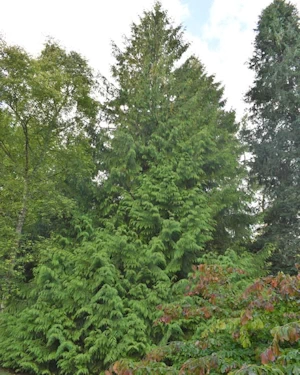 September 2024
 September 2024
 September 2024