×
![woodturning]()

Trees gallery - Logan Botanic Garden - page 2
Galloway
 September 2025
 September 2025
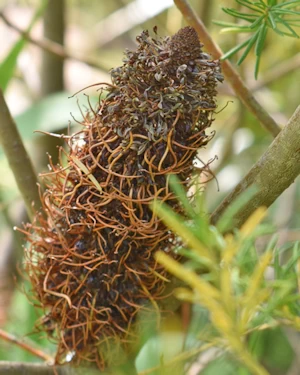
Banksia ericifolia banksia - after English botanist and naturalist Sir Joseph Banks (1743 - 1820), who first collected specimens of the genus in 1770 during Captain Cook's voyage; ericifolia - from Latin erica meaning heather and folium meaning leaf, referring to the heather-like leaves; macrantha: - from Greek makros meaning large and anthosmeaning flower. macrantha
Heath leaved banksia
A.k.a. lantern banksia, a large, fast-growing Australian shrub reaching up to 6 m, known for its massive, bottlebrush-like autumn/winter blooms. It naturally occurs only in the northern coastal areas of New South Wales and stands out for having much larger flowers and foliage than the typical species. It produces spectacular, elongated spikes in brilliant shades of golden-orange to deep red. Dense, dark green, needle-like leaves are arranged alternately on the branches. The bark is smooth, greyish-brown, becoming corky with age. September 2025
 September 2025
Banksia marginata banksia - after English botanist and naturalist Sir Joseph Banks (1743 - 1820), who first collected specimens of the genus in 1770 during Captain Cook's voyage; marginata - from Latin marginatus, meaning with a distinct margin, referring to the distinct appearance of the leaves, which have prominently recurved or rolled-under edges.
Silver banksia
It ranges from a 20 cm prostrate shrub on exposed coastal heaths to a 12 - 30m tall tree. Its stiff leaves have silvery-white undersides. It produces dense, cylindrical spikes of pale yellow flowers up to 13 cm long that bloom from late summer to winter. These die back to leave woody cones consisting of seed-bearing follicles, which often open following extreme heat or bushfires. The bark is light grey and smooth when young, developing a finely tessellated texture with age.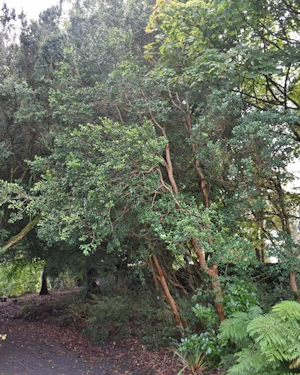 September 2025
 September 2025
 September 2025
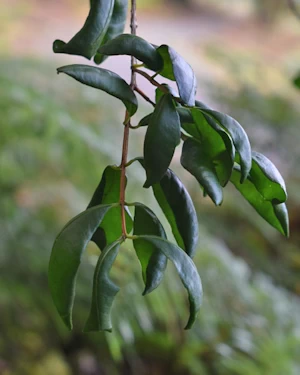
Blepharocalyx cruckshanksiiblepharocalyx - from Greek blepharis meaning eyelash or fringe and calyx the outer whorl or sepals of a flower, referring to the fringed, ciliate margins of the calyx lobes; cruckshanksii - after Scottish plant hunter and botanist Alexander Cruckshanks (1792 - 1860), who collected specimens of the plant during his travels in Chile and Peru in the 1820s and 1830s
Temu
A.k.a. Heaven Scent, a highly fragrant, slow-growing evergreen shrub or small tree up to 20 m (3-5 m in cultivation), native to Chile. It produces dense masses of scented white flowers with conspicuous stamens bloom during the summer months. It hasflaking bark and edible dark berries that transition from red to dark purple/black as they ripen.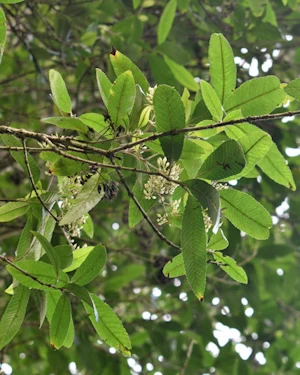 September 2025
 September 2025
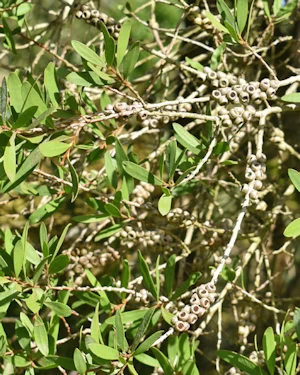
Caldcluvia caldcluvia - after Alexander Caldcleugh, a Scottish botanist and plant collector who traveled extensively through South America between 1819 and 1825. paniculata - Latin meaning with panicles, referring to the plant's inflorescence which bloom in loose, branching, pyramidal clusters. paniculata
Tiaca
An evergreen tree or shrub native to the temperate rainforests of Chile and Argentina, reaching 20m in the wild (6 m in cultivation). It has clusters of small white hermaphroditic flowers, with a greyish-brown bark, followed by leathery, many-seeded hairy capsules that are crowned by persistent styles September 2025
 September 2025
Callistemon callistemon - from Greek kalli meaning beautiful and stemon, stamens, referring to the plant's fluffy, cylindrical flowers; viridiflorus from Latin viridis meaning green and flora meaning flower, describing the lime-green colouring of its blooms viridiflorus
Green bottlebrush
A.k.a. lime bottlebrush, a hardy, broadleaf evergreen compact shrub or small tree native to Tasmania. The leaves are sword shaped, dark green, and arranged alternately along wand-like stems. Flowers bloom primarily in summer, as cylindrical, brush-like spikes with fluffy, greenish-yellow to cream-tinted stamens and are highly attractive to pollinators like bees, hummingbirds, and other beneficial insects.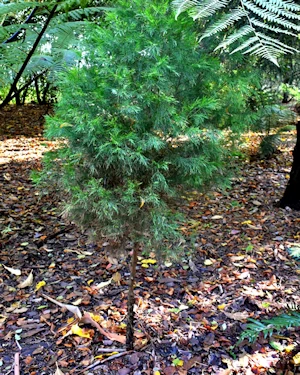 September 2025
 September 2025
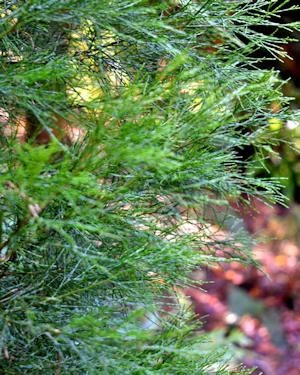
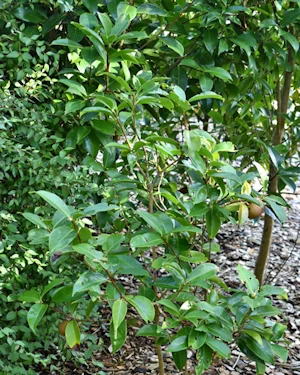
Callistris callistris - Callistris: Derived from the Ancient Greek words kallos meaning beautiful and either treis, three or trichos, hair, referring to the arrangement of the tree's tiny, scale-like leaves in whorls of three; endlicheri after Stephan Friedrich Ladislaus Endlicher (1804 - 1849), an eminent Austrian botanist, numismatist, and former director of the Botanic Gardens of Vienna. Endlicheri
Black Cypress Pine
An evergreen coniferous tree native to eastern Australia, growing 5 to 15 m, with narrow, pyramidal crown, dark green keeled leaves, and rounded cones with smooth scales. Dainty, dark green, scale-like leaves are arranged in whorls of three. The bark is tough, dark, and deeply furrowed. The species is monoecious, producing small, smooth, spherical female seed cones (15 - 20 mm in diameter) that can persist on the branches for years.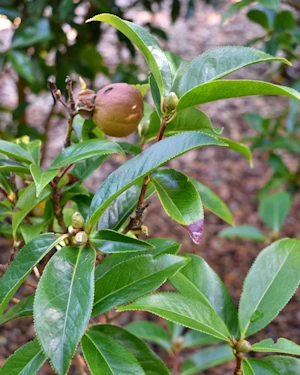 September 2025
 September 2025
Camellia camellia - after Georg Joseph Kamel (Latinized to Camellus), a Moravian Jesuit missionary and botanist who documented plants in the Philippines during the 17th century; reticulata - from Latin reticulatus, meaning net-like, referring to the dull green, elliptical leaves, which feature prominent, deeply indented veins that create a highly visible netting pattern across the leaf's surface reticulata
Yunnan camellia
A large, spring-blooming evergreen shrub or small tree native to Yunnan, China. It producing some of the largest, most spectacular flowers in the genus, ranging from soft pink to deep red,up to 15 cm across. Blooms feature 5 to 8 or more crinkled, ruffled petals surrounding vibrant yellow stamens.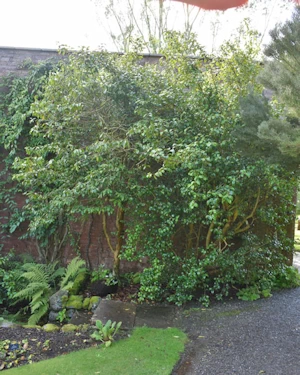 September 2025
 September 2025
Camellia williamsiiCamellia - after Georg Joseph Kamel (Latinized to Camellus), a Moravian Jesuit missionary and botanist who documented plants in the Philippines during the 17th century; williamsii - after the breeder, John Charles (J.C.) Williams, who successfully raised the first of these historic European hybrids at his Cornish estate around 1923; Inspiration - one of many named Williams' cultivars Inspiration
Camellia Inspiration
Camellia × williamsii 'Inspiration' is a free-flowering evergreen shrub with vivid, deep rosy-pink semi-double blooms and vigorous growth. Bred as a hybrid between c. reticulata and c. saluenensis. It has a robust, upright shape with dense, waxy, deep-green foliage. September 2025
 September 2025
 September 2025
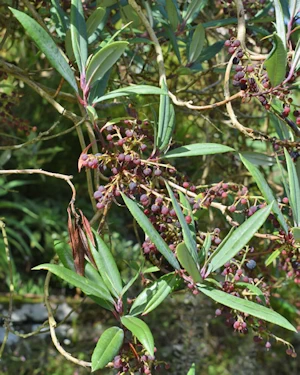
Carpodetus serratusCarpodetus - from Greek karpos meaning fruit and detos meaning bound together, referring to the way the seeds are grouped and held together in clusters inside the tree's small berries; serratus - from Latin meaning saw-toothed, describing the jagged, toothed edges of the leaves.
Marble leaf
A.k.a. Putaputawētā (Māori) a fast-growing,(up to 10 m) evergreen tree native to New Zealand. The tree exhibits heteroblasty (changing shape as it ages). Young plants are tangled, divaricating spreading at a wild angle shrubs with tight, zig-zagging branches and very small leaves. Adult trees open up to have a single, graceful trunk and larger, glossy leaves.From late spring through summer, the tree produces dense clusters (panicles) of small, fragrant white flowers. These are followed by small, chewy berries that ripen from green to black by autumn.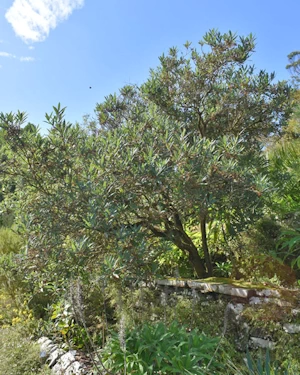 September 2025
 September 2025
ComarostaphylisComarostaphylis - Comarostaphylis - from Greek komaros, referring to the strawberry tree, Arbutus unedo and staphyle meaning cluster, describing the spherical, berry-like fruits; discolor - from Latin dis- meaning differing and color meaning hue, so different colours or two-toned. discolor
Mexican Summer Holly
An evergreen shrub or small tree up t 10 mnative to the mountains of Mexico and Guatemala. Belonging to the heath family, it has flaking bark ranging from reddish-brown to grey,and clusters of white to pink bell-shaped flowers, followed by bright red berries that often turn darker red or black at maturity.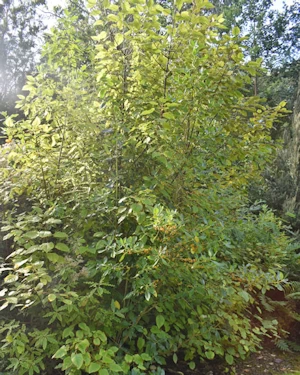 September 2025
 September 2025
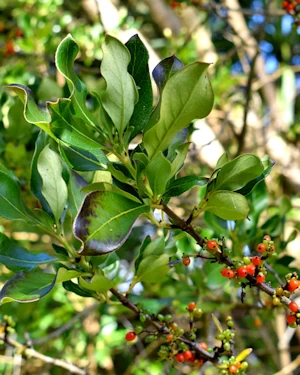
Coprosma robustaCoprosma - from Greek kopros meaning dung and osme meaning smell, referring to the foul, fetid odour released when the leaves of some species are crushed; robusta - from Latin meaning sturdy, referring to its fast-growing, hardy, colonizing nature.
Karamu
A.k.a shiny leaved coprosma, a fast-growing, evergreen shrub or small tree native to New Zealand. It is frequently used for hedging, coastal planting, and ecological restoration. Flowers are inconspicuous, small green or white, blooming primarily in the late summer. These are followed by dense clusters of bright orange-red to dark red berries (drupes), which are a major food source for native birds.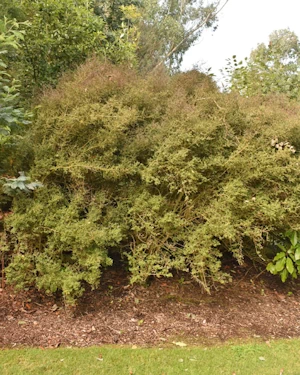 September 2025
 September 2025
Coprosma virescensCoprosma - from Greek kopros meaning dung and osme meaning smell, referring to the foul, fetid odour released when the leaves of some species are crushed; virescens - from Latin meaning becoming green, referring to the translucent green seeds visible in the berries.
Mikimiki
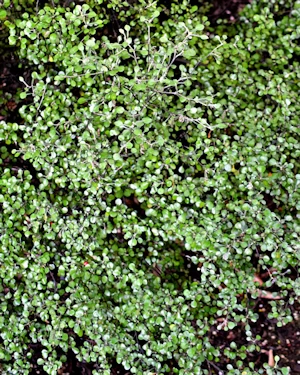
A.k.a. mingimingi, an evergreen shrub growing 2 - 3 m tall, endemic to New Zealand. Leaves are small (up to 9 mm long), with wavy edges or blunt teeth. Flowers are insignificant and apetalous. The species is dioecious individual plants are either male or female . Fruits are small (up to 6 mm) berries that start yellowish-white and ripen to greenish-translucent, acting as an important food source for native birds and skinks. It has a naturally tangled, airy, twiggy structure it making it excellent texture for informal hedging.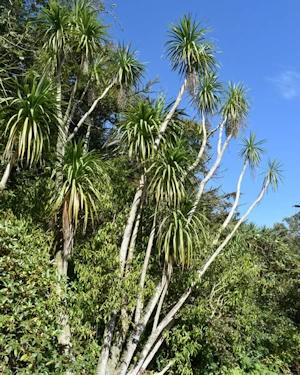 September 2025
 September 2025
 September 2025
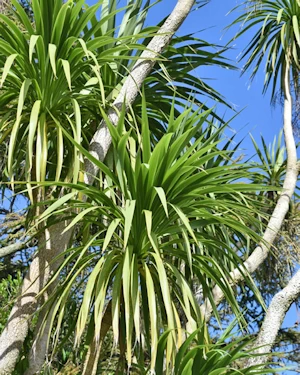
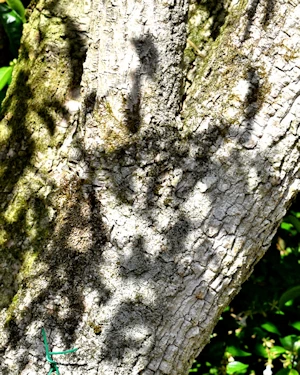
Cordyline australisCordyline - from Greek kordylē meaning club, referring to the massive, thickened underground rhizomes; australis - from Latin meaning southern: it is native to the Southern Hemisphere, specifically New Zealand.
Cabbage Palm
A.k.a. Torbay Palm, a palm-like evergreen native to New Zealand. It is not a true palm but rather a woody tree-like perennial. Young plants form a fountain of long, tough, sword-shaped leaves. As they mature, they develop a stout, straight trunk that can grow up to 20 m, branching out only after flowering to create a dense, rounded, multi-headed canopy. In late spring to summer, mature plants produce massive, dense panicles of small, heavily fragrant, creamy-white flowers,followed in autumn by small, spherical berries that are white or bluish-white.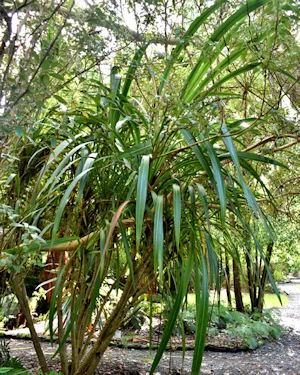 September 2025
Cordyline australisCordyline - from Greek kordylē meaning club, referring to the massive, thickened underground rhizomes; banksia - after Sir Joseph Banks (1743 - 1820), an eminent English botanist, naturalist, and patron of the natural sciences, chief botanist on Captain James Cook’s first voyage to the Pacific.
Forest Cabbage Tree
A.k.a. tī ngahere, an evergreen shrub native to New Zealand. Unlike the more tree-like c. australis, it features a low-branching habit and exceptionally long, gracefully weeping sword-shaped leaves. It usually grows as a multi-stemmed shrub or small tree up to 4 m. Leaves: Its most defining feature.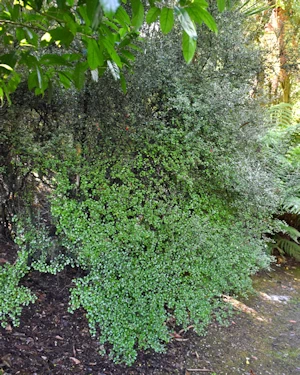 September 2025
 September 2025