×
![woodturning]()

Trees gallery - Logan Botanic Garden - page 6
Galloway
 September 2025
 September 2025
 September 2025
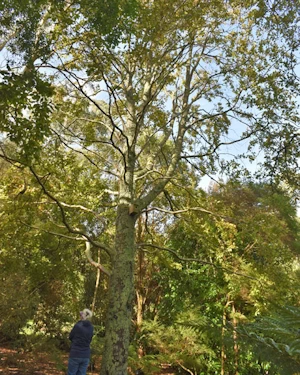
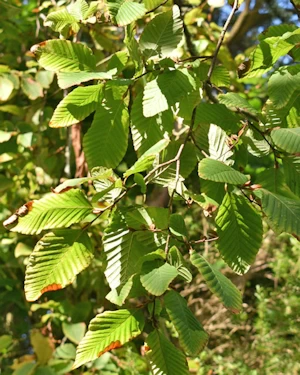
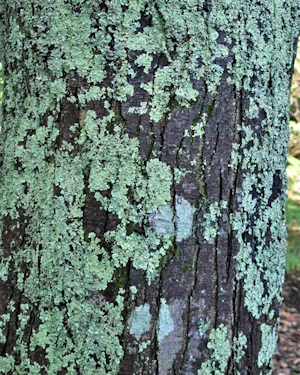
Nothofagus nervosa Nothofagus - from Greek nothos, meaning false and fagus, Latin name for the beech tree, referring to how the southern beeches closely resemble northern beeches (Fagus) but are genetically distinct; -nervosa - from Latin nervosus meaning sinewy, referring to the deeply impressed, prominent parallel veins along the leaf surface.
Rauli
A.k.a. Chilean mahogany, a fast-growing, deciduous tree native to the Andean temperate forests of Chile and Argentina. It has a tall, straight trunk and rich, cherry-red timber, with distinctively veined green leaves that turn golden-yellow in the autumn. It can reach heights of 30 to 40 m or more.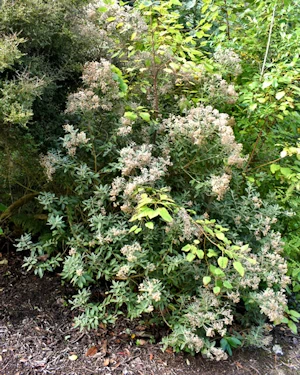 September 2025
 September 2025
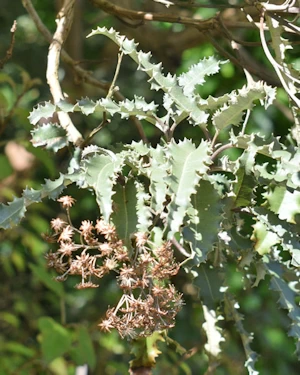
Olearia Olearia - after Johann Gottfried Olschlager, a 17th-century German scholar, theologian, and botanical author; argophylla - from Greek argos meaning white and phyllon meaning leaf, referring to the silvery-white leaf undersides argophylla
Musk Daisy-bush
A.k.a. native musk or silver shrub, is a large evergreen shrub or small tree native to SE Australia. It grows into one of the largest daisy-family plants in the world, ranging from 3 to 15 m. The leaves are alternate, broad-elliptic, and discolorous. They feature a glossy, dark green top and a silvery-white felt-like underside. It produces clusters of small, daisy-like flower heads. Crushed leaves emit a pungent, musk-like scent.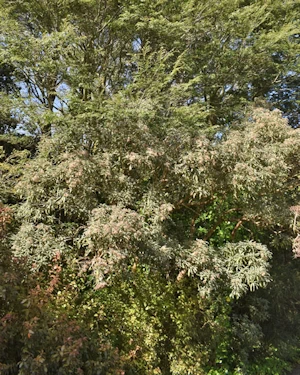 September 2025
 September 2025
Olearia ilicifolia Olearia - after Johann Gottfried Olschlager, a 17th-century German scholar, theologian, and botanical author; ilicifolia - from Latin ilex meaning holly and folium meaning leaf, referring to the wavy, grey-green, spiny-toothed foliage, which resembles holly
Mountain holly
A.k.a. Maori holly or New Zealand holly, a hardy, evergreen shrub or small tree native to New Zealand, growing up to 3 m. It has holly-like foliage, musk-scented leaves, and large, branched clusters (corymbs) of small, fragrant, daisy-like flowers. The entire plant, especially the foliage, gives off a distinct, musk-like fragrance.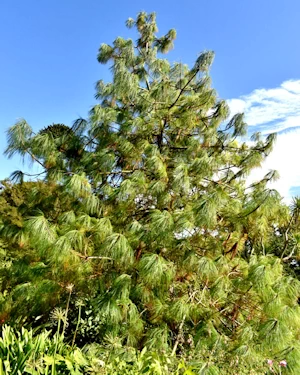 September 2025
 September 2025
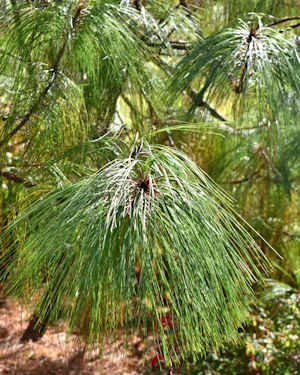
Pinus patula pinus- Latin for pine; patula - from Latin meaning wide open, spreading, or lax.
Mexican weeping pine
This is probably pinus patula, also known as jelecote pine, spreading pine or patula pine, a native to the highlands of Mexico. It can grow to 30m tall. It has been widely planted as a forestry tree in many parts of the world, but is becoming an invasive species in countries such as New Zealand, South Africa and Hawaii. Female cones are stalkless, and are 6 - 10 cm long. As with other pines, clusters of small orange coloured male cones appear in spring.Pittosporum Pittosporum - from Greek pitta meaning pitch, tar or resin, and sporos meaning seed, referring to the sticky substance that coats the seeds; tenuifolium - from Latin tenuis meaning thin, and folium, meaning leaf, describing the narrow, thin leaves tenuifolium
Kohuhu
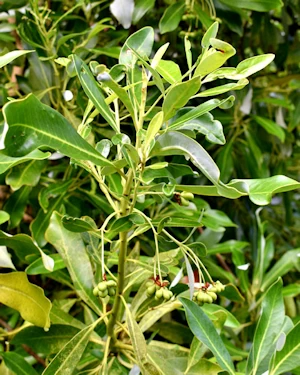
A.k.a. tawhiwhi, a dense, fast-growing evergreen shrub or small tree native to New Zealand, growing from 8 - 10 m. It has black stems and glossy, wavy-edged foliage; widely used for hedging and screening. The leaves are small, glossy, and typically pale green. It has dark, wiry, almost black bark on its young, twiggy shoots. It produces tiny cup-shaped flowers in late spring to early summer, ranging from deep red to dark purple that are strongly honey-scented. September 2025
 September 2025
 September 2025
Pittosporum tobira Pittosporum - from Greek pitta meaning pitch, tar or resin, and sporos meaning seed, referring to the sticky substance that coats the seeds; tobira - from Japanese tobira no ki, meaning door tree or door leaf, originating from the practice of hanging branches in doorways during Setsubun (a Japanese festival marking the beginning of spring) because the cut branches emit a strong, pungent odor meant to ward off evil spirits.
Japanese Cheesewood
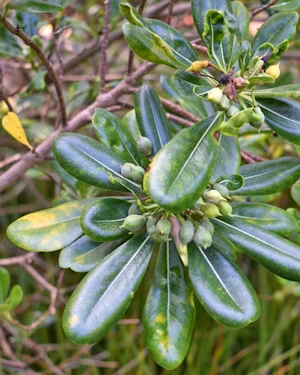
A.k.a. Mock Orange, a broadleaf evergreen shrub or small tree, native to East Asia, which grows up to 4 m. It has glossy foliage and heavily scented clusters of small, orange-blossom-like flowers. They start bright white and gracefully fade to a buttery yellow as they age. They are followed by hairy, woody capsules containing black seeds encased in a resinous pulp.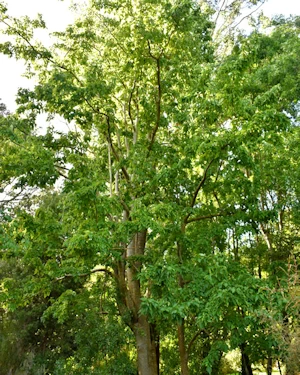 September 2025
 September 2025
 September 2025
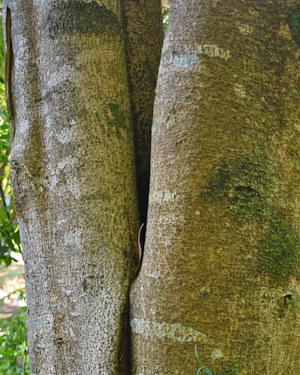
Plagianthus regius Plagianthus - from Greek plagios meaning slanting, and anthos meaning flower, referring to the asymmetric or lop-sided shape of the flower's petals, which are uneven at the base; regius from Latin meaning royal, as this is the largest of New Zealand's deciduous trees.
Ribbonwood
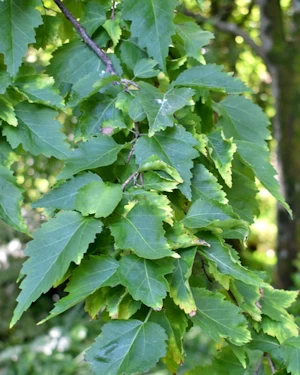
A.k.a. manatu, New Zealand's tallest deciduous tree, reach heights of 15 - 20 m. It has peeling, ribbon-like bark, dramatic heteroblasty juvenile-to-adult transformation , and dense sprays of spring blossoms. Young trees are slender and columnar, forming dense, tangled thickets with tiny, interlacing zigzag branches and small, 3 - 4 lobed leaves, while mature specimens develop a straighter trunk, broad, elegant canopies, larger, elongated, pale green toothed leaves. In late spring a profusion of small, subtly fragrant, cream or greenish-white flower clusters emerge.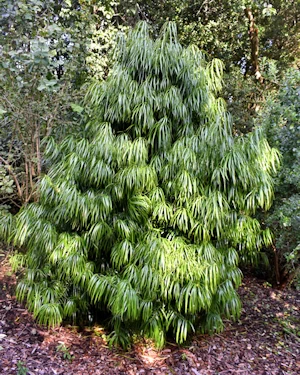 September 2025
 September 2025
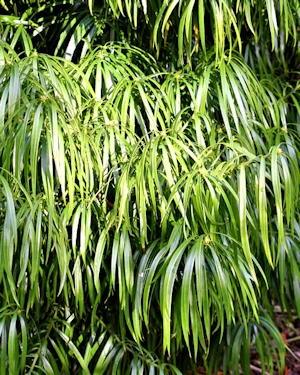
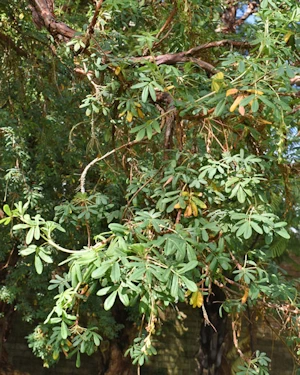
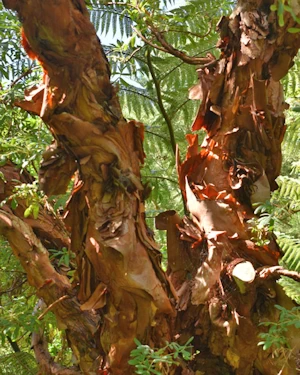
Podocarpus Podocarpus - from Greek podos meaning foot and karpos meaning fruit, referring to the fleshy, swollen fruit-stalks (receptacles) that support the seeds; henkelii - after Dr. John Spurgeon Henkel (1871 - 1962), a Conservator of Forests for Natal and Zululand, and later a Director of Forestry. henkelii
Henkel's Yellowwood
A slow-growing evergreen conifer native to the mistbelt forests of South Africa, where it can grow up to 20 - 30 m (more likely 4 - 9 m in cultivation). It has a tall, pyramidal shape and distinctive, weeping foliage. n eters tall. A straight trunk has bark that peels to reveal a reddish-brown underbark as it matures. It is dioecious male and female trees are separate . Instead of cones, females produce fleshy, spherical, berry-like seeds (arils) that ripen from green to purple.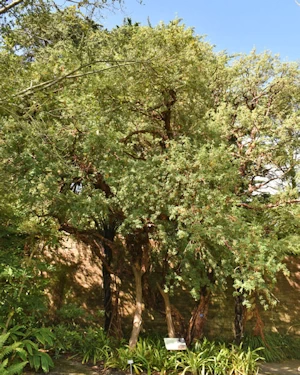 September 2025
 September 2025
 September 2025
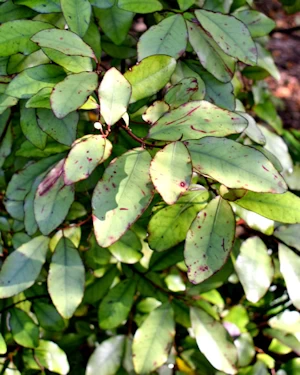
Polylepis australis Polylepis - from the Greek words poly meaning many and lepis meaning scales, referring to the dense, peeling, and multi-layered papery bark; australis - from Latin meaning southern, indicating that this species naturally occurs further south than almost any other in its genus.
Filo Pastry Tree
A.k.a. Tabaquillo, a small, multi-stemmed evergreen tree or large shrub, reaching 3 to 6 m, endemic to the high-altitude Andean mountains of C Argentina. It has papery, cinnamon-coloured bark that peels in loose, flaky layers, an adaptation that protects the plant from freezing temperatures and high altitude UV rays. It produces small, rather inconspicuous green flowers with reddish-purple stamens, often grouped in drooping racemes a flower cluster with the separate flowers attached by short equal stalks at equal distances along a central stem. The flowers at the base of the central stem develop first. . .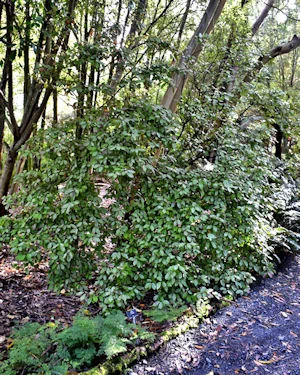 September 2025
 September 2025
Pseudowintera Pseudowintera from Greek pseudo- meaning false,relating to it similarity to the genus wintera (Drimys winteri); colorata - from Latin coloratus meaning coloured, referring to the leaves, which are blotched with red and yellow-green, and turn brilliant red on new spring growth. colorata
New Zealand pepperwood
A.k.a. mountain horopito, a slow-growing evergreen shrub native to New Zealand. It is has highly aromatic, peppery foliage with naturally variegated leaves of pale yellow-green, pink blothches, and deep red or purple margins. It forms a compact, bushy shrub reaching up to 2.5 m. In late spring, small, star-shaped, greenish-yellow or creamy-white flowers appear in small clusters. These are followed by tiny berries that start green, turn vibrant red, and eventually ripen to black.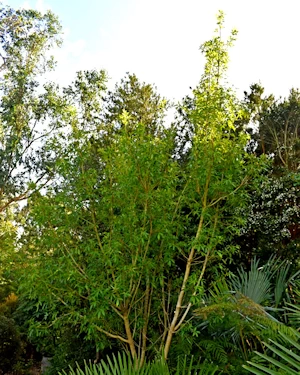 September 2025
 September 2025
 September 2025
Raukaua laetevirensRaukaua - traditional Maori name, referring to the aromatic leaves, historically infused by the Maori into oils to produce perfumes; laetevirens - from Latin laetus meaning bright, and virens meaning to be green
Devil's Elder
An large evergreen shrub or small tree native to the temperate rainforests of S Chile and Argentina, reaching up to 6 m. It has palmately compound leaves, loose panicles (clusters) of small greenish-white flowers, and purplish fruit, followed by small, maroon-purple or purplish-brown berries.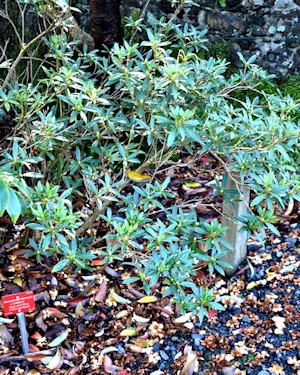 September 2025
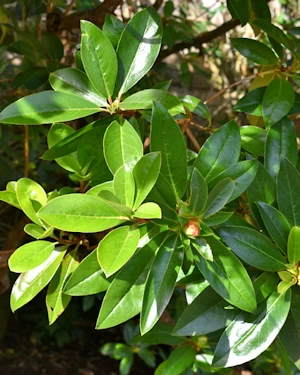
Rhododendron formosum Rhododendron - from Greek rhodon meaning rose and dendron meaning tree; formosum - from Latin formosus meaning beautiful.
Formosan rhododendron
A.k.a. Beautiful rhododendron, a fragrant, broadleaf evergreen shrub native to NE India and Myanmar, reaching to 2 - 3m. It has loose, open habit, with sweetly scented, trumpet-shaped white flowers in clusters of 2 to 6 often flushed with pink and yellow, with a yellow blotch in the throat. The leaves are narrow, elliptic, and glossy dark green. Margins are often fringed with bristles or fine hairs (loriform-setose) when young.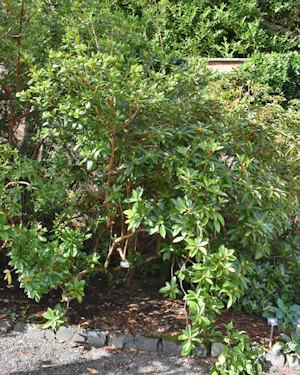 September 2025
 September 2025
Rhododendron Rhododendron - from Greek rhodon meaning rose and dendron meaning tree; parryae - named by Mrs. Parry after her husband, an officer in the Indian Civil Service.parryae
Parry's rhododendron
A fragrant, evergreen shrub or small tree found in the Lushai Hills in SE Assam, India. It has pinkish-purple, peeling bark and striking white flowers. It has large, funnel-shaped flowers with a prominent orange-yellow blotch. The flowers grow in terminal trusses of 3 to 4. The wide, funnel-shaped corolla has five undulating lobes. September 2025
 September 2025
 September 2025
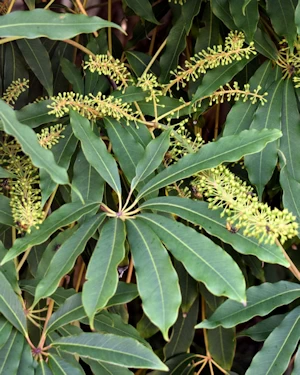
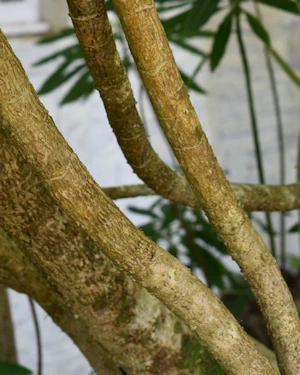
Schefflera taiwaniana schefflera - after 18th-century German physician and botanist Johann Peter Ernst von Scheffler; taiwaniana - from Taiwan
Taiwanese umbrella tree
Synonymous with Heptapleurum taiwanianum - from Greek hepta meaning seven and pleuron meaning rib, referring to the ribs or veins on the leaves; taiwaniana - from Taiwan An evergreen shrub or small tree native to the high-altitude misty forests of Taiwan, reaching 3 to 4 m. Panicles of small, green-brown flowers are followed by clusters of decorative purple-black berries.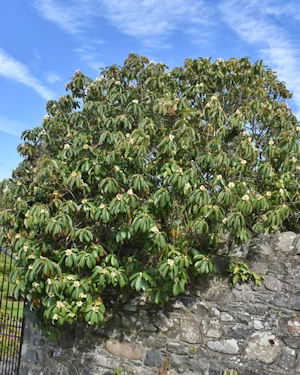
September 2025
September 2025
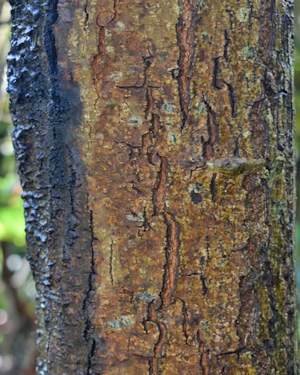
Schima wallichii schima - from Greek skiasma, meaningshadow, referring to the dense, broad crown of evergreen leaves that casts a deep, heavy shade; wallichii - after Nathaniel Wallich (1786 - 1854), a Danish botanist and superintendent of the Calcutta Botanic Garden.
Needlewood tree
A.k.a. S. wallichiana, and Chinese guger tree, a large, evergreen tree in the tea family, native to the Himalayan foothills and SE Asia, reaching 10 - 45 m tall. The flowers are fragrant, solitary, and measure 3 -4 cm across. They feature 5 white petals and a large cluster of yellow stamens, and resemble a fried-egg. Following the blooms are woody, 5-valved capsules that contain small, narrowly winged seeds. September 2025
September 2025
September 2025
 September 2025
Sorbus sorbus - Latin name for the fruit of the service tree, probably due to them being red; maderensis - from Madeira". maderensis
Madeiran rowan
A.k.a. Madeiran mountain ash, a large shrub or small tree, endemic only to the island of Madeira. It is celebrated for its attractive foliage, fluffy white spring flowers, and striking display of orange and red autumn berries. It produces dense clusters (corymbs) of small, fluffy, creamy-white flowers, Following the flowers are large clusters of berries that start out bright orange and mature into a deep red.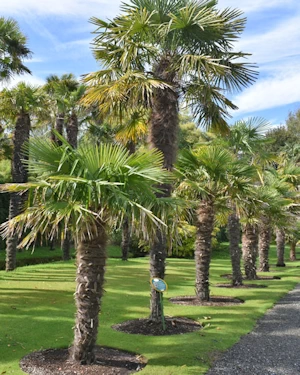 September 2025
 September 2024
 September 2024
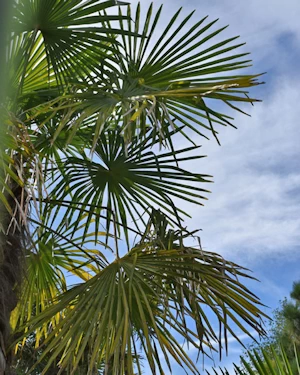
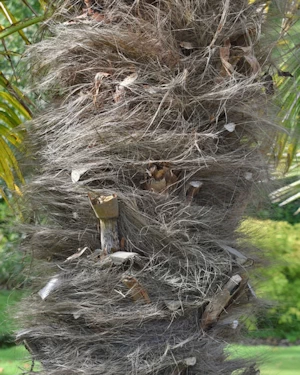
Trachycarpus fortunei from Greek trachys, rough, and karpos, fruit, referring to the fibrous, rough trunk of the palm; fortunei, after Scottish horticulturist Robert Fortune (1812 - 1880).
Windmill palm
Also called the Chusan palm, native to subtropical and temperate mountain forests of China, Japan, Myanmar and India where it typically grows to 12-20m. One of the hardiest of the palms, cultivated for its coarse but strong leaf sheath fibre, used for making rope, sacks, and other coarse cloth where strength is important. September 2025
 September 2025
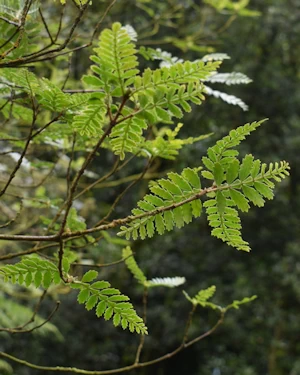
Ugni molinae Ugni - from uni, the Mapudungun word for the fruit in the indigenous language of the Mapuche people in southern Chile; molinae - after Juan Ignacio Molina (1740 - 1829), an Italian-born Chilean Jesuit priest and naturalist
Chilean guava
A.k.a. ugniberry, a compact, slow-growing evergreen shrub native to Chile and Argentina, reaching 1 to 1.5 m. It has aromatic, sweet crimson berries that taste like a mix of strawberries and pineapple. It has dense, glossy, dark green leaves that emit a spicy aroma when crushed. It produces delicate, nodding, bell-shaped white to pale pink flowers, followed by dark red or white berries. September 2025
 September 2025
Weinmannia Weinmannia - after German pharmacist and botanist Johann Wilhelm Weinmann (1683 - 1741); trichosperma - from Greek thrix meaning hair and sperma meaning seed, referring to the minute, ellipsoid seeds which are covered in fine, scattered white hairs. trichosperma
Tineo
A.k.a. Palo Santo, an evergreen tree native to the temperate rainforests of S Chile and Argentina, reaching up to 30 m. In late spring, it produces tight, cylindrical racemes up to 5 cm long, densely packed with small, fragrant, creamy-white or pale pink flowers. These are followed by small leathery fruit capsules which turn bright red or coppery-red before splitting open to release tiny, hairy seeds.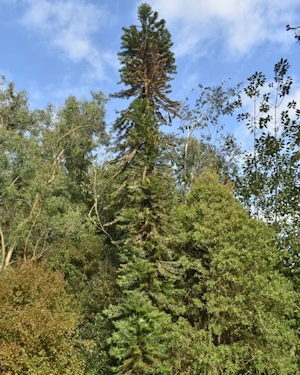 September 2025