×
![woodturning]()

Trees gallery - Logan Botanic Garden - page 5
Galloway
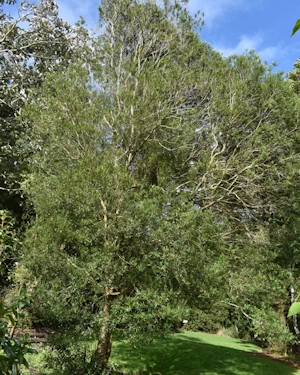 September 2025
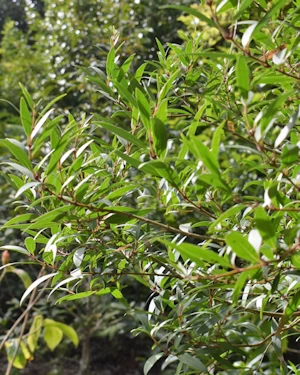 September 2025
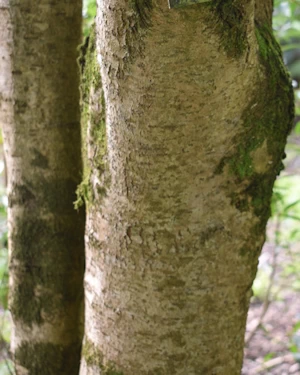 September 2025
Leucopogon parviflorus Leucopogon - from Greek leukos meaning white and pogon, meaning beard, referring to the white, hairy beard found on the inside of the tubular flowers and petal lobes; parviflorus - from Latin parvus meaning small and [floris meaning flower, efers to the tiny, relatively inconspicuous blooms of this particular species, compared to others in the genus. Coast Beard-heath, t.
Coast beard-heath
A.k.a.native currant, a hardy, medium-to-large shrub native to coastal Australia and New Zealand, growing from 1 to 5 m. It has dense foliage and delicate, bearded white flowers, followed by small, sweet, edible white berries. Leaves are small and narrow, up to to 3.5 cm long. They are generally bright to grey-green, lance-shaped, and usually have curved, sharply pointed tips. The flowers are tiny (about 4 - 5 mm long), white, and tubular, blooming in clustered spikes of 7 to 13. The inside of the petals has distinct, fuzzy white hairs, giving the plant its common name, beard-heath.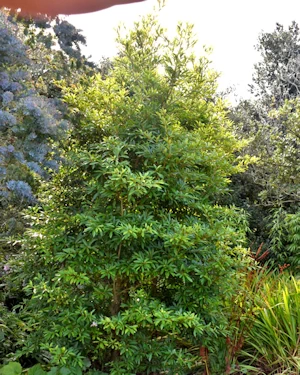 September 2025
 September 2025
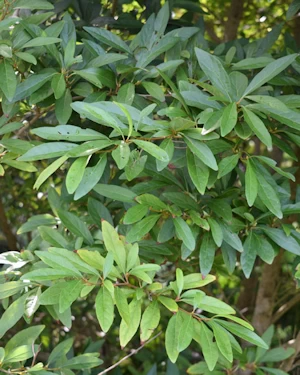
Lindera Lindera - after the Swedish physician and botanist Johan Linder (1676 - 1724); erythrocarpa - from Greek erythros meaning red, and karpos meaning fruit or seed. erythrocarpa
Red-Fruit Spicebush
A.k.a. Japanese Spicebush, a deciduous large shrub or small tree native to China, Korea, and Japan, growing 5 to 7 m. The leaves and stems are aromatic when crushed. It is dioecious male and female flowers grow on separate plants . Clusters of fragrant, star-shaped, pale yellow-green flowers bloom in spring just before or alongside the emerging leaves. On pollinated female plants, flowers are followed by abundant crops of glossy, round, cherry-red pomes (berries). The grey bark is rough on younger specimens, dotted with small corky bumps (lenticels) and prominent, long, conical winter buds.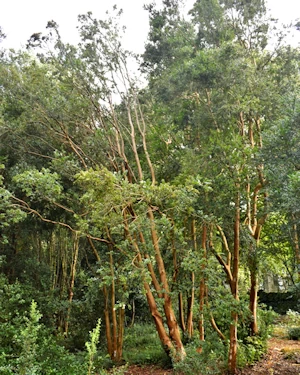 September 2025
 September 2025
 September 2025
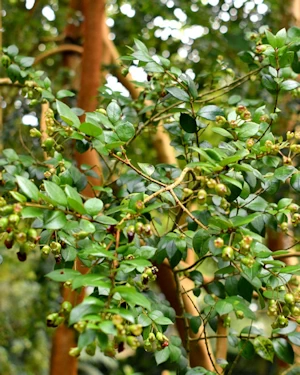
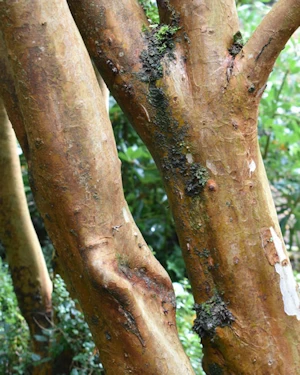
Luma apiculata Luma - from the vernacular name for the tree in the Mapudungun language of the Mapuche Native American people of Chile and Argentina; apiculata - from Latin apiculatus meaning tip, referring to the small, sharp point found at the end of the leaves
Chilean myrtle
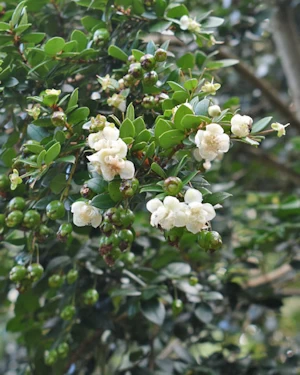
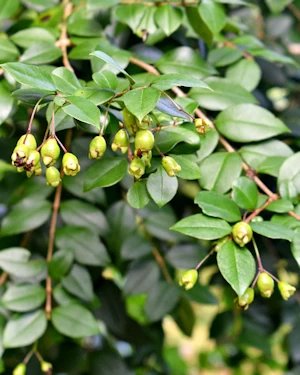
Luma apiculata (commonly known as the Chilean myrtle) is an evergreen shrub or small tree native to the temperate rainforests of Chile and Argentina. It has peeling cinnamon-and-cream bark, glossy aromatic leaves, fragrant summer flowers, and edible autumn berries. Masses of bowl-shaped, creamy-white flowers with prominent stamens appear from mid-summer, followed by small, edible, purplish-black berries that ripen in early to mid-autumn.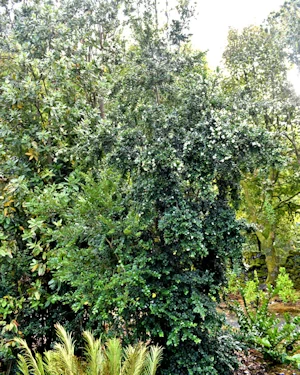 September 2025
 September 2025
 September 2025
Luma chequen Luma - from the vernacular name for the tree in the Mapudungun language of the Mapuche Native American people of Chile and Argentina; chequen - the native name for the shrub in the Chilean Araucanía region.
White Chilean myrtle
A.k.a. chequen, or arrayan blanco is an upright, broadleaf evergreen shrub or small tree native to the central Andes mountains between Chile and Argentina. It has sweetly scented foliage, it is frequently used as a fragrant hedge, windbreak, or ornamental plant.Key CharacteristicsFoliage: Densely branched with small, leathery, dark-green oval leaves that are highly aromatic when crushed, sometimes giving off a unique bubblegum-like fragrance. Distinct from related species, it has a dull grey-brown to cinnamon bark rather than a smooth, reddish trunk. It produces profuse, cup-shaped white flowers with delicate, spreading petals in mid- to late summer, followed by edible, dark purple to black berriesMagnolia Magnolia - after French botanist Pierre Magnol (1638 - 1715); campbellii - after Archibald Campbell, a British East India Company official who facilitated the 1849 botanical expeditions of Sir Joseph Dalton Hooker; Charles Raffill - hybrid cultivar by English horticulturist Charles Raffill. campbellii Charles Raffill (?)
Campbell's magnolia (Charles Raffill?)
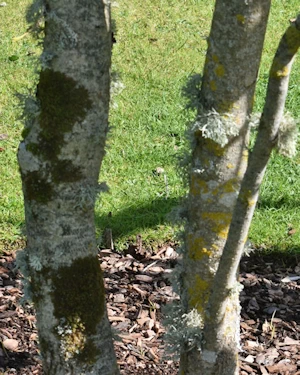
A large deciduous tree native to the Himalayas, growing from 15 to 30 m, with a late-winter to early-spring bloom. Before its leaves appear, the bare branches produce enormous, fragrant flowers, 15 - 35 cm in diameter, with 12 to 16 fleshy tepals ranging from white to deep rose-pink. The tree matures slowly, typically not producing flowers until it is 20 to 30 years old.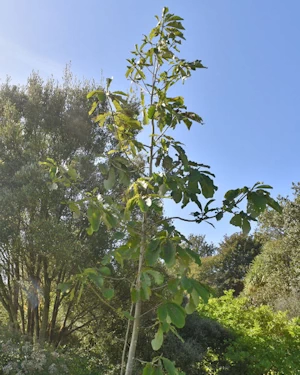
September 2025
September 2025
Magnolia magnolia - after the French physician and botanist Pierre Magnol (1638 - 1715), a pioneer in early plant classification; Officinalis - from Latin officina, meaning a workshop or pharmacy, botanically a plant with an established history of medicinal use. officinalis
Houpu magnolia
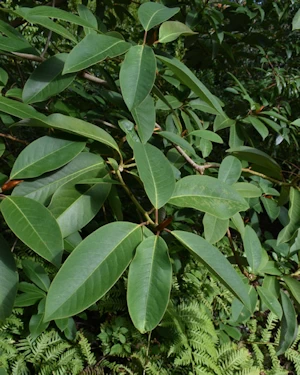
A deciduous tree native to China with large, fragrant white spring flowers and medicinal bark (Houpu), growing up to 20 m. with upright branches and yellow-green young stems. Leaves are Enormous, papery, and bright green (up to 50 cm long), often grey-green and downy underneath. The common variety, var. biloba, features a distinct deep notch at the leaf tip. Flowers appear in late spring to early summer. They are large (15 - 20 cm across), cup-shaped, creamy-white, and deeply fragrant. September 2025
 September 2025
Magnolia - Magnolia - after French botanist Pierre Magnol (1638 - 1715), one of the founding fathers of botany; sapaensis - derived from Sa Pa, the mountain town and district in Lào Cai Province, northern Vietnam; -ensis - Latin meaning belonging to. sapaensis
Vietnamese magnolia
Syn. Manglietia sapaensis, a rare, semi-evergreen shrub or small tree native to the high-altitude cloud forests of northern Vietnam, growing to 10 m. It has large glossy leaves, fragrant summer flowers, and vibrant pink fruits. It produces large, cup-shaped, fragrant blossoms, with flowers consists of 9 tepals that are creamy white on the inside, with the outer/middle tepals flushed purplish-red beneath. Followed by cone-like fruits that mature to a bright pink or red colour, revealing dark, suspended seeds.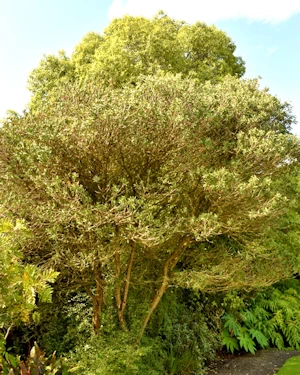 September 2025
 September 2025
 September 2025
Melaleuca melaleuca - from Greek mélas meaning black, and leukos meaning white, referring to fire-blackened white bark; pallida - Latin meaning pale, referring to the pale-yellow bottlebrush flowers the shrub produces - pallida
Lemon bottlebrush
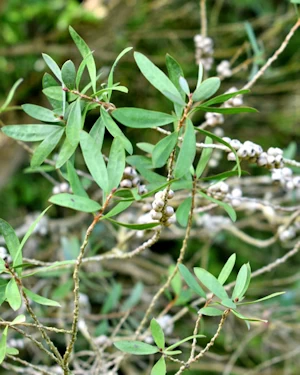
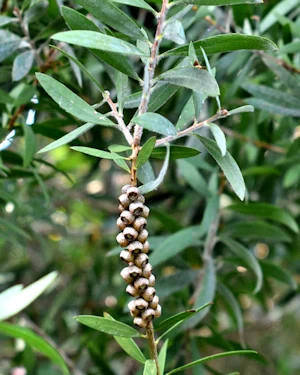
A hardy, upright evergreen shrub endemic to E and SE Australia, growing from 3 to 8 m. It has pale yellow, bottlebrush-shaped blooms and silvery new growth. It has thin, spreading branches, a naturally dense structure, and rough, flaky bark. Dense, cylindrical flower spikes, 3 to 7 cm are creamy-white, pale yellow, or lemon-coloured, and occasionally flushed with pink. Following the blooms, the plant produces woody, button-like seed capsules that persist on the stems for several years.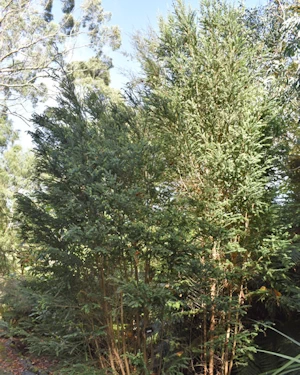 September 2025
 September 2025
Melaleuca melaleuca - from Greek mélas meaning black, and leukos meaning white, referring to fire-blackened white bark; Squarrosa: - from Latin squarrosus, meaning rough with stiff bracts, leaves or scales, referring to the manner in which the shrub's overlapping, scale-like leaves bend and curve outwards from top to bottom squarrosa
Scented paperbark
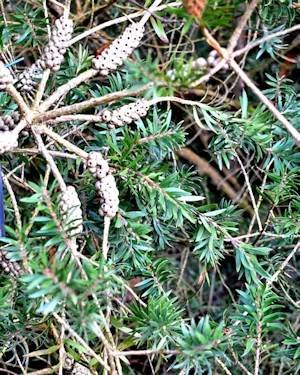
A.k.a. Australian swamp tea tree, an upright evergreen shrub or small tree native to SE Australia, growing 2 to 5 m. It has spongy, layered white papery bark, sweet fragrance, and dense, creamy-yellow bottlebrush flowers, which appear from late spring to early summer. These are followed by small, woody, cup-shaped capsules that cluster along the stems.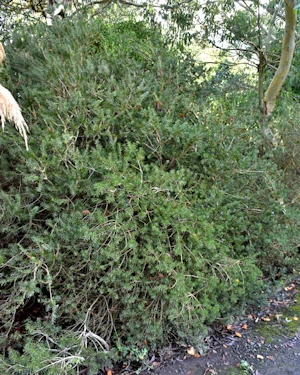 September 2025
 September 2025
 September 2025
Melaleuca virens melaleuca - from Greek mélas meaning black, and leukos meaning white, referring to fire-blackened white bark; - -
Lime bottlebrush
A.k.a. mountain bottlebrush, and formerly callistemon viridiflorus, a small-to-medium upright evergreen shrub endemic to Tasmania, growing 2 to 3 m. It has dense dark green foliage and distinctive lime-yellow, dense, cylindrical bottlebrush flowers, followed by woody, seed-bearing capsules.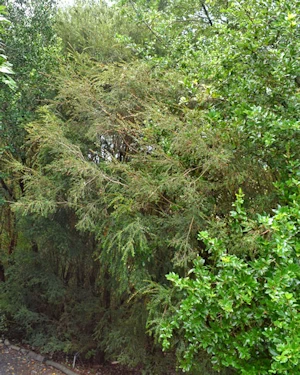 September 2025
 September 2025
 September 2025
Metrosideros metrosideros - from Greek Metra meaning heartwood and sideron meaning iron, referring to the exceptionally hard, dense, and strong timber; stipularis - from Latin stipula, meaning straw or stalk, referring to prominent stipules — the small, leaf-like appendages at the base of the leaf stalk. stipularis
Tepu
A.k.a. trepu, or tepual, and formerly known as Tepualia stipularis, a slow-growing evergreen tree or shrub native to the extremely wet, swampy regions of S Chile and Argentina, growing up to 5 m. It features elliptical, dark-green leaves and bears small, white, five petalled flowers which bloom singly or in clusters.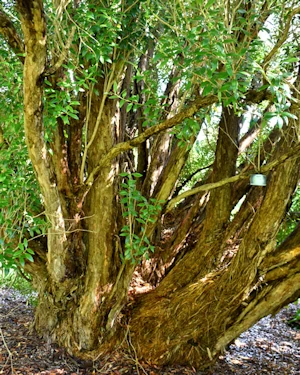 September 2025
 September 2025
Metrosideros metrosideros - from Greek Metra meaning heartwood and sideron meaning iron, referring to the exceptionally hard, dense, and strong timber; umbella - Latin for umbrella, referring to the umbrella-shaped cluster of flowers in which individual stalks (pedicels) originate from a single, central point. umbellata
Southern rata
A slow-growing, loosely-branching evergreen tree endemic to New Zealand, reach heights up to 15 m. It has dense, glossy foliage and vivid, scarlet, brush-like flowers that bloom in the summer. The bark is thin, peeling off in papery flakes. September 2025
 September 2025
 September 2025
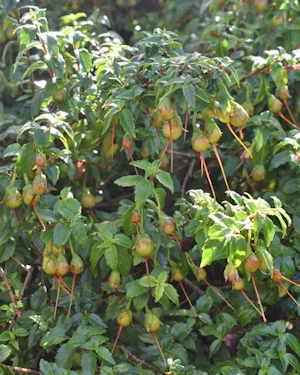
Mitraria Mitraria - from Greek mitra meaning mitre or headband, referring to the bishop's hat shape of the seed capsule; coccinea - from Latin coccineus meaning scarlet, describing the vibrant colour of the tubular flowers. coccinea
Chilean mitre flower
An exotic evergreen scrambling shrub native to the moist, temperate rainforests of Chile and Argentina. It has vibrant, tube-shaped large flowers up to 5 cm long and boast a rich scarlet-orange to red color with a velvety texture. They are pendulous and tubular with protruding yellow stamens. It has small, glossy, deep green, oval-shaped leaves that have serrated margins.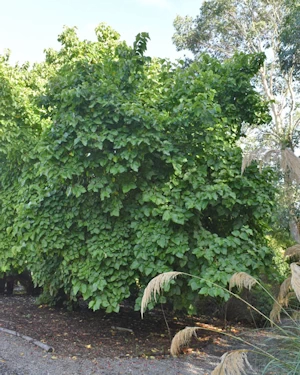 September 2025
September 2025
September 2025
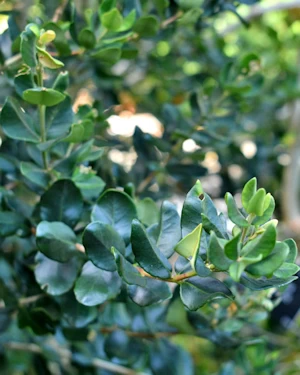
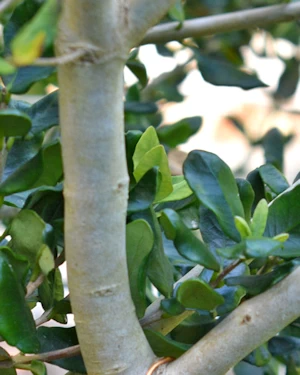
Morus nigra Morus Latin for mulberry; nigra - Latin for black, referencing the dark purple or black colour of the mulberry fruit.
Black mulberry
A deciduous tree growing to 12 m, originating in Mesopotamia and Persia, but cultivated across Europe and Asia. The richly flavoured fruit is a compound cluster of several small drupes that are dark purple, almost black when ripe, 2.5 cm in diameter.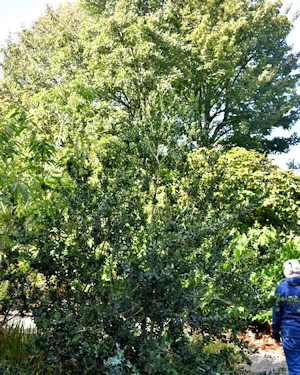 September 2025
 September 2025
 September 2025
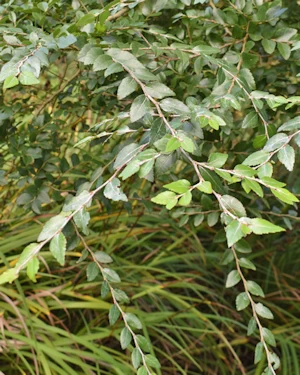
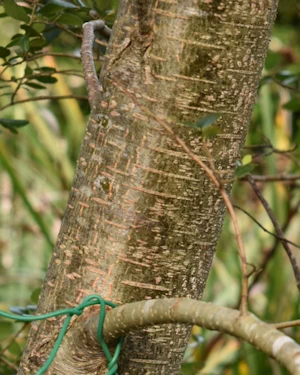
Myrceugenia Myrceugenia - from Greek myrtos meaning myrtle and eugenes meaning well-born or noble; colchaguensis refers to its native region, the Colchagua Province in central Chile, (ensis means originating from). colchaguensis
Colchaguilla
A rare species of small evergreen tree or large shrub growing to 4 m, endemic to the coastal mountain ranges of central Chile. Flowers grow singly in the leaf axils, notable for having calyx-lobes covered with dense yellow hairs. These are followed by a fleshy berry.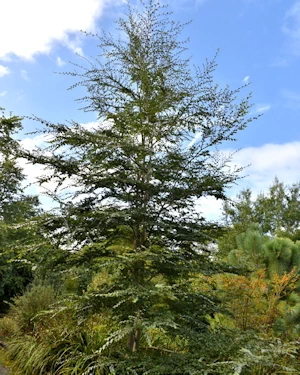 September 2025
 September 2025
 September 2025
Nothofagus dombeyi Nothofagus - from Greek nothos, meaning false and fagus, Latin name for the beech tree, referring to how the southern beeches closely resemble northern beeches (Fagus) but are genetically distinct; dombeyi - after French botanist and explorer Joseph Dombey (1742 - 1794), who collected many of the foundational botanical specimens of this tree during his expedition to Chile and Peru in the late 18th century.
Dombey's beech
A.k.a. coigue, a tall, fast-growing evergreen tree native to the temperate forests of S Chile and Argentina. It has layered branches, dense glossy foliage, and robust timber, growing up to 40 - 45 m in the wild, with a broadly conical to flat-topped habit. Its branches often layer, cedar-like, horizontally. Flowers are hermaphroditic containing both male and female floral organs: pistils and stamens , tiny and insignificant, while the fruit is a small, triangular nutlet containing seeds. September 2025
 September 2025
 September 2025